

Nourishing the Kidneys
Managing chronic kidney disease through nutrition relies on balancing essential nutrients while minimising the workload on failing kidneys. Damaged kidneys…
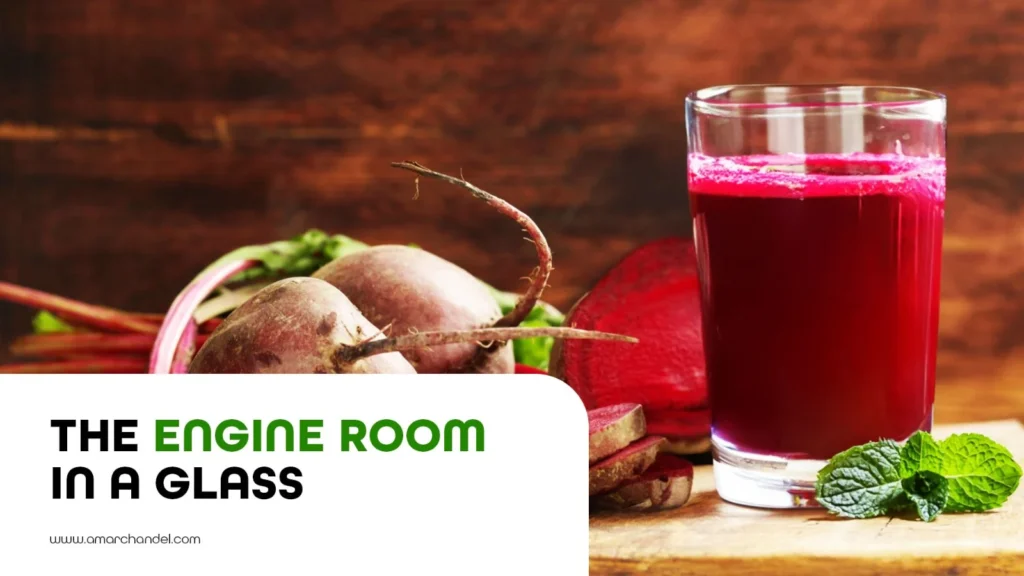
Every time we flex a muscle, take a breath, or blink an eye, our body spends a tiny packet of biological energy known as adenosine triphosphate, or ATP. This compound serves as the primary energy currency inside human cells. Deep within our cells lie microscopic powerhouses that generate ATP using an extraordinary molecular machine. This enzyme, known as ATP synthase, operates very much like a microscopic rotary motor. As oxygen drives a stream of tiny, positively charged particles called protons across a cell membrane, this rotary engine spins, continuously churning out fresh supplies of cellular fuel to keep our tissues functioning.
Like any physical motor, however, this microscopic system is not entirely leakproof. Some energy is lost along the way through proton leakage and slight mechanical inefficiency. For a long time, exercise scientists believed this basic metabolic conversion rate was fixed by human biology. The discovery of dietary nitrate in beetroot juice completely transformed this understanding.
When we drink beetroot juice, the inorganic nitrates it contains are absorbed into the bloodstream and concentrated in our salivary glands. Friendly bacteria living naturally on the back of our tongue then convert these nitrates into nitrites. Once swallowed and reabsorbed, these nitrites transform into nitric oxide, a powerful signalling molecule that directly influences our energy-producing cellular machinery.
Recent scientific investigations have shed further light on the exact mechanisms at play. Beyond expanding blood vessels to improve blood flow, nitric oxide acts directly on our cells’ rotary energy generators. By sealing up minor proton leaks and reducing mechanical loss inside the cellular power plants, it allows the body to produce the exact same amount of energy while consuming notably less oxygen.
Recent laboratory trials led by exercise physiologists have even demonstrated that dietary nitrate accumulates directly inside human muscle tissue. During strenuous physical exercise, this stored nitrate provides a local reservoir of nitric oxide that boosts maximum muscle force and overall power output.
This physiological discovery has gained widespread interest across India, where beetroot has long been a major crop and a staple ingredient in regional cooking. Across Indian sports academies and athletic training centers, fresh beetroot juice and natural nitrate concentrates are increasingly adopted by runners, cyclists, and team-sport athletes looking for a safe, natural way to build stamina. Because fresh beetroot is widely grown, affordable, and readily available throughout Indian markets, it offers an accessible alternative to expensive imported pre-workout supplements.
Beyond athletic performance, this natural mechanism holds relevant health implications for everyday life in India.
Cardiovascular conditions and high blood pressure affect a significant proportion of the adult population in the country. Indian clinical studies evaluating dietary nitrate intake show that regular consumption of beetroot juice helps relax blood vessels, reduce resting arterial pressure, and enhance overall blood circulation.
What began as a surprising breakdown of sports science theory has thus become a practical, low-cost dietary tool for supporting everyday cardiovascular health and cellular energy across the nation.
Sources and References
Bailey, S.J. et al. (2010) “Dietary nitrate supplementation reduces the O2 cost of low-intensity exercise and enhances tolerance to high-intensity exercise in humans,” Journal of Applied Physiology, 107(4), pp. 1144–1155.
Jones, A.M. (2014) “Dietary nitrate supplementation and exercise performance,” Sports Medicine, 44(S1), pp. 35–45.
Kadach, S. et al. (2023) “15N-labeled dietary nitrate supplementation increases human skeletal muscle nitrate concentration and improves muscle torque production,” Acta Physiologica, 237(3), e13923.
Rao, R.N. et al. (2020) “Cardiovascular and metabolic benefits of dietary inorganic nitrate: Implications for Indian populations,” Indian Journal of Medical Research, 152(3), pp. 210–218.
Managing chronic kidney disease through nutrition relies on balancing essential nutrients while minimising the workload on failing kidneys. Damaged kidneys…

Passing pink or reddish urine after eating beetroot is a harmless condition known as beeturia. While seeing a unexpected splash…

Our understanding of meat preservatives began with a crisis on a Norwegian fur farm back in 1957. Mink were dying…
