

Blending Whole Berries Beats Pressing Them
Blending Whole Berries Beats Pressing Them Berries regularly rank among the healthiest fruits you can add to your diet, packed…
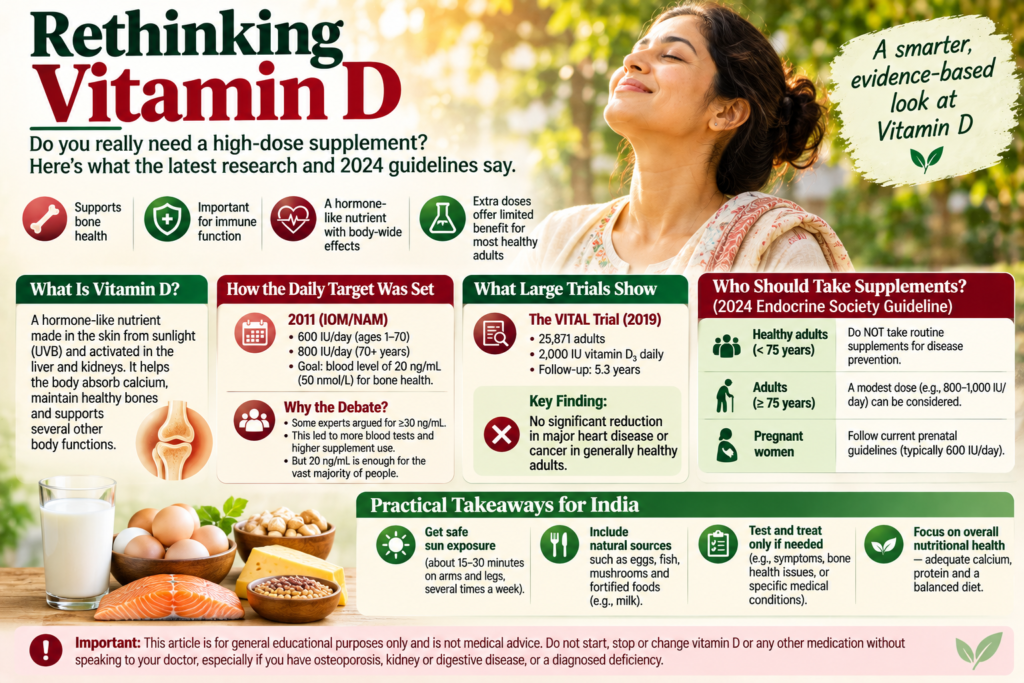
Vitamin D is currently among the most tested and supplemented nutrients in modern medicine. Millions of adults regularly request blood tests or take high-dose supplements under the belief that boosting vitamin D protects against chronic illness. However, large clinical trials and a major 2024 guideline indicate that many generally healthy adults gain surprisingly little from extra doses.
Why has such a widely recommended nutrient come under fresh scrutiny? The answer lies in how vitamin D works, how its daily targets were originally defined, what recent clinical trials have actually shown, who genuinely needs supplementation, and how these considerations apply to the unique population landscape of India.
Disclaimer: This article is for general educational purposes and is not medical advice. Do not stop prescribed vitamin D, or start high-dose vitamin D, without speaking to your doctor. Guidelines for healthy people do not apply if you have osteoporosis, kidney or digestive disease, symptoms of deficiency, or take medicines that affect vitamin D.
Most classical vitamins act as essential cofactors in biochemical reactions, serving clear, single primary functions. Vitamin D operates differently. Strictly speaking, it behaves more like a precursor to a steroid hormone than a standard dietary vitamin.
When ultraviolet B (UVB) rays from sunlight strike the skin, they convert 7-dehydrocholesterol into vitamin D3. The liver and kidneys then process this compound into its active hormonal form, calcitriol. Receptors for active vitamin D are found throughout the human body, not only in skeletal tissues but also in skeletal muscle, the heart, lungs, immune cells, and the brain.
While the presence of these receptors across multiple organ systems led researchers to hypothesize that vitamin D might prevent broad non-skeletal diseases, biological presence alone does not prove that taking extra vitamin D prevents disease.
For a closer look at the two main supplemental forms, read Vitamin D2 vs Vitamin D3.
In 2011, the Institute of Medicine (IOM, now the National Academy of Medicine) published updated Dietary Reference Intakes for calcium and vitamin D. The committee set the Recommended Dietary Allowance (RDA) at 600 International Units (IU) per day for individuals aged 1 to 70 years, and 800 IU per day for adults over 70. These recommendations were intended to achieve a serum 25-hydroxyvitamin D [25(OH)D] concentration of 20 ng/mL (50 nmol/L), a level determined to cover the skeletal health needs of at least 97.5% of the population.
The IOM established these targets assuming minimal sun exposure and integrated multiple bone-health outcomes, including calcium absorption efficiency, bone mineral density, and fracture prevention. Parathyroid hormone (PTH) suppression was evaluated as one of several biological markers, though PTH thresholds varied across studies. The committee concluded that evidence for non-skeletal outcomes—such as cancer prevention, cardiovascular health, auto-immune conditions, and diabetes—was inconsistent and inconclusive. To prevent adverse effects from excess intake, the committee set a Tolerable Upper Intake Level (UL) of 4,000 IU daily for healthy adults.
Following the 2011 report, several professional groups argued that a target of 20 ng/mL was insufficient for optimal health, proposing instead that blood levels should be at least 30 ng/mL. This threshold shift led to widespread routine blood testing and a substantial increase in supplement use. For example, in the United States, regular use of vitamin D supplements containing 1,000 IU or more rose from under 1% of the population in 1999 to roughly 18% by 2014.
However, a serum level of 20 ng/mL represents a population-based requirement level sufficient for the vast majority of people, rather than a rigid boundary between health and immediate disease. Definitions for terms such as “deficiency” and “insufficiency” continue to vary across different global medical organizations.
To determine whether higher vitamin D levels prevent chronic illness, researchers conducted large-scale randomized controlled trials. The Landmark Vitamin D and Omega-3 Trial (VITAL), led by Manson et al. and published in The New England Journal of Medicine (2019), evaluated 25,871 adults taking 2,000 IU of vitamin D3 daily versus placebo over a median follow-up of 5.3 years. The trial showed no statistically significant reduction in major cardiovascular events or invasive cancer incidence. Ancillary studies within VITAL and separate randomized trials similarly found no clear preventative benefit for age-related cognitive decline, dementia, or incident diabetes in unselected healthy populations.
These trial findings require careful context. Most trial participants were healthy adults without baseline symptomatic deficiency or clinical indications for treatment. Consequently, these results do not suggest that vitamin D is unimportant to human biology, nor do they apply to individuals with severe baseline deficiency, rickets, osteomalacia, malabsorption disorders, or chronic kidney disease.
In 2024, the Endocrine Society released updated clinical practice guidelines (Demay et al., JCEM) focused specifically on disease prevention in generally healthy individuals. The panel evaluated empirical evidence across target populations and advised target-specific strategies rather than universal supplementation or routine screening.
| Target Population | 2024 Endocrine Society Recommendation Summary | Primary Clinical Rationale |
|---|---|---|
| Children & Adolescents (1–18 years) | Empiric supplementation suggested | Prevention of nutritional rickets; potential reduction in lower respiratory infections |
| Pregnant People | Empiric supplementation suggested | Potential reduction in risk of preeclampsia, intra-uterine mortality, and preterm birth |
| Adults 75 Years and Older | Empiric supplementation suggested | Potential reduction in overall mortality risk |
| High-Risk Prediabetes | Empiric supplementation suggested | Potential reduction in risk of progression to overt type 2 diabetes |
| Healthy Adults (19–74 years) | Suggests against routine supplementation above RDA; suggests against routine screening | Lack of clear trial evidence demonstrating preventive health benefits; routine 25(OH)D blood testing not indicated even in dark skin or obesity |
The guideline notes that optimal individual dosages remain unclear, that daily lower-dose supplementation or fortified foods are preferred over large intermittent bolus doses, and that broad blood testing lacks clinical utility in healthy populations. If you are curious about when routine testing does and does not change what you do, similar evidence-based principles apply to evaluating other nutrient markers.
The 2024 Endocrine Society guideline applies exclusively to generally healthy populations without underlying medical conditions. Diagnostic testing and targeted therapeutic regimens remain appropriate for individuals presenting with:
Furthermore, as a US-based document, the guideline does not explicitly tailor its recommendations to regional nutritional profiles or healthcare infrastructure in India.
Estimates of vitamin D deficiency in India vary widely based on geographic region, study design, and diagnostic cutoffs. A comprehensive report by ICRIER and the Anvka Foundation (2025) estimates that approximately 1 in 5 Indians (around 20%) are strictly deficient when using standard diagnostic cutoffs, with regional prevalence ranging from roughly 9% in northern states to 39% in eastern regions. Older reviews that applied higher diagnostic cutoffs (such as requiring levels strictly above 30 ng/mL) reported prevalence estimates between 70% and 100% in specific cohort samples.
Despite abundant sunny weather, several biological, social, and environmental factors contribute to low vitamin D synthesis across Indian populations:
The Indian Council of Medical Research – National Institute of Nutrition (ICMR-NIN) recommends an daily intake of 600 IU of vitamin D for Indian adults under conditions of minimal sun exposure.
To address population-level deficits, the Food Safety and Standards Authority of India (FSSAI) established regulations allowing voluntary fortification of milk and edible oil with vitamin D. While voluntary fortification is ongoing, public health policy experts, including those from the ICRIER report, advocate for broader implementation and improved supply chain compliance to improve intake nationwide.
For more context on the relationship between dairy, calcium, and nutrition, read The Land of Milk, Butter and Ghee, But ….
Meeting daily vitamin D requirements can be achieved through three primary avenues:
For broader practical ideas on balanced food choices, see Eating Healthy on a Budget.
In India, high-dose therapeutic formulations—such as single oral sachets or injections containing 60,000 IU of vitamin D3—are widely available and often taken without medical supervision or follow-up blood monitoring.
Unregulated or prolonged mega-dosing carries serious health risks. Unlike water-soluble vitamins, excess fat-soluble vitamin D is stored in body tissue and can cause hypervitaminosis D and severe hypercalcemia (dangerously elevated blood calcium levels).
A landmark clinical case series from northern India (Kaur, Mishra & Mithal, 2015) evaluated 16 patients presenting with vitamin D toxicity resulting from overzealous correction of perceived deficiency. Patients had received cumulative doses reaching a median of 3.6 million IU. Clinical manifestations included persistent nausea, vomiting, altered mental status, acute kidney injury, severe hypercalcemia, and acute pancreatitis. Similar pediatric and adult case series from Kashmir and Odisha document comparable risks from unmonitored high-dose regimens.
The established upper intake limit for healthy adults is 4,000 IU per day. High-dose schedules (such as 60,000 IU weekly) are short-term clinical treatments intended exclusively for diagnosed deficiency under direct medical supervision.
Routine 25(OH)D blood testing is not recommended for generally healthy adults without symptoms or underlying risk factors. Diagnostic testing is reserved for individuals with bone disorders, kidney disease, malabsorption syndromes, or clinical signs of deficiency.
The ICMR-NIN recommends 600 IU daily for healthy adults with limited sun exposure. Modest daily supplementation within this range is typically safe, but high-dose supplements should only be initiated after consulting a healthcare provider.
No. High-dose sachets containing 60,000 IU are potent therapeutic interventions designed for clinical deficiency. Taking mega-doses without supervision can lead to vitamin D toxicity, severe hypercalcemia, and kidney damage.
Sunlight can provide adequate vitamin D under optimal conditions. However, urban air pollution, darker skin tones, indoor lifestyles, and extensive clothing cover often reduce cutaneous synthesis, making dietary sources or modest daily supplements necessary for many individuals.
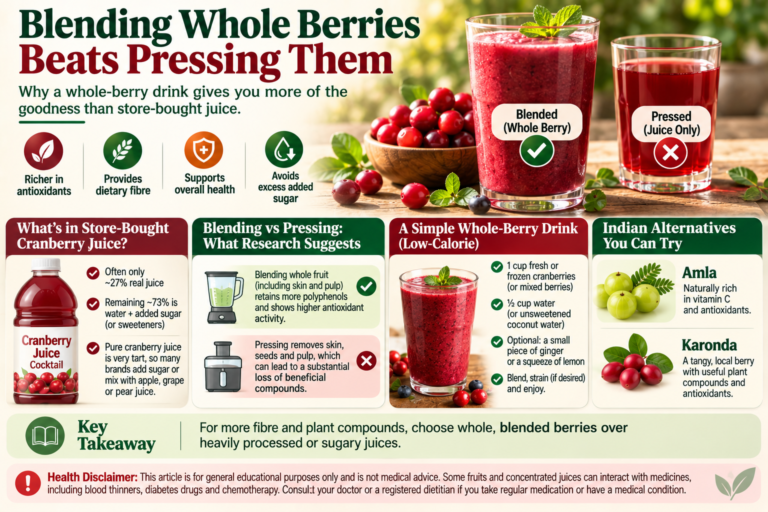
Blending Whole Berries Beats Pressing Them Berries regularly rank among the healthiest fruits you can add to your diet, packed…
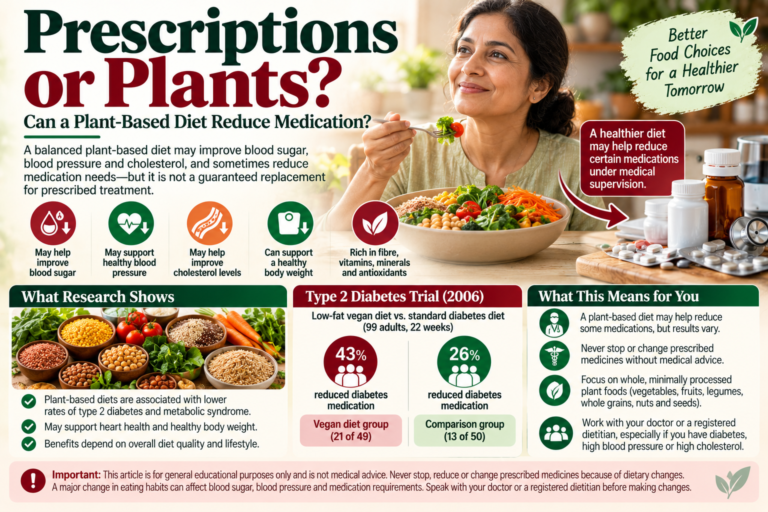
If you have type 2 diabetes, high blood pressure or high cholesterol, you may have wondered whether changing what you…

Eggs are a familiar part of everyday life in India. They are boiled for breakfast, turned into bhurji, added to…
