

Powering Up
When sports scientists first suggested that drinking plain beetroot juice could help athletes ride faster and last longer, the idea…

A popular wellness claim suggests that healthy human gut bacteria quietly manufacture all the vitamin B12 our bodies require, and that modern sanitation and processed foods somehow broke this natural system. For people following plant-based or vegetarian diets, the idea that a thriving microbiome can take care of B12 needs sounds deeply reassuring.
However, the actual biology is both more fascinating and far less comforting. While microbes inside the human digestive tract genuinely synthesize vitamin B12, anatomical timing, inactive chemical lookalikes, and individual variation mean you cannot count on your gut to prevent deficiency.
In this article, we look at which organisms actually produce vitamin B12, what landmark studies from India and abroad reveal about small-intestinal and colonic bacteria, why the “ancestral lifestyle” theory remains unproven speculation, how to secure reliable daily B12 intake, and what Indian clinical data say about deficiency across the country.
Disclaimer: This article is for general educational purposes and is not medical advice. Vitamin B12 deficiency can cause lasting nerve damage and anaemia. Do not rely on gut bacteria, probiotics or fermented foods for B12. If you have symptoms such as tingling, numbness, memory problems or unusual fatigue, or are at risk, speak to your doctor about testing and treatment.
To clear up the most common misconception right away: human cells cannot manufacture vitamin B12. Neither can animals, plants, or fungi. In the entire biological world, only certain species of bacteria and archaea possess the complex genetic machinery required to synthesize cobalamin, the chemical name for vitamin B12.
Every animal on earth ultimately depends on microbial synthesis for its B12 supply. Ruminant animals like cows, goats, and sheep host B12-producing bacteria in their specialized foregut (the rumen), allowing them to absorb the vitamin and store it in their muscle tissues and milk. Carnivorous and omnivorous animals obtain B12 by eating animal-derived foods.
As a 2024 scientific review in Nutrition Research Reviews (“Biological properties of vitamin B12”) emphasizes, eukaryotic organisms do not produce cobalamin themselves, meaning humans depend almost entirely on external sources: animal foods, fortified foods, or dietary supplements.
Although human cells cannot build vitamin B12, trillions of bacteria living inside the human gastrointestinal tract certainly can. The real scientific question is whether that internally produced B12 is chemically active and located where the body can absorb it.
The dense microbial community residing in the human large intestine (colon) actively synthesizes cobalamin and related compounds. Historically, nutrition textbooks stated that this colonic B12 was completely useless to the host because the specialized receptors needed for active B12 absorption—which bind to a stomach protein called intrinsic factor—are located upstream in the terminal ileum, the final section of the small intestine. Furthermore, classic biochemical analyses, such as work by Allen and Stabler (2008) in the American Journal of Clinical Nutrition, showed that the overwhelming majority of B12-like molecules found in human stool (over 98% according to nutritional summaries) are inactive chemical analogues called corrinoids rather than true, usable vitamin B12.
However, a small 2023 study in India led by Kurpad and colleagues, published in the American Journal of Clinical Nutrition, challenged the assumption that zero absorption occurs in the large intestine. Using a precise isotope-labelled B12 tracer in healthy adults (roughly 10 to 11 participants per measure), the researchers found that while oral bioavailability of a 5 microgram dose was 63% over 12 hours, approximately 7% of labelled B12 delivered directly into the colon was absorbed within four hours. The authors noted that modest colonic uptake might help explain why clinical deficiency is sometimes less frequent than very low dietary intakes alone would predict. Even so, scientists emphasize that how much active B12 colonic bacteria actually supply in everyday life—and whether it can reliably prevent deficiency—remains unknown.
If the main absorption receptors sit in the small intestine, could bacteria living higher up in the digestive tract supply usable B12? A classic 1980 study published in Nature by Albert, Mathan, and Baker explored this exact possibility in southern India.
The researchers examined fluid from the small bowel of apparently healthy southern Indian subjects and discovered that specific bacterial species, notably Pseudomonas and Klebsiella, were capable of synthesizing significant amounts of vitamin B12. They also observed that the small bowel of these participants tended to harbor a larger bacterial population than typically seen in Western subjects, speculating that small-intestinal synthesis might partially explain why severe overt B12 deficiency was less common among some lifelong Indian vegetarians than expected.
While fascinating, that study requires careful context. It involved a small sample size and did not prove that small-intestinal bacteria consistently meet human nutritional needs. In fact, clinical gastroenterology shows that excessive bacterial colonization in the small intestine (known as small intestinal bacterial overgrowth, or SIBO) frequently causes B12 deficiency, because proliferating gut bacteria consume dietary B12 for themselves before the host can absorb it.
Taken together, the evidence makes one point clear: internal microbial synthesis is not a dependable nutritional strategy. Bacterial populations vary wildly from person to person, most colon-produced molecules are inactive analogues, and much of the synthesis happens downstream of primary absorption sites. The straightforward clinical observation that many otherwise healthy vegans and strict vegetarians develop severe B12 deficiency when they skip fortified foods or supplements confirms that gut microbes cannot be trusted to do the job alone.
People choosing plant-rich diets should understand that foods such as lentils, chickpeas and beans offer valuable fibre and protein, but they are not dependable sources of active B12. You can read more about their nutritional role in Pulses for Heart Health.
When discussing why humans struggle to get B12 without animal products, many wellness articles invoke an evolutionary story. According to this narrative, our ancestors obtained a steady trickle of vitamin B12 from soil microbes clinging to unwashed vegetables, fruits, and untreated stream or well water. The theory goes on to claim that modern hygiene—chlorinated tap water, thorough vegetable washing, chemical fertilizers, processed diets, and frequent antibiotic use—wiped out environmental B12-producing bacteria and disrupted upper-gut microbial colonies.
It is important to treat this narrative strictly as an unproven hypothesis rather than established medical fact. No clinical evidence confirms that modern water treatment or agricultural practices stripped away a reliable human B12 supply, nor do plants themselves synthesize or store B12. Soil contamination on unwashed roots would deliver only trace, erratic, and largely inactive amounts of corrinoids.
More importantly, romanticizing untreated water or unwashed produce carries serious public health dangers. Drinking unsterilized water or eating unwashed raw vegetables exposes people to life-threatening waterborne pathogens, parasites, and bacterial infections such as typhoid, cholera, and hepatitis A. Modern sanitation saves millions of lives; replacing lost dietary B12 is far safer and vastly more effective through clean, verified nutrition.
Because internal gut synthesis is unreliable, meeting your daily vitamin B12 requirement depends on consistent external intake. Understanding how the gut absorbs cobalamin helps you choose the smartest approach.
The human body’s primary B12 absorption mechanism relies on intrinsic factor receptors in the small intestine, which saturate quickly at around 1.5 to 2 micrograms per meal and require several hours to reset. Consequently, your body absorbs a much higher percentage of B12 from small, frequent doses than from one massive serving.
A 2024 clinical study in healthy Indian adults published in Nutrients by Kashyap and colleagues demonstrated this steep drop-off clearly: oral bioavailability was 50.9% at a small 2.5 microgram dose, fell to 26.7% at 5 micrograms, and dropped to 15.4% at 10 micrograms. Consuming B12-fortified foods—such as fortified plant milks, breakfast cereals, or nutritional yeast—in modest amounts spread across breakfast, lunch, and dinner takes full advantage of this high-efficiency pathway.
In India, the Food Safety and Standards Authority of India (FSSAI) sets fortification standards for staples like rice and wheat flour that include iron, folic acid, and vitamin B12, whereas fortified milk and edible oil standards cover vitamins A and D. Always check packaging labels for the “+F” fortification logo and the specific nutrient list.
For another example of how the timing and composition of meals can influence nutrient absorption, see The Simple Mealtime Trick to Maximise Your Vitamin D Absorption.
When taking higher-dose supplements, the active receptor pathway saturates, and the remaining B12 crosses the intestinal wall via passive diffusion, which absorbs only about 1% of the total dose. Because passive absorption is low, supplement doses are set much higher than the body’s baseline physiological need, which the 2023 Kurpad tracer study estimated at roughly 1 microgram of absorbed B12 per day (balancing daily excretion of around 0.7 micrograms).
Recommended maintenance supplement regimens vary across health organizations and individual needs. For instance, nutrition groups such as the Vegan Society suggest either a low daily supplement of at least 10 micrograms or a larger weekly dose of 2,000 micrograms, while some clinical guidelines suggest daily doses ranging from 10 to 250 micrograms for adults who do not eat fortified foods. Anyone already diagnosed with B12 deficiency requires higher, doctor-supervised therapeutic dosing rather than standard over-the-counter maintenance pills.
Eating a diverse, fibre-rich diet with traditional fermented foods like curd, idli, dosa batter, or kanji supports overall digestive health and encourages a balanced microbiome. However, there is no reliable scientific evidence that probiotic capsules, fermented plant foods, or dietary fibre supply enough active, bioavailable vitamin B12 to meet human requirements. Treat fermented foods and fibre as valuable partners for gut comfort, not as substitutes for direct B12 intake.
Fermented foods and dairy also feature in many Indian diets, but their nutritional value depends on the food and quantity consumed. For related reading, see Childhood Constipation and the Cow’s Milk Connection.
Low vitamin B12 status is one of the most widespread micronutrient gaps documented across Indian clinics and community health surveys.
Regional surveys and diagnostic audits consistently show that roughly half or more of tested Indian adults have low serum B12 concentrations, with published studies reporting prevalence rates commonly ranging between 47% and 70% depending on the geographic region, age group, and laboratory cutoff values used. Other population estimates report somewhat lower ranges, such as 24% to 47%, when stricter clinical deficiency thresholds are applied. Regardless of the exact cutoff, low B12 affects millions of people across both urban and rural India.
Dietary patterns play a central role. Although national surveys indicate that roughly 80% of Indian adults consume eggs, fish, chicken, or meat at least occasionally, overall per-capita frequency of animal-source food consumption remains low, and a substantial portion of the population follows strict vegetarian diets. For lacto-vegetarians, milk and curd serve as primary natural sources of B12.
Some health discussions suggest that the common Indian household habit of repeatedly boiling milk destroys its vitamin B12 content. While prolonged boiling can degrade heat-sensitive water-soluble vitamins—an Indian study simulating household milk boiling for 15 minutes documented 24% to 29% losses in thiamin, riboflavin, niacin, and vitamin B6, alongside a 36% drop in folate—that specific study did not measure vitamin B12. Further direct research is needed to quantify B12 losses under Indian kitchen conditions.
Beyond diet, non-dietary factors frequently impair B12 status. Long-term use of metformin (a common diabetes medication) and acid-suppressing drugs (such as proton pump inhibitors and antacids) interferes with B12 release and absorption in the stomach and small intestine. Age-related declines in stomach acid and gastrointestinal disorders add further risk.
Because the liver stores several years’ worth of vitamin B12, deficiency often develops silently over a long period before obvious symptoms appear. Watch for early warning signs and consult a physician if you experience:
Routine medical evaluation is especially sensible for higher-risk groups, including vegans and strict vegetarians, adults over age 60, pregnant and breastfeeding women, individuals taking metformin or daily acid-reducing medicines, and people with coeliac disease, Crohn’s disease, or prior stomach surgery. A doctor can order a serum B12 blood test and, when borderline readings occur, specialized markers like holotranscobalamin (active B12) or methylmalonic acid (MMA). Prompt treatment matters deeply, because prolonged deficiency can cause permanent neurological damage.
Public health specialists and nutrition researchers in India emphasize a combination of targeted clinical screening, accessible supplementation, and staple food fortification to address widespread deficiency. Under FSSAI food fortification guidelines, fortified rice and wheat flour include vitamin B12 alongside iron and folic acid to help reach broader segments of the population through everyday meals. Meanwhile, national dairy fortification standards currently focus on vitamins A and D rather than B12. Combining fortified staples with affordable, well-regulated supplements and timely medical testing offers the most practical path forward.
No. While certain intestinal bacteria synthesize vitamin B12, most of it is either produced in inactive forms or generated in the colon downstream of the main absorption site. Probiotic supplements and fermented foods do not provide a reliable daily supply.
A small 2023 tracer study in Indian adults showed that roughly 7% of labelled B12 placed directly in the colon was absorbed within four hours. However, because most bacterial cobalamin in the colon consists of inactive analogues, colonic absorption cannot be relied upon to prevent deficiency.
It depends on how much and how often you consume them. Many Indian adults eat dairy or eggs in modest quantities that still fall short of daily needs. A simple blood test is the best way to know whether your current diet maintains healthy levels.
Both approaches work well when taken consistently. A smaller daily dose (such as 10 to 250 micrograms) or a larger weekly dose (such as 2,000 micrograms) can maintain healthy status, though people with existing deficiency need higher therapeutic doses prescribed by a doctor.
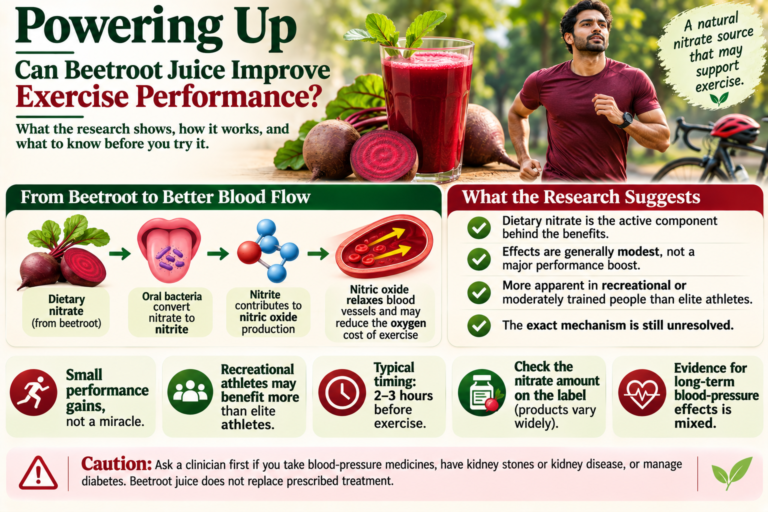
When sports scientists first suggested that drinking plain beetroot juice could help athletes ride faster and last longer, the idea…
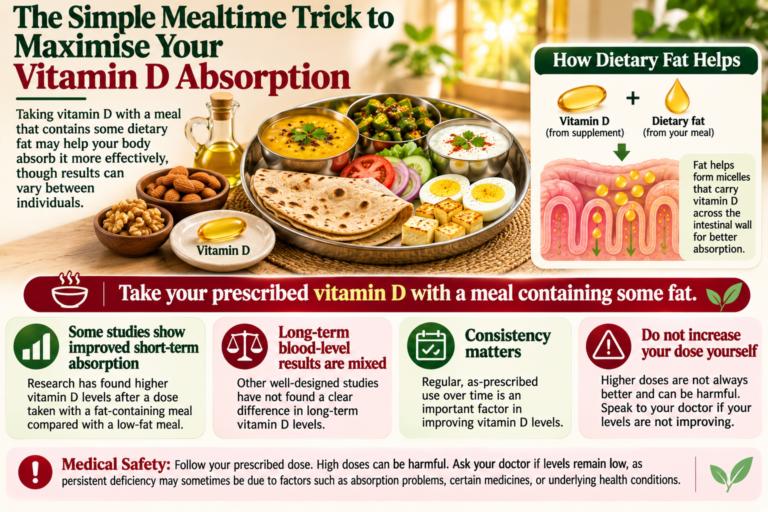
Few health routines feel more frustrating than diligently taking a prescribed vitamin D supplement for months, only to return to…
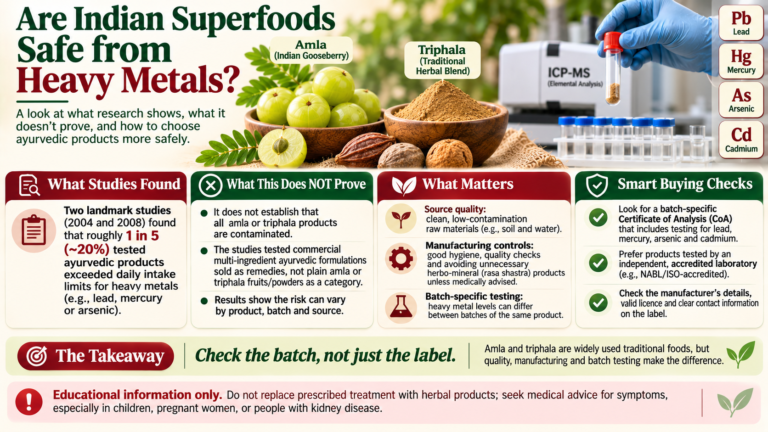
For generations, amla and triphala have held a trusted place in Indian kitchens and medicine cabinets. Whether taken as a…
