

Rethinking Vitamin D
Vitamin D is currently among the most tested and supplemented nutrients in modern medicine. Millions of adults regularly request blood…
Blending Whole Berries Beats Pressing Them
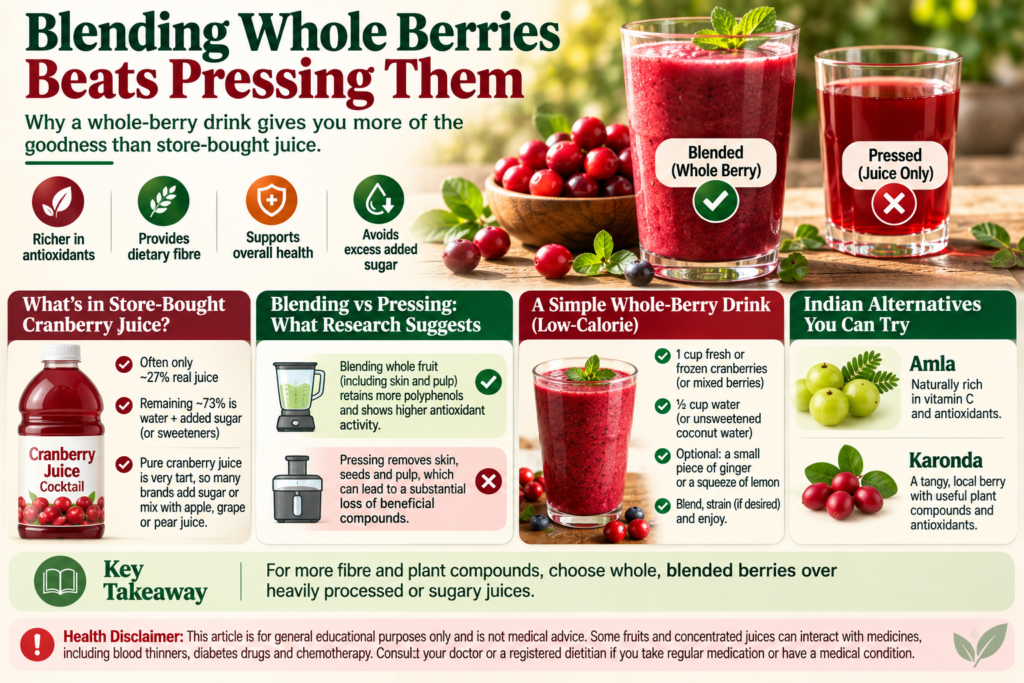
Berries regularly rank among the healthiest fruits you can add to your diet, packed with antioxidants, vitamin C, and dietary fibre. When looking for a convenient way to enjoy them, grabbing a bottle of cranberry juice from the supermarket shelf seems like a smart choice. However, a closer look at the label reveals a surprising reality: many popular commercial berry drinks are mostly sweetened water with just a splash of actual fruit.
Even when you buy pure, unsweetened juice, the manufacturing process strips away the skin and pulp, leaving behind valuable dietary fibre and a significant portion of beneficial plant compounds. In this article, we look at what is really in store-bought cranberry juice, explore what research says about blending whole fruit versus pressing it into juice, provide a simple recipe for making a low-calorie whole-berry drink at home, and examine accessible local alternatives like amla and karonda for Indian households.
Health Disclaimer: This article is for general educational purposes only and does not constitute medical advice. Some foods and herbal fruits can interact with prescription medications, including blood thinners, diabetes drugs, and chemotherapy treatments. Always consult your doctor or a registered dietitian before adding concentrated fruit drinks to your routine if you take regular medication or have an underlying medical condition.
What Is Really in Shop-Bought Cranberry Juice
If you pick up a typical bottle of cranberry juice at the grocery store, chances are you are holding what the label describes as a “cranberry juice cocktail” or “cranberry juice drink.” Because pure cranberry juice is naturally intense, astringent, and tart, manufacturers dilute it heavily. Major commercial brands in the United States and globally state on their labels that these drinks contain only about 27% real fruit juice. The remaining 73% consists of added water and high concentrations of sugar, high-fructose corn syrup, or artificial sweeteners.
It helps to distinguish between three common commercial offerings:
Indian shelf products vary widely in their formulations. Some imported or domestic brands offer pure juices, while many popular options rely heavily on added sugars and fruit nectars. Checking nutrition labels for “added sugars” and verifying the exact juice percentage is essential if you want to understand how refined carbohydrates and sugar affect Indian diets.
Juicing vs Blending: What the Research Shows
When deciding between a glass of pressed juice and a blended whole-fruit drink, processing methods play a major role in determining the final nutritional content.
What Commercial Processing Does to Cranberries
Industrial cranberry juice processing involves several steps, including mechanical crushing, blanching, pressing, and high-heat pasteurisation. During pressing, the liquid is separated from the pomace—the solid residue consisting of skins, seeds, and pulp.
A 2011 study published in the Journal of Agricultural and Food Chemistry tracked cranberry polyphenols throughout commercial juice processing. The researchers observed that pressing caused the single largest loss of total polyphenols because many of these compounds are bound to the skin and structural cell walls. However, the study also noted that cranberry polyphenols were relatively stable overall compared to those in softer berries.
Complementing these findings, a pilot-scale extraction study hosted by the Cranberry Institute demonstrated that commercial juice yields of 47% to 58% captured only between 18% and 50% of the total bioactives present in the original whole fruit. While processing does not destroy all nutrients, discarding the pomace leaves a substantial share of phytonutrients behind.
Blending vs Pressing in Other Fruits
The idea that blending whole fruit yields higher phenolic content and stronger lab-measured antioxidant activity compared to pressing comes largely from a 2014 study published in Preventive Nutrition and Food Science. That research evaluated typical Korean kernel fruits—specifically apples, pears, persimmons, and mandarin oranges.
The researchers found that juices made by blending whole fruits contained higher total phenolic concentrations and demonstrated greater antioxidant capacity than juices pressed only from the fruit flesh. However, the study also revealed a nuance: pressed juices of apple, pear, and mandarin retained higher levels of vitamin C than their blended counterparts.
While these findings suggest that retaining fruit skins through blending offers nutritional advantages, two important caveats apply. First, the study tested tree fruits rather than berries, so the results cannot be generalized directly to cranberries. Second, higher antioxidant capacity measured in a laboratory assay does not automatically translate to superior health outcomes in the human body. To understand why test-tube results require careful interpretation, read our detailed analysis on why lab antioxidant rankings can mislead.
How to Make a Whole-Berry Drink at Home
Blending whole cranberries allows you to consume the entire fruit, including its skin and fiber, without the massive sugar load of commercial juice cocktails. Because fresh cranberries are extremely tart, preparing a balanced drink requires an adequate liquid base and a sweetening approach tailored to your preference.
Basic Whole-Cranberry Recipe
Preparation Tips: Use unsweetened fresh or frozen cranberries rather than dried cranberries, which almost always contain added sugar and oil coatings. Start with a modest portion of cranberries to test your tolerance for tartness, and drink the mix promptly after blending to minimize exposure to air.
Recipe Variations
A Note on Sweeteners, Including Erythritol
Many low-calorie berry recipes recommend zero-calorie sugar alcohols like erythritol to counteract natural acidity. While erythritol is widely used in sugar-free products, recent clinical research highlights important considerations regarding its safety profile.
A major 2023 study published in Nature Medicine (Witkowski et al.) examined the relationship between circulating erythritol levels and cardiovascular health. Researchers observed that higher blood levels of erythritol were associated with an increased risk of major adverse cardiovascular events, including heart attack and stroke, over a three-year follow-up period. In vitro and animal models within the same study indicated that erythritol enhanced platelet reactivity and clot formation potential.
Building on these findings, a 2024 intervention study involving 20 healthy volunteers demonstrated that consuming a drink sweetened with erythritol led to a significant increase in blood platelet reactivity compared to a drink containing glucose.
It is important to view these studies in context. The initial observational data involved individuals already at elevated risk for cardiovascular disease, and small short-term trials require further validation before clinical guidelines change. Regulatory agencies have not withdrawn erythritol’s safety approval, but study authors have called for urgent long-term research.
If you prefer to sweeten your whole-berry drink, consider neutral alternatives:
Is a Blended Whole-Fruit Drink Better Than Juice?
Choosing a blended whole-fruit beverage over clear processed juice offers clear nutritional benefits backed by broad dietary consensus. By incorporating the entire berry, blending retains 100% of the fruit’s dietary fibre and skin-bound nutrients while avoiding the high concentrations of refined sugar found in store-bought cocktails.
A serving made with 50 grams of raw cranberries provides approximately 23 calories (raw cranberries contain about 46 calories per 100 grams) alongside essential vitamins and trace minerals. By comparison, a 250 ml glass of commercial cranberry cocktail can deliver over 110 calories, predominantly from added sugars.
Adopting whole blended beverages aligns closely with broader dietary patterns focused on whole-food plant-rich eating. However, consumers should separate basic beverage choices from targeted medical claims. While clear cranberry juice is frequently discussed in relation to urinary tract health, drinking blended cranberries should be viewed as a sensible dietary swap rather than a medical cure.
Cranberries in India: Cost, Access and Local Options
For health-conscious consumers in India, incorporating cranberries into a daily diet presents distinct logistical and financial challenges.
Imported Berries and Sweetened Dried Cranberries
Fresh cranberries are not widely cultivated in India and are imported primarily from North America. As a result, fresh or plain frozen cranberries are expensive and limited to select urban gourmet stores.
Conversely, dried cranberries are widely available in Indian supermarkets and online platforms. However, virtually all commercial dried cranberries are infused with sugar syrup or fruit juice concentrates and coated in sunflower oil to preserve softness, making them more akin to candied fruit than a low-calorie health food. Always check the ingredient list carefully before purchasing dried berries.
Amla: A Well-Studied Local Alternative
For an affordable, locally available alternative rich in polyphenols and vitamin C, Indian gooseberry (amla) is an outstanding substitute. Amla is exceptionally rich in natural ascorbic acid, with published literature reporting values ranging from 193 mg to over 700 mg of vitamin C per 100 grams depending on fruit variety and growing conditions.
A study published in the Journal of Ethnopharmacology (Scartezzini et al., 2006) investigated the antioxidant properties of amla fruit. The researchers found that vitamin C accounted for roughly 45% to 70% of amla’s overall antioxidant activity, with the remainder contributed by complex polyphenols, tannoids, and gallic acid derivatives.
While amla has a distinct phytochemical profile rather than being a direct match for cranberries, its exceptional nutrient density makes it a practical, highly accessible option for Indian households. Discover why amla is a safer antioxidant pick than exotic extracts when building a daily routine.
Karonda
Another native fruit worth considering is karonda (Carissa carandas). Commonly grown across tropical and subtropical regions of India, karonda is a small, sour berry-like fruit traditionally used in pickles and preserves.
Published nutritional analyses of karonda show varying ascorbic acid levels depending on fruit maturity. Ripe karonda typically yields between 5 mg and 17 mg of vitamin C per 100 grams (similar to raw cranberries, which contain about 14 mg per 100 grams), while immature green fruit can contain up to 50 mg per 100 grams. Karonda serves as an economical, tart local alternative suitable for blending into fresh summer drinks without relying on costly imports.
Who Should Be Careful
While whole fruit drinks offer clear nutritional value, certain individuals should exercise caution before making concentrated fruit beverages a regular habit.
Frequently Asked Questions
Is 100% store-bought cranberry juice healthy?
100% pure cranberry juice contains natural antioxidants and lacks refined sugar, but it is extremely tart and high in natural acidity. Many commercial 100% juice options are blended with sweet apple or grape juices, which increases total sugar content. Furthermore, pressed juice discards the dietary fibre found in the whole fruit.
Is blending fruit better than juicing it?
Blending is generally preferable for blood sugar management and satiety because it retains the fruit’s structural cell walls and dietary fibre. Juicing extracts liquid while leaving behind the fiber-rich pomace where many insoluble antioxidants reside.
Can I use amla instead of cranberries in smoothies?
Yes. Fresh or frozen amla can be blended with water and a natural sweetener to create a nutrient-dense, high-vitamin-C drink. Because amla is very sour and astringent, start with a small piece (half a fruit) per serving.
Is erythritol safe to use as a sweetener?
Erythritol remains approved by food safety regulators globally. However, studies published in 2023 and 2024 have linked elevated blood erythritol levels to increased cardiovascular event risks and enhanced platelet reactivity. Individuals with existing heart conditions or elevated clot risks may want to consult their physician or choose alternative sweetening options.
Key Takeaways
References
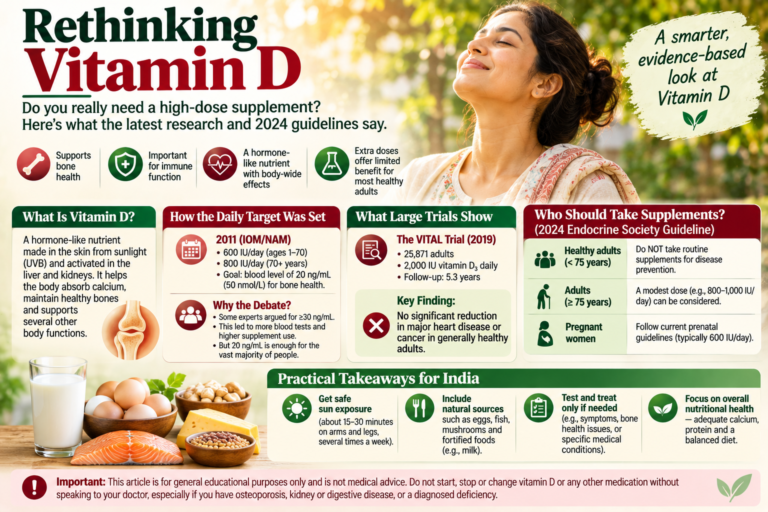
Vitamin D is currently among the most tested and supplemented nutrients in modern medicine. Millions of adults regularly request blood…
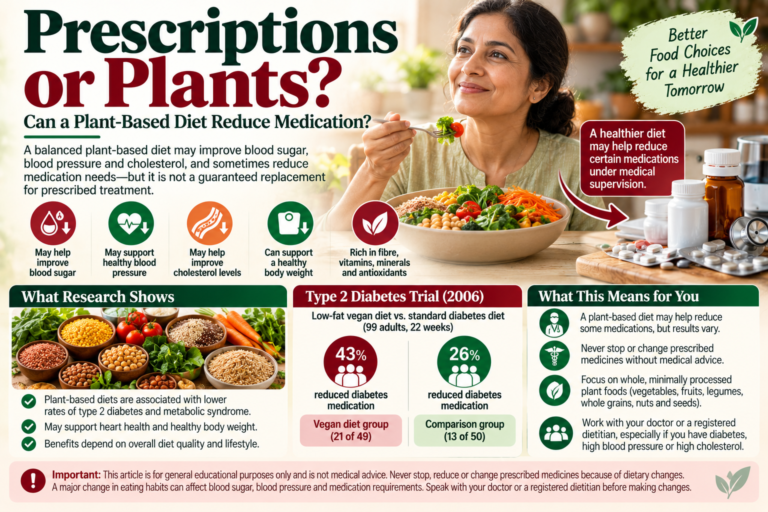
If you have type 2 diabetes, high blood pressure or high cholesterol, you may have wondered whether changing what you…

Eggs are a familiar part of everyday life in India. They are boiled for breakfast, turned into bhurji, added to…
