

Do Jal Neti Safely
An Ancient Practice Backed by Modern Medicine Using a neti pot to flush the nasal passages with salt water is…
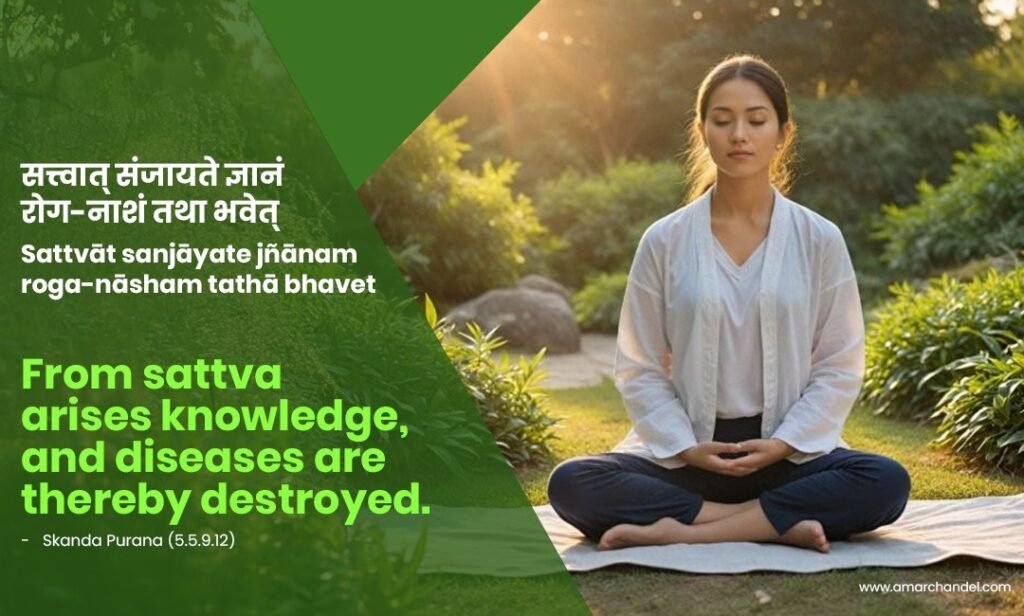
Sattvāt sanjāyate jñānaṁ roga-nāsham tathā bhavet
सत्त्वात् संजायते ज्ञानं रोग-नाशं तथा भवेत्
Source: Skanda Purana (5.5.9.12)
The verse is a profound insight into the correlation between cultivating sattva (purity, balance) and its effects on physical, mental, and spiritual health. Let’s explore its meanings, implications, and applications in detail.
1. सत्त्वात् (Sattvāt): Derived from sattva, this refers to the quality of purity, balance, harmony, and truthfulness as described in the Trigunas (three fundamental qualities of nature in Hindu philosophy: sattva, rajas, tamas).
2. संजायते (Sanjāyate): Means “arises” or “is born.”
3. ज्ञानं (Jñānaṁ): Refers to knowledge, wisdom, or awareness. It implies both worldly knowledge and higher spiritual wisdom.
4. रोग-नाशं (Roga-nāsham): Refers to the destruction or elimination of diseases. Roga means disease or affliction, and nāsha means annihilation.
5. तथा भवेत् (Tathā bhavet): Translates to “so it happens” or “thus it becomes.”
This verse is rooted in the ancient Indian concept of health and wellness, which encompasses the integration of physical, mental, and spiritual dimensions. It highlights the idea that cultivating sattva not only leads to enlightenment and wisdom but also eradicates diseases by harmonising the body and mind.

1. Sattva represents purity, clarity, and harmony.
2. Rajas symbolizes activity, passion, and restlessness.
3. Tamas embodies inertia, ignorance, and darkness.
A sattvic lifestyle is considered ideal in Ayurveda and Yoga, as it promotes balance and well-being while paving the way for spiritual growth.

Modern science echoes the wisdom of this verse by showing how purity in diet, lifestyle, and thought processes impacts both knowledge and health:
1. Nutrition and Cognition: Studies reveal that a clean, plant-based diet improves cognitive function and mental clarity.
2. Stress Reduction: Meditation and mindfulness practices lower cortisol levels, reducing the risk of stress-related diseases.
3. Disease Prevention: Antioxidant-rich foods and regular physical activity prevent chronic illnesses such as diabetes, heart disease, and cancer.
4. Gut-Brain Connection: A sattvic diet supports a healthy gut microbiome, which is crucial for mental and emotional well-being.
Role of Sattva in Liberation (Moksha)
In the Upanishads and the Bhagavad Gita, sattva is described as the bridge to transcendence:
• Sattva helps overcome the bondage of rajas (attachment) and tamas (ignorance).
• It prepares the individual for higher spiritual practices, such as meditation and devotion.
Role of Sattva in Karma Yoga
Performing actions selflessly, with a sattvic attitude, leads to freedom from the cycle of karma (cause and effect).
Metaphysical Implications
Diseases (roga) are not just physical afflictions but also represent spiritual ignorance or delusion. The annihilation of roga through sattva symbolises the removal of these veils of ignorance, allowing the soul to shine in its true essence.
Examples from History and Mythology
1. Rishi Patanjali: The proponent of Yoga Sutras emphasised the role of sattva in achieving samadhi (the ultimate state of meditation and enlightenment).
2. Lord Buddha: His teachings of the Middle Path resonate with sattva, advocating balance and moderation in all aspects of life.
3. Saints and Sages: Indian saints like Adi Shankaracharya and Swami Vivekananda followed sattvic principles, embodying wisdom and physical vitality.
The verse holds timeless wisdom that is increasingly relevant today:
• Lifestyle Disorders: Modern lifestyles, dominated by rajas (stress) and tamas (unhealthy habits), lead to chronic diseases. Cultivating sattva can counteract these tendencies.
• Mental Health Crisis: Anxiety, depression, and burnout are rampant. Sattvic practices offer a natural remedy.
• Environmental Sustainability: A sattvic diet and lifestyle promote eco-consciousness by advocating minimalism and plant-based living.
1. Dietary Choices:
• Prioritise fresh, organic produce.
• Avoid processed, fried, and overly spicy foods.
2. Mindfulness Practices:
• Practice meditation daily.
• Engage in gratitude journaling.
3. Physical Activity:
• Incorporate yoga and gentle exercises.
4. Mental Purity:
• Avoid negative media and toxic relationships.
• Focus on uplifting books, music, and conversations.
5. Service and Compassion:
• Engage in acts of kindness and charity.
The verse “सत्त्वात् संजायते ज्ञानं रोग-नाशं तथा भवेत्” is a reminder that cultivating purity and balance through sattva is not just a path to health but also a journey toward enlightenment. It bridges ancient wisdom with modern science, offering a holistic blueprint for living a harmonious and fulfilling life. By aligning ourselves with the principles of sattva, we can achieve clarity of thought, physical vitality, and spiritual awakening.

An Ancient Practice Backed by Modern Medicine Using a neti pot to flush the nasal passages with salt water is…

For millions of women who have completed breast cancer treatment, the transition into survivorship is marked by both relief and…

The performance boost many people attribute to a daily shot of beetroot juice does not depend solely on what is…
