

Cut Trans Fats to Protect Breast Cancer Survivors
For millions of women who have completed breast cancer treatment, the transition into survivorship is marked by both relief and…
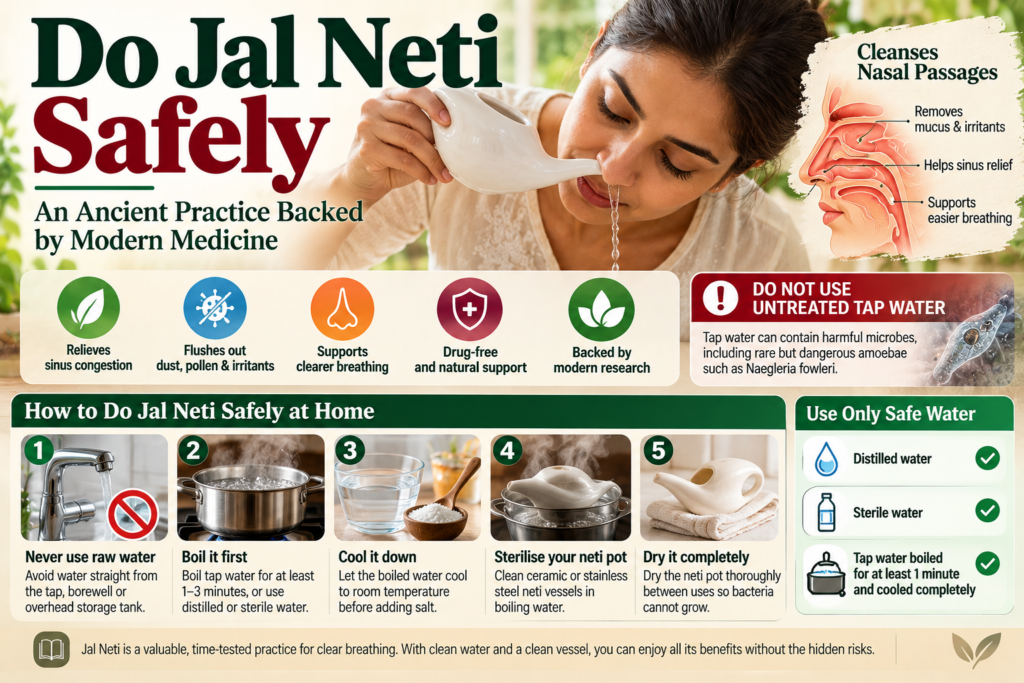
Using a neti pot to flush the nasal passages with salt water is an ancient practice. Today it also enjoys significant support within modern evidence-based medicine.
Over the years, medical literature has repeatedly highlighted nasal irrigation as a low-cost option for relieving certain nasal and sinus symptoms. Saline nasal irrigation may help remove excess mucus and irritants, although results can vary depending on the condition and the individual.
Jal Neti is also associated with traditional yoga and daily wellness practices. To explore how these practices fit into everyday habits, read our guide to daily routines and the traditional practice of Dinacharya.
For people with mild, short-term nasal discomfort, saline irrigation may provide symptom relief. However, it should be performed correctly, with particular attention to water safety and equipment hygiene.
Disclaimer: This article is for general educational purposes only and does not constitute medical advice. Consult a qualified healthcare professional if you have persistent sinus symptoms, recurrent infections or concerns about whether nasal irrigation is suitable for you.
Despite its potential benefits, nasal irrigation equipment can become contaminated if it is not cleaned and maintained properly.
When plastic bottles or neti pots are reused without adequate cleaning, microorganisms may remain on their inner surfaces. Some bacteria can form biological layers known as biofilms, which can be difficult to remove through an inadequate rinse.
Using contaminated equipment may introduce unwanted microorganisms into the nasal passages. This makes cleaning and drying the irrigation device an essential part of a safe nasal-cleansing routine.
Always follow the manufacturer’s cleaning instructions. Do not boil or microwave a vessel unless the manufacturer confirms that the material is suitable for that method. Allow the equipment to dry completely before storing it.
One of the most important safety considerations in nasal irrigation is the source of the water itself.
Water that is safe to drink is not necessarily safe to introduce into the nasal passages. Certain microorganisms can survive in untreated water and, in extremely rare cases, cause serious infections when contaminated water enters the nose.
For this reason, never assume that clear-looking tap water or household storage-tank water is suitable for nasal irrigation.
Certain free-living microscopic organisms, including Naegleria fowleri and species of Acanthamoeba, can cause severe infections under particular circumstances.
In extremely rare cases, contaminated water entering the nose has been associated with life-threatening infections affecting the brain. Although these infections are uncommon, the potential consequences make appropriate water preparation essential.
For nasal irrigation, use only:
Never use untreated tap water, borewell water or water taken directly from a household storage tank.
In India, nasal cleansing known as Jal Neti has been practised for centuries as part of traditional yoga and personal hygiene routines. However, water quality and treatment can vary between locations and sources.
Municipal supplies, private borewells and household storage tanks may differ in their treatment and maintenance. Water that appears clean should not automatically be considered safe for nasal rinsing.
Jal Neti should therefore be approached with the same attention to hygiene as other personal wellness practices. Our guide to proper breathing and body-mind control explores another aspect of traditional wellness and respiratory awareness.
Follow these steps to reduce the risks associated with nasal irrigation.
These precautions are important for anyone practising nasal irrigation, whether as part of a traditional yoga routine or to manage nasal symptoms.
Jal Neti is one traditional practice that some people incorporate into their daily routines. It should not, however, be treated as a cure for every respiratory condition or as a necessary practice for everyone.
Maintaining wellbeing also involves appropriate physical activity, sufficient sleep, a balanced diet and good personal hygiene. For a broader perspective on health and everyday wellbeing, read our article on health as the foundation of life’s pursuits.
The key is to understand both the potential benefits and the limitations of traditional practices while making informed decisions about personal health.
Jal Neti may help some people manage nasal symptoms when performed appropriately. However, safe water preparation, correct saline concentration and proper equipment hygiene are essential.
Always use distilled, sterile or appropriately boiled and cooled water. Clean the irrigation device according to its manufacturer’s instructions, allow it to dry completely and seek professional advice if you have persistent symptoms or concerns about nasal irrigation.
With appropriate precautions, readers can better understand how Jal Neti fits into traditional wellness practices while prioritising safety.

For millions of women who have completed breast cancer treatment, the transition into survivorship is marked by both relief and…

The performance boost many people attribute to a daily shot of beetroot juice does not depend solely on what is…

When researchers evaluated the total antioxidant levels of thousands of foods and botanical substances, a little-known Amazonian tree sap, rather…
