

Smart Daily Strategies for Securing Vitamin B12
When it comes to vitamin B12, the biggest obstacle to maintaining healthy levels is rarely how much you consume. The…

For decades, pharmaceutical research has pursued the dream of “magic bullets”—single molecules aimed at single disease targets. But chronic illnesses like diabetes, cancer, and autoimmune disorders rarely operate through linear pathways. Instead, they are governed by complex biological networks with redundant signalling loops. This explains why drugs targeting a single receptor or cytokine often fail in late-stage trials for conditions like inflammatory bowel disease and rheumatoid arthritis. Modern network pharmacology recognises that blocking one node in the web often causes another pathway to compensate (NCBI).
This has given rise to interest in polypharmacology—drugs that act on multiple targets at once. Yet synthesising such “promiscuous drugs” in the lab is costly and patent-driven.
In contrast, plants have always been promiscuous chemists. Spices, fruits, pulses, and vegetables harbour dozens—sometimes hundreds—of bioactive compounds that gently modulate multiple molecular switches. This natural multitargeting confers cumulative health benefits, aligning with time-tested principles of holistic healing.
Take aspirin, originally derived from willow bark. Today it is recognised not just as a pain reliever but also as an antiplatelet agent, a protector against preeclampsia, and even a cancer-preventive compound—all due to its diverse mechanisms of action (NCBI).
Or consider turmeric (curcumin)—a cornerstone of Indian kitchens and Ayurvedic medicine. Far from being a one-trick anti-inflammatory agent, curcumin modulates enzymes, transcription factors, cytokines, and growth factors across multiple systems. A 2023 meta-analysis found curcumin supplementation significantly improved diastolic blood pressure, vascular stiffness, and endothelial function (PubMed). Another 2022 review confirmed its role in antioxidant defense, NF-κB inhibition, renin–angiotensin modulation, and anti-fibrotic pathways in the context of hypertension and cardiovascular disease (PubMed). Importantly, India’s daily dietary turmeric intake—often 2–2.5 grams—has demonstrated a remarkable safety profile over centuries (NCBI).
Despite this evidence, regulatory systems like the U.S. FDA remain geared toward single-compound approvals. Botanical mixtures face skepticism. Yet progress is emerging: in 2006, the FDA approved sinecatechins (Polyphenon® E)—a 15% green tea extract—for treating genital and perianal warts. This marked the first approval of a botanical prescription drug in the U.S. (Wikipedia). Clinical trials showed higher wart clearance and lower recurrence rates compared to standard treatments (PMC).

Thus, while the pharmaceutical world continues to chase synthetic polypharmacology, nature’s promiscuous plants have been quietly practicing it all along—safer, cheaper, and culturally rooted in traditions like Ayurveda.
References
1. Network pharmacology & multi-targeting in chronic disease: NCBI
2. Aspirin’s multi-system benefits: NCBI
3. Curcumin & cardiovascular health meta-analysis (2023): PubMed
4. Curcumin mechanisms in hypertension & metabolic disorders (2022): PubMed
5. Curcumin safety & traditional intake in India: NCBI
6. FDA approval of sinecatechins (Polyphenon® E): Wikipedia
7. Clinical efficacy of sinecatechins for HPV warts: PMC
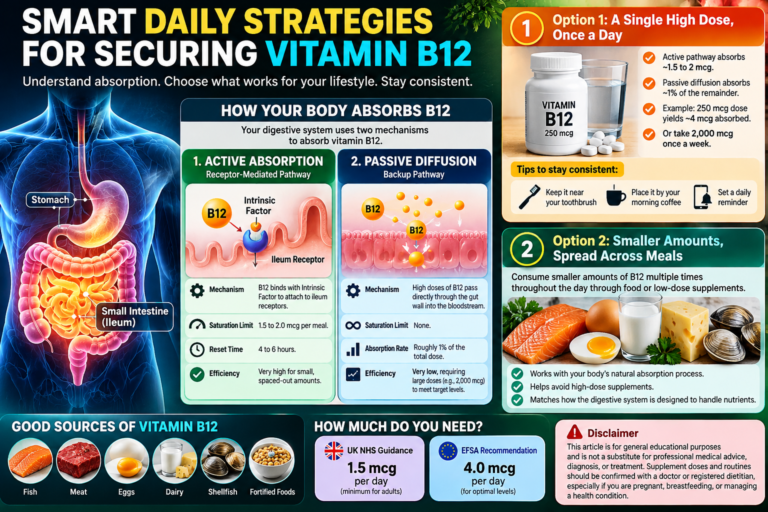
When it comes to vitamin B12, the biggest obstacle to maintaining healthy levels is rarely how much you consume. The…

Medical Disclaimer: This article is for general educational purposes and is not medical or nutritional advice. Research on antioxidant activity…
Medical Disclaimer: The information provided in this article is for educational and informational purposes only and is not intended as…
