
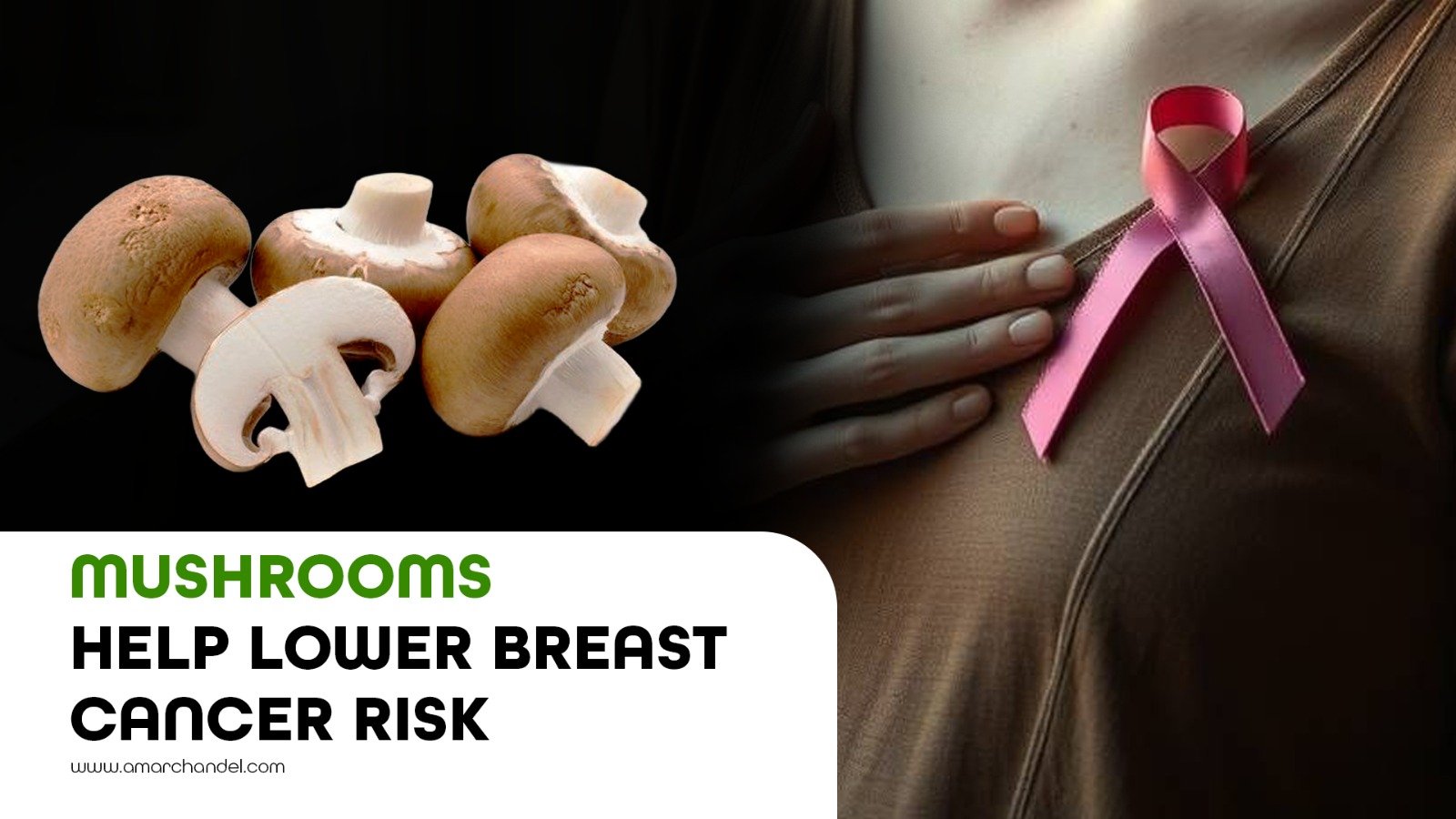
In recent years, scientists have been exploring a fascinating idea—that something as simple and affordable as mushrooms might play a role in reducing the risk of breast cancer. While this may sound surprising, the explanation lies in how certain cancers grow and how some natural compounds in foods may interfere with that process.
Many breast cancers depend on a hormone called estrogen to grow. The body produces estrogen naturally, but cancer cells can also make their own supply using an enzyme called aromatase. This enzyme becomes an important target in cancer treatment, and in fact, several breast cancer medicines work by blocking it.
Researchers discovered that common white button mushrooms—widely available—contain natural compounds that can slow down this enzyme. Early laboratory studies showed that mushroom extracts could reduce aromatase activity and slow the growth of breast cancer cells in controlled conditions.
In simple terms, mushrooms seemed to interfere with the cancer cells’ ability to “fuel” themselves with estrogen.
Later studies went a step further. Instead of just testing enzyme activity, scientists observed actual breast cancer cells in the lab. When these cells were given the raw material to make estrogen, they grew rapidly. But when mushroom extracts were added, this growth slowed down significantly—sometimes nearly returning to normal levels.
This raised an obvious question—does eating mushrooms have a similar effect in real life?
More recent population-based studies provide some encouraging clues. Observational research, including studies from Asian populations, has found that women who regularly consume mushrooms may have a lower risk of breast cancer compared to those who rarely eat them.

However, it is important to understand what this means—and what it does not mean. These studies show an association, not a guarantee. Mushrooms are not a cure for cancer, and they cannot replace medical treatment. But they may be one helpful piece in a larger lifestyle pattern that supports better health.
Another advantage is that mushrooms bring multiple benefits beyond this potential anti-estrogen effect. They are low in calories, provide fibre, and contain compounds that support immune function. Some varieties also provide vitamin D when exposed to sunlight, which is often low in Indian populations.
But how much is useful? Early laboratory estimates suggested that even small daily amounts—equivalent to a handful of mushrooms—might have biological effects. Still, human studies have not defined an exact “dose,” and it is better to think in terms of regular inclusion rather than specific numbers.
The bigger takeaway is not about one “superfood,” but about patterns. Diets rich in vegetables, fruits, legumes, and whole foods consistently show protective effects against many chronic diseases, including certain cancers. Mushrooms can be part of that broader picture, supporting a holistic healing approach that focuses on nourishing the body naturally and promoting overall well-being.
So rather than seeing mushrooms as a miracle solution, it is more accurate—and more useful—to see them as a small but meaningful ally in a healthier lifestyle.
References
- Grube BJ et al. White button mushroom phytochemicals inhibit aromatase activity and breast cancer cell proliferation. Journal of Nutrition. 2001.
- Chen S et al. Anti-aromatase activity of phytochemicals in white button mushrooms. Cancer Research. 2006.
- Additional epidemiological evidence from observational studies on mushroom intake and breast cancer risk (various population studies, including Asian cohorts).