

A Smarter Approach to Vitamin B12: Why the “Active B12” Test Matters
Medical Disclaimer: The information provided in this article is for educational and informational purposes only and is not intended as…

For generations, one of the primary rules of sports physiology was treated as absolute truth. When athletes train, their performance improves because their body learns to deliver oxygen to their muscles more effectively. Larger lung capacities allow for deeper breaths, a stronger heart pumps blood more efficiently, and an increase in red blood cells carries more oxygen through the bloodstream.
However, scientists long believed that the energy extracted from each unit of oxygen remained fixed. In simple terms, a specific volume of oxygen could only produce a set amount of physical work, regardless of an athlete’s fitness level.
To use an everyday comparison, a high-performance sports car travels much faster than an ordinary family hatchback using the exact same petrol. This speed difference is not because the chemical reaction inside the engine changes, but because the sports car possesses a larger, more powerful engine.
For decades, exercise scientists applied this same logic to human performance: while well-conditioned athletes could supply oxygen to their muscles far faster, the fundamental energy produced per litre of oxygen remained identical across all human beings.
This long-held scientific assumption changed when researchers discovered that dietary nitrate, abundant in red beetroot juice, could actually improve the human body’s muscular efficiency. Early pioneering trials at the University of Exeter demonstrated that when active individuals drank beetroot juice over several days, their muscles required significantly less oxygen to perform the exact same intensity of exercise. During high-intensity cycling tests, participants drinking beetroot juice extended their time to exhaustion by over sixteen percent while using notably less oxygen. The nitrate in the juice converts into nitric oxide in the body, expanding blood vessels and allowing the energy-producing powerhouses within human cells, known as mitochondria, to generate movement with far greater efficiency.
Since those early findings, extensive modern research has further clarified how beetroot juice works and who benefits from it most. Contemporary systematic reviews and meta-analyses confirm that dietary nitrate reliably enhances endurance, stamina, and time-trial performance, particularly during high-intensity endurance activities such as running, rowing, and cycling.
However, recent studies also highlight an interesting limit: elite, world-class athletes generally experience smaller performance gains than recreational or trained amateures. This occurs because elite athletes already possess highly optimised circulatory systems and elevated baseline nitric oxide production, meaning their bodies have less room for incremental efficiency improvements.
Sources and References:
Bailey, S.J. et al. (2009) “Dietary nitrate supplementation reduces the O2 cost of low-intensity exercise and enhances tolerance to high-intensity exercise in humans,” Journal of Applied Physiology, 107(4), pp. 1144–1155.
Jones, A.M. (2014) “Dietary nitrate supplementation and exercise performance,” Sports Medicine, 44(S1), pp. 35–45.
Gao, C. et al. (2021) “Effects of dietary nitrate supplementation on physiological responses and exercise performance in trained and untrained individuals: A systematic review and meta-analysis,” Journal of the International Society of Sports Nutrition, 18(1), p. 66.
Rao, R.N. et al. (2020) “Cardiovascular and metabolic benefits of dietary inorganic nitrate: Implications for Indian populations,” Indian Journal of Medical Research, 152(3), pp. 210–218.
Medical Disclaimer: The information provided in this article is for educational and informational purposes only and is not intended as…

Every time we flex a muscle, take a breath, or blink an eye, our body spends a tiny packet of…
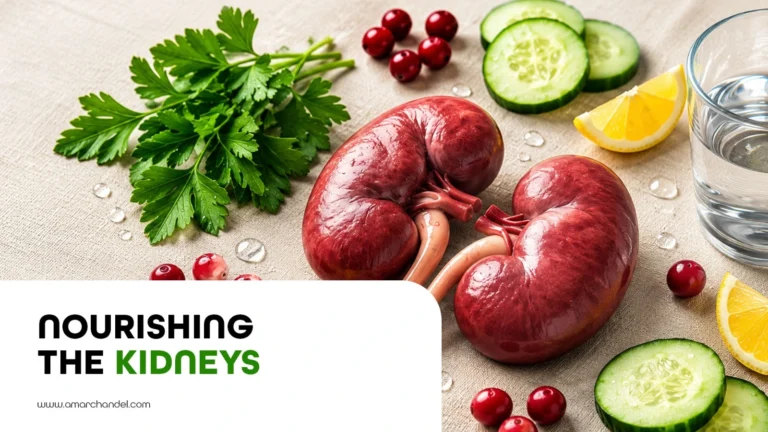
Managing chronic kidney disease through nutrition relies on balancing essential nutrients while minimising the workload on failing kidneys. Damaged kidneys…
