

The Red Meat Dilemma
Can everyday dishes like a fragrant mutton curry or weekend breakfast sausages influence how long we live? For decades, dietary…

When we think of heart health, our minds usually jump to cutting back on salt, lacing up running shoes, or taking daily prescriptions. Yet one of the body’s most effective tools for opening up blood vessels and relaxing arterial walls depends on a partnership: a natural compound found in leafy vegetables interacting with the microscopic bacteria living right on your tongue.
When you consume dietary nitrate from vegetables, your body converts it into nitrite and subsequently into nitric oxide, a signaling molecule that tells your blood vessels to dilate and relax. But what does the scientific literature actually say about dietary nitrates and blood pressure? Which vegetables deliver the highest concentration of this compound? And how can Indian kitchens, where hypertension now affects a staggering 35.5% of the adult population, best make use of local greens like amaranth, spinach, and mustard leaves?
This guide breaks down the nitrate to nitric oxide pathway, evaluates clinical trial results alongside large population studies, ranks nitrate dense greens, and provides safe, practical ways to prepare them without losing their nutritional value. These everyday nutrition choices also connect with Amarchandel’s guide to simple vegetables that help the liver fight everyday toxins.
This article is for general educational purposes only and does not constitute medical advice. Do not stop or alter your blood pressure medications, nitrate drugs prescribed for angina, or any other medical treatment based on the information presented here. Certain leafy greens contain high levels of vitamin K, which can interfere with blood thinners like warfarin, or high oxalates, which can affect individuals with kidney stones. Always consult your physician before making significant changes to your diet.
The process that transforms a serving of leafy greens into a blood vessel relaxing agent follows a well-documented multi-step physiological pathway:
The pathway moves from dietary nitrate in the gut to concentration in saliva, conversion by oral bacteria into nitrite, and finally systemic conversion into nitric oxide to dilate blood vessels.
Nitric Oxide acts as a fundamental signaling molecule. It diffuses into the smooth muscle cells surrounding your blood vessels, triggering them to relax. This relaxation increases the diameter of the vessel (vasodilation), which reduces resistance to blood flow and helps maintain lower systemic blood pressure.
It is worth noting that your body also produces nitric oxide internally via the L-arginine and nitric oxide synthase (NOS) pathway. However, as we age or develop endothelial dysfunction, this internal pathway often becomes less efficient. The dietary nitrate-nitrite-nitric oxide pathway offers a complementary, food-derived route to sustain nitric oxide availability. A broader look at keeping your lungs healthy also highlights how daily habits can support respiratory health.
Because the oral microbiome plays a critical functional role in this chain, habits that disrupt tongue bacteria, such as using strong antibacterial mouthwashes, can significantly blunt the conversion of nitrate to nitrite, temporarily reducing the blood pressure benefits of nitrate-dense meals.
While the physiological mechanism of nitric oxide is clear, clinical research on eating nitrate-rich foods shows a nuanced picture depending on the study type, dosage, and participant health.
Clinical interest in dietary nitrates surged following targeted interventions. A widely cited randomized controlled trial by Kapil et al. (2015) evaluated 68 adults with hypertension. Participants consumed either 250 mL of nitrate-rich beetroot juice daily or a nitrate-free placebo juice for 4 weeks. The nitrate group experienced sustained blood pressure reductions of approximately 8 mmHg systolic and 4 mmHg diastolic, alongside improvements in vascular function.
However, broader clinical trials present mixed findings:
These varying outcomes indicate that blood pressure response to dietary nitrate depends heavily on individual baseline blood pressure, age, metabolic health, the specific food matrix consumed, and the total dose of nitrate delivered.
Observational data looking at whole diets across thousands of people over many years show consistent cardiovascular associations.
The landmark Danish Diet, Cancer, and Health Study (Bondonno et al., 2021) followed 53,150 participants over 23 years. It revealed that individuals consuming higher amounts of vegetable-derived nitrate (around 60 to 140 mg daily) had:
Crucially, the protective benefits in this study plateaued at around 60 mg of dietary nitrate per day, an amount easily achieved by eating approximately one cup of raw leafy greens daily.
While long-term observational data link green vegetable intake with better heart outcomes, randomized clinical trials have not established that dietary nitrate supplements or nitrate-rich diets directly prevent heart attacks or strokes. Furthermore, researchers cannot isolate nitrate as the sole protective agent. Green vegetables are rich in potassium, magnesium, vitamin K, folate, fiber, and polyphenols, all of which independently support arterial health. Their role in a varied diet complements the discussion of hidden chemicals in our kitchens and mindful everyday food choices.
Many popular health articles highlight beetroot as the undisputed champion of nitric oxide production. While beetroot is indeed a rich source, plant science database classifications show that leafy green vegetables consistently top the nitrate content charts.
Botanical classifications categorise vegetables by their average inorganic nitrate content per 100 grams of fresh weight:
Rocket (arugula) consistently registers some of the highest recorded values, occasionally reaching up to 480 mg per 100 g fresh weight. Red beetroot typically averages around 146 mg to 250 mg per 100 g. Thus, while beetroot juice is a convenient concentrated source for clinical trials, everyday leafy greens deliver equivalent or superior nitrate density per calorie.
It is important to treat these rankings as ranges rather than precise fixed values. The nitrate content within the exact same species of vegetable can vary up to tenfold depending on:
For readers in South Asia, incorporating nitrate-dense foods does not require buying expensive imported salads or specialty produce. Traditional Indian markets (sabzi mandis) are filled with high-nitrate native greens.
Popular nutritional summaries sometimes incorrectly claim that amaranth leaves are low in oxalates. This is inaccurate.
Laboratory analyses evaluating leafy vegetables grown in India confirm that amaranth species (green amaranth, purple amaranth), alongside spinach (palak) and colocasia (arbi ke patte), rank among the highest in total oxalate content, carrying up to 1.3 to 1.4 grams of oxalate per 100 grams of fresh leaf.
Oxalates bind to calcium in the digestive tract and urinary system. For individuals prone to calcium oxalate kidney stones, eating large quantities of high-oxalate greens raw or unboiled can increase stone risk. Readers interested in reducing other everyday exposures can also review avoiding invisible pollutants.
If you have a personal history of kidney stones, greens like fenugreek (methi), coriander (dhaniya), radish leaves (mooli ke patte), and mustard greens (sarson) offer healthy dietary variety with significantly lower oxalate burdens.
Because inorganic nitrate is highly water-soluble, your choice of cooking method directly determines how much nitrate reaches your plate.
While eating whole vegetables is safe and beneficial for the general population, specific health conditions and medications require clear precautions:
It is crucial to distinguish between dietary nitrates from vegetables and nitrite additives used in processed meats (such as bacon, hot dogs, and cured sausages).
When processed meats containing added nitrites are exposed to high cooking temperatures, the nitrites react with meat proteins (amines) to form carcinogenic compounds called nitrosamines. In contrast, vegetables naturally contain vitamin C, polyphenols, and antioxidants that actively inhibit nitrosamine formation in the stomach, rendering vegetable nitrate safe within established dietary intakes (the European Food Safety Authority sets an Acceptable Daily Intake of 3.7 mg per kg of body weight).
Data from the landmark ICMR-INDIAB national study published in The Lancet Diabetes & Endocrinology (2023) highlights a serious health challenge: 35.5% of Indian adults live with hypertension (reaching 40.7% in urban areas and 33% in rural regions).
Leafy greens offer a practical, affordable addition to your daily diet, but they work best as part of an overall heart-healthy lifestyle. This broader environmental-health perspective is explored in industrial toxins and women’s health:
Is beetroot juice better than leafy greens for blood pressure?
Not necessarily. While beetroot juice is convenient and used in clinical trials because it provides a standardized dose, leafy greens like rocket, Swiss chard, amaranth, and spinach deliver equivalent or higher nitrate amounts per 100 grams while providing beneficial dietary fiber.
Can leafy greens replace my blood pressure medicine?
No. While dietary nitrate from greens can support healthy blood pressure, clinical trials show variable results, and dietary changes are not a direct replacement for prescribed medical treatment. Always consult your doctor before making changes to your medication regimen.
Are nitrates in vegetables safe?
Yes, for the vast majority of adults. Unlike cured meats where nitrites can form harmful nitrosamines, green vegetables contain natural antioxidants (such as vitamin C) that prevent these compounds from forming.
Can I eat amaranth leaves if I have kidney stones?
If you have a history of calcium oxalate kidney stones, you should exercise caution. Amaranth leaves are high in oxalates. Lightly boiling and draining the water can reduce oxalate levels, but choosing lower-oxalate greens like fenugreek (methi) or radish leaves is a safer strategy.
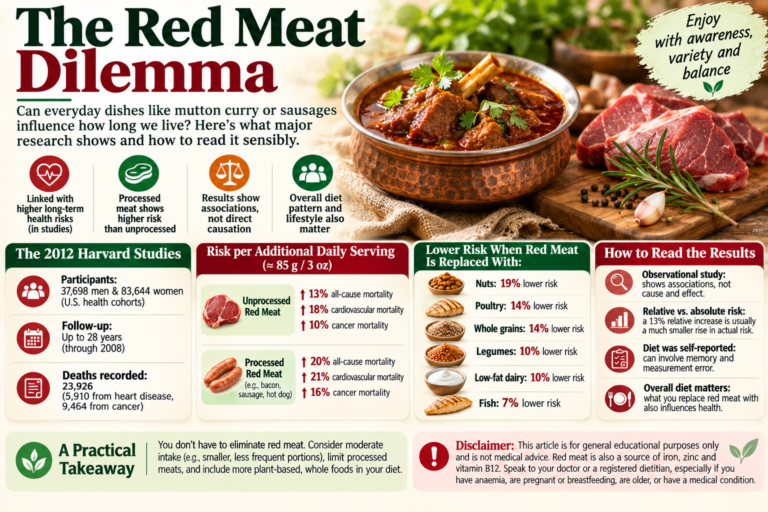
Can everyday dishes like a fragrant mutton curry or weekend breakfast sausages influence how long we live? For decades, dietary…
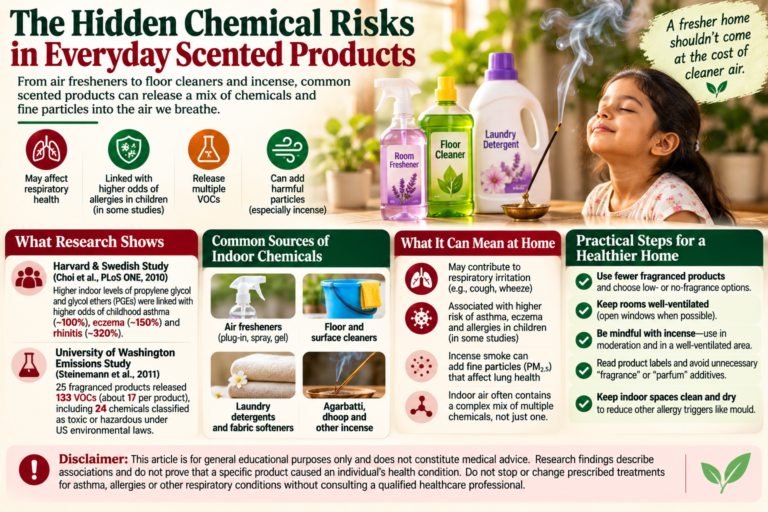
We rarely think about the quality of the air inside our homes. Most of us spend the vast majority of…
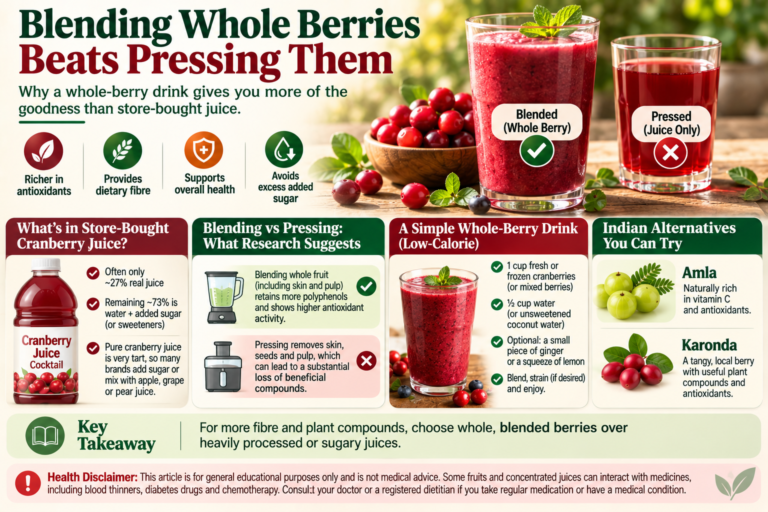
Blending Whole Berries Beats Pressing Them Berries regularly rank among the healthiest fruits you can add to your diet, packed…
