
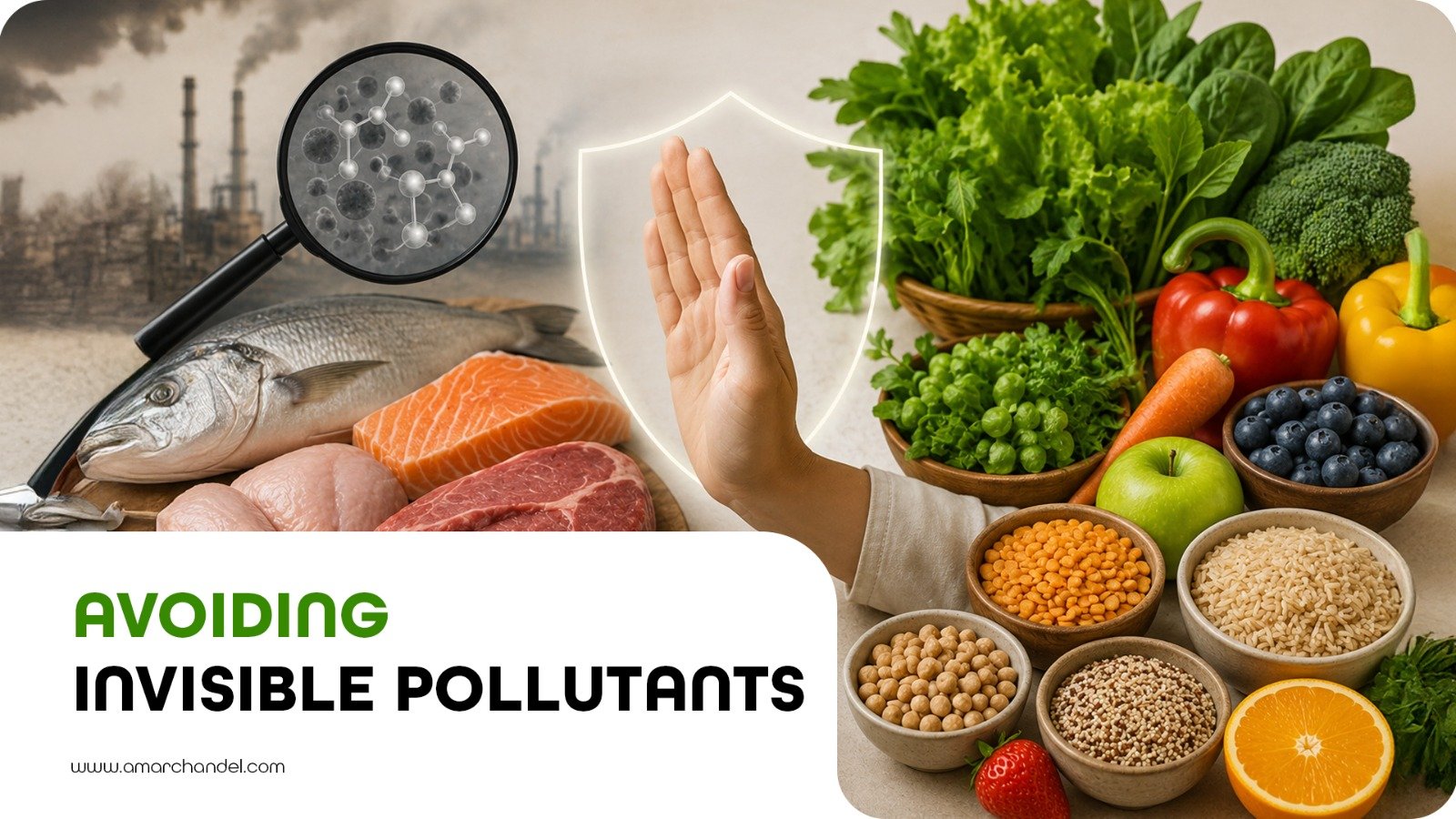
Industrial chemicals known as flame retardants or PBDEs are a growing concern for health-conscious families. These chemicals are used in everything from electronics to furniture foam, but they eventually leak into the environment and enter our food chain. Because these toxins are fat-soluble, they do not dissolve in water; instead, they stick to animal fat. This means that for most people in India, the primary source of these pollutants is not the air we breathe, but the animal products we eat. Infants are often the most exposed, as these chemicals can build up in a mother’s body and be passed on through breast milk.
Recent studies have helped us rank which foods carry the highest risk. Across the globe, and increasingly in India, fish is consistently found to be the most contaminated source. Even varieties thought to be “cleaner” often carry high levels.
After fish, white meats like poultry are generally more contaminated than red meats. This is often due to the way these animals are raised and the feed they are given. Interestingly, some of the highest concentrations of these pollutants are actually found in processed pet foods for dogs and cats.
In holistic healing for humans, switching from white meat to red meat may lower exposure slightly, but the risk remains significantly higher than if one sticks to plant-based options.

Another group of dangerous chemicals often found alongside flame retardants are PCNs. These are little-known industrial pollutants that act similarly to dioxins, among the most toxic substances known to science. For a long time, we did not know which foods in a typical market were the most affected by PCNs. We now know that the “worst of the worst” are farmed fish and even some organic salmon. Following closely behind are poultry and eggs. Red meats like lamb and goat have lower levels, and dairy products sit somewhere in the middle.
The safest route for your health is found at the bottom of the food chain. Vegetables, fruits, and grains contain about ten times fewer pollutants than meat, dairy, and eggs. When compared to fish, plant foods are nearly a hundred times cleaner. A 2024 report by the Indian Council of Medical Research (ICMR) suggests that as India’s rivers and soil face more industrial pressure, choosing a diet based on whole plant foods is the most effective way to avoid these “dioxin-like” chemicals. By filling your plate with fresh produce instead of factory-farmed animal products, you can significantly reduce the amount of industrial waste that ends up in your body.
Sources and References:
- Schecter, A., et al. (2010). “Polycyclic aromatic hydrocarbons in U.S. food.” Environmental Science & Technology. (Updated with 2024 global food chain data).
- Indian Council of Medical Research (ICMR) (2024). “State of Environmental Toxins in Indian Food Supplies: Annual Review.”
- Fernandes, A. S., et al. (2010). “Polychlorinated naphthalenes (PCNs) in UK dietary samples: Exposure and dietary intakes.”
- National Institute of Nutrition (NIN), India (2023). “Chemical contaminants in poultry and fish: A growing concern for urban consumers.”