
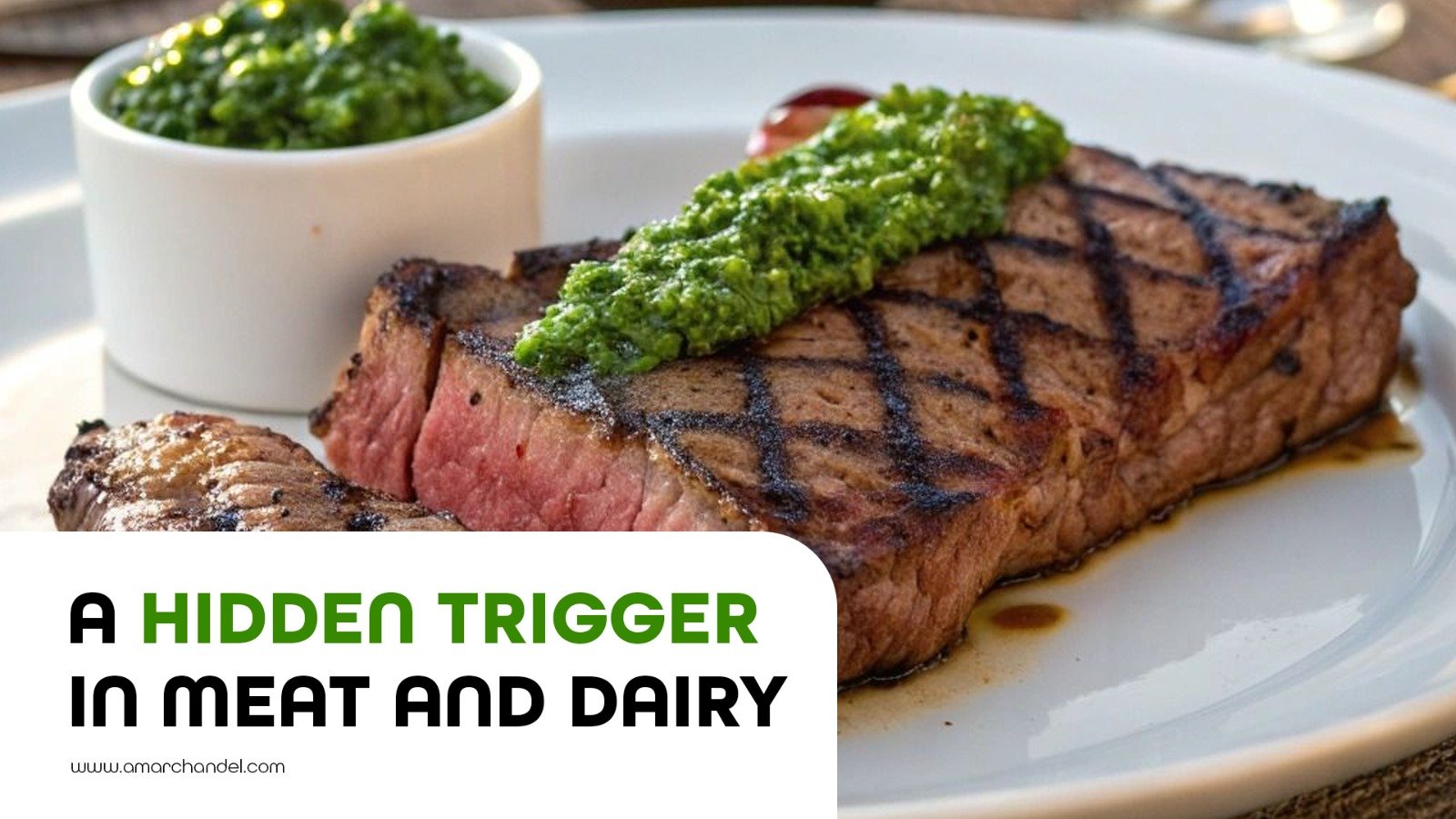
There is a little-known story unfolding inside the human body—one that links everyday foods like red meat and dairy to chronic inflammation. Scientists have identified a foreign molecule called Neu5Gc that may quietly accumulate in our tissues and contribute to diseases such as heart disease and cancer.
What makes this molecule unusual is that the human body cannot produce it. Millions of years ago, humans lost the ability to make Neu5Gc due to a genetic change. However, it is still present in most mammals. So when we eat foods like beef, mutton, pork, or dairy, small amounts of this molecule enter our system.
Research shows that Neu5Gc can get incorporated into the lining of our blood vessels and certain organs. This lining—called the endothelium—is critical for healthy blood flow. But when Neu5Gc builds up there, the immune system may treat it as a foreign invader. This triggers the production of antibodies against it, leading to a slow, ongoing inflammatory response inside the body.
This chronic inflammation is important because it plays a central role in many modern diseases. In the case of heart disease, inflammation damages the artery walls and contributes to the formation of plaques—fatty deposits that can block blood flow and lead to heart attacks or strokes. Studies have found Neu5Gc present within these atherosclerotic plaques, suggesting it may be part of the disease process.
The same mechanism may also influence cancer risk. Some cancers, especially those arising in glandular tissues like the breast or colon, have been linked to long-term inflammation. Scientists propose that Neu5Gc accumulation in these tissues may amplify inflammatory signals and create an environment where cancer cells can grow more easily.
What is striking is that this is not just a laboratory curiosity—it connects directly to dietary habits. A typical diet rich in red meat and dairy can introduce measurable amounts of Neu5Gc into the body every day. Estimates suggest that people consuming such diets may ingest several milligrams daily, even though the human body naturally produces none.

This has particular relevance for India today. Traditionally, many Indian diets—especially vegetarian ones—were low in animal foods and high in plant-based staples like dals, vegetables, fruits, and whole grains. However, with rising incomes and urban lifestyles, consumption of meat, processed foods, and high-fat dairy is increasing across many regions. At the same time, India is seeing a sharp rise in heart disease, diabetes, and certain cancers—even at younger ages.
While no single factor explains this trend, diet-driven inflammation is now considered a key contributor. Neu5Gc adds another layer to this understanding. It suggests that beyond cholesterol or fat content, certain animal-derived components may provoke immune reactions that slowly damage tissues over time.
An important point here is that plant foods do not contain Neu5Gc. Fruits, vegetables, legumes, nuts, and grains are naturally free of this molecule. This means that shifting toward a more plant-based diet could reduce exposure and potentially lower inflammation.
Scientists have even suggested that reducing dietary intake of Neu5Gc may help “dampen” harmful immune responses in the body. In simple terms, what we eat may influence not just our nutrition, but also how our immune system behaves toward our own tissues.
Of course, this does not mean that one meal will cause disease. These processes develop slowly over years. But it does highlight a broader pattern—chronic exposure to certain dietary factors can quietly shape long-term health.
For India, where food habits are rapidly changing, this insight is especially important. Returning to traditional, plant-rich eating patterns—whether fully vegetarian or simply more balanced—aligns with holistic healing, Ayurvedic wisdom, and mind-body balance. Such diets support natural detoxification, gut health, and inflammation reduction, offering protection not just through nutrients but also by avoiding hidden inflammatory triggers like Neu5Gc. Embracing sattvic nutrition, clean eating, and conscious food choices can further enhance immune resilience, promote cellular healing, and restore overall wellness and vitality.
References
- Pham T et al. Evidence for a novel human-specific xeno-auto-antibody response against vascular endothelium. Blood. 2009.
- Hedlund M et al. Evidence for a human-specific mechanism for diet and antibody-mediated inflammation in carcinoma progression. PNAS. 2008.
- Varki A. Uniquely human evolution of sialic acid biology. PNAS. 2010.