
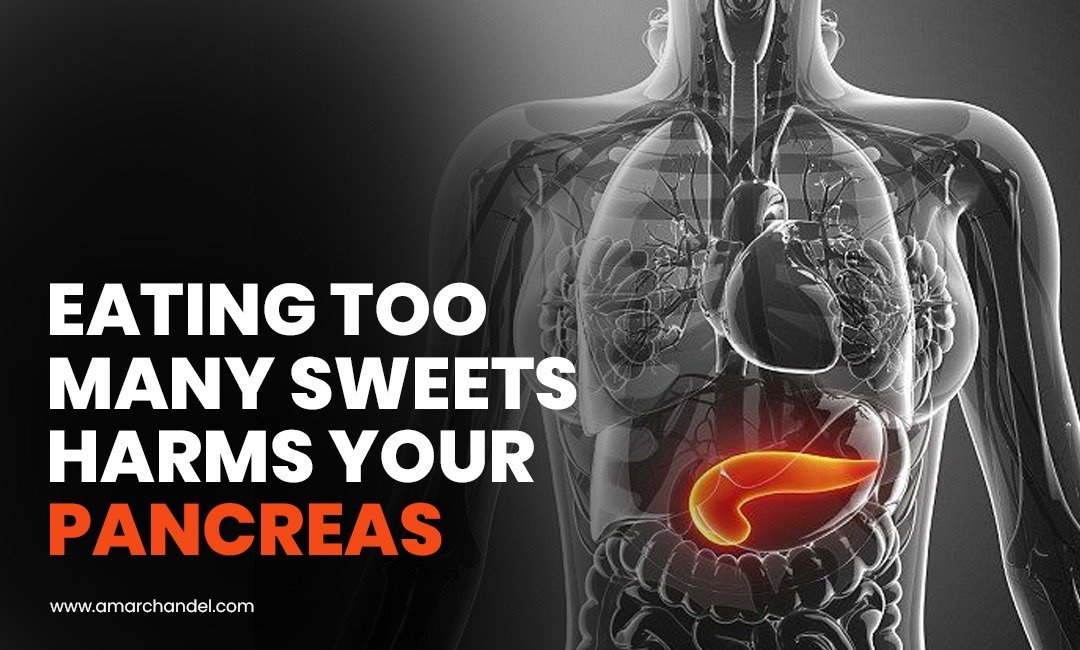
Most people know that too much sugar is bad for their health. But very few know why, and almost nobody knows what exactly sugar does to the pancreas, the small organ that keeps your blood sugar under control by producing insulin.
Modern research — including recent studies from Karolinska Institute in Sweden, the US, Europe, and Asia — shows something very important:
Excess sugar does not just increase blood sugar levels. It slowly damages the pancreas itself — sometimes permanently.
The pancreas has two main jobs:
1. Produce insulin to keep blood sugar under control.
2. Produce digestive juices to break down food.
Every sweet you eat — mithai, chocolate, cake, halwa, gulab jamun, sweet tea, soft drinks, sugar in coffee — forces your pancreas to work harder.
When it happens occasionally, the body can manage.
But if it happens daily, repeatedly, and in large quantities, the pancreas starts getting tired, inflamed, and eventually damaged.
How Exactly Do Sweets Harm the Pancreas?
A. Sugar Overloads the Insulin-Producing Cells (Beta Cells)
Whenever we eat sugar, the pancreas must release insulin.
If we eat too much sugar too often:
• The pancreas keeps pumping insulin all day.
• The beta cells become “overworked.”
• Over time, they start becoming weaker.
• They cannot produce enough insulin.
• Blood sugar starts rising.
This is the beginning of insulin resistance and then diabetes.
Recent studies on rats (very relevant to human biology) show that a high-sugar diet reduces the size of the insulin-producing islets and weakens their function.
B. Sugar Causes Inflammation Inside the Pancreas
Modern research shows that excess sugar — especially sucrose (table sugar) and fructose (found in sweets, honey, soft drinks, desserts) — triggers inflammation inside the pancreas.
Inflammation is like a slow fire burning inside the organ.
When this inflammation becomes chronic, it can:
• Reduce pancreatic function
• Damage insulin-producing cells
• Lead to early diabetes
Animal studies showed clear signs of inflammatory cells entering the pancreas when the diet was high in sugar.
C. Sugar Increases Oxidative Stress (Internal “Rusting”)
Sugary foods increase something called oxidative stress, which is like internal rusting.
This damages:
• Pancreatic cells
• DNA
• Proteins
• Blood vessels inside the pancreas
New 2024 research shows that oxidative stress quickly increases when animals are fed sugar-rich diets, and the pancreas begins to malfunction.
D. Sugar + Fat = Worst Combination for the Pancreas
The biggest damage happens when sugar is combined with fat, especially:
• Cakes
• Pastries
• Ice cream
• Chocolate
• Fried sweets
• Junk food
• Ultra-processed foods
This “Western diet” (high fat, high sugar) is the biggest enemy of the pancreas.
A major 2024 study found:
Long-term sugar + fat diet damages the tiny blood vessels inside the pancreas.
These blood vessels carry oxygen and nutrients to pancreatic cells.
When they are damaged:
• Insulin cannot leave the pancreas properly.
• The pancreas struggles to function.
• The damage becomes partly irreversible.
Researchers called this “metabolic memory” — meaning, even after you start eating healthy again, the damage doesn’t completely heal.
This is one of the most alarming findings of recent science.
What Happens to the Pancreas After Years of Eating Too Many Sweets?
Based on multiple studies from 2010 to 2024, this is the typical progression:
Stage 1: Overwork
The pancreas works extra hard to produce insulin.
Stage 2: Fat Buildup in the Pancreas
Sugar + fat diet causes fat to accumulate inside the pancreas, just like it accumulates in the liver.
This fat disrupts insulin production.
Stage 3: Inflammation and Cell Damage
The pancreas becomes inflamed.
Beta cells start dying.
Stage 4: Shrinking of Insulin-Producing Islets
Studies show that after long-term sugar intake:
• Islets become larger initially due to overwork
• Then they shrink as cells die
• Their structure becomes distorted
Stage 5: Reduced Insulin Production
The pancreas cannot keep up anymore.
Blood sugar rises.
You become pre-diabetic or diabetic.
Stage 6: Permanent Damage
In long-term studies, even after switching to a healthy diet, the microvascular (blood vessel) damage did not fully heal.
This means:
Years of high sugar intake may cause lasting harm.
Warning Signs
Simple signs include:
• Feeling sleepy after meals
• Needing sweets after meals
• Fatty liver
• High fasting insulin
• Belly fat
• Frequent hunger
• Cravings for sweets
• Sudden irritability if you skip meals
All these show that your pancreas is already overworked.
Endocrinologists (hormone specialists) commonly warn:
• “Sugar forces the pancreas to release insulin continuously.”
• “Repeated sugar spikes exhaust insulin-producing cells.”
• “Obesity, caused by sugary foods, further stresses the pancreas.”
• “Ultra-processed foods cause long-term metabolic injury.”
The recent Swedish study (Karolinska Institute) shocked experts because it showed structural and functional damage inside the pancreas that did not fully reverse even after going back to a normal diet.
Is Sugar Alone the Problem? Or the Whole Lifestyle?
Sugar is a major problem, but the damage is worse when:
• Sugar intake is excessive
• You eat sweets frequently
• You combine sugar with fat
• You live a sedentary lifestyle
• You eat late at night
In other words:
Your pancreas can tolerate occasional sweets, but it cannot handle daily abuse.
Can the Pancreas Heal?
Yes, partly — especially if the damage is not advanced.
Healing improves with:
• Cutting down added sugar
• Losing weight
• Eating whole, unprocessed foods
• Walking daily
• Having an early dinner
• Fasting windows (12–14 hours)
• Avoiding deep-fried sweets
• Controlling carbs
But the world’s most important lesson from recent research is:
Some types of pancreatic damage become harder to reverse if sugar abuse continues for many years.
So the earlier you reduce sugar, the better the pancreas heals.
The Final Message
Eating sweets once in a while is fine.
But daily sweets, sugary drinks, desserts, and processed foods overload the pancreas and cause inflammation, fat buildup, oxidative stress, and microvascular damage.
Modern science is now very clear:
Too much sugar does not just raise blood sugar — it slowly destroys the pancreas from inside.
This damage may take years to show up, but by the time it appears, the pancreas has already struggled for a long time.
If you want to protect your long-term metabolic health:
• Reduce sweets
• Avoid processed sugar
• Say no to sugar + fat combinations
• Choose natural, whole foods
Your pancreas will thank you.