

A Smarter Approach to Vitamin B12: Why the “Active B12” Test Matters
Medical Disclaimer: The information provided in this article is for educational and informational purposes only and is not intended as…
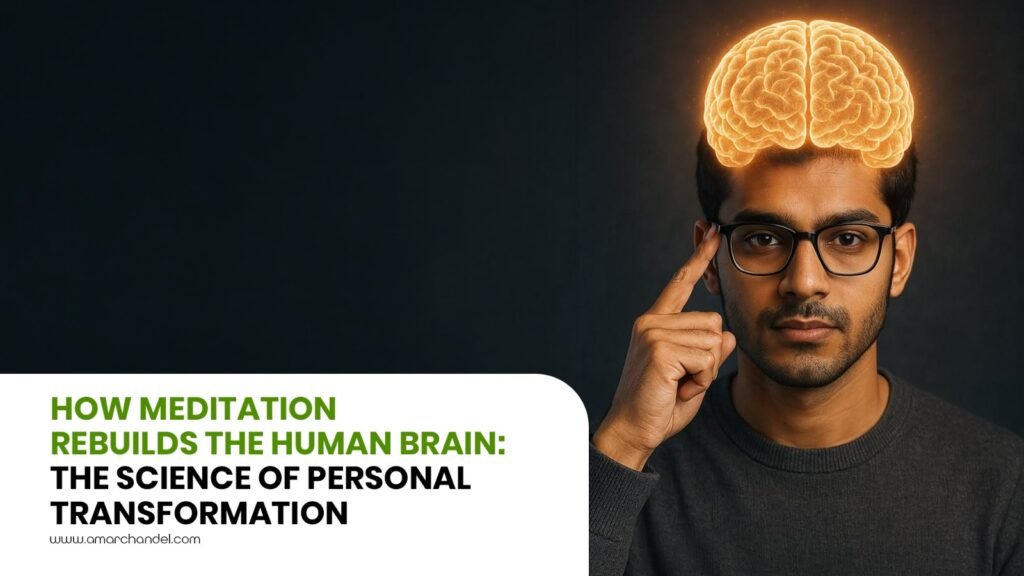
In recent decades, modern neuroscience has thoroughly validated the profound impact of meditation on the individual human body and mind. Rather than viewing it as a simple relaxation technique, researchers now understand that regular practice triggers a process called neuroplasticity, which is the brain’s remarkable ability to physically restructure itself in response to altered habits and thoughts.
Through advanced brain-imaging technology, such as functional magnetic resonance imaging, scientists have been able to peer inside the brains of regular meditators to see these structural changes happening in real time.
One of the most significant discoveries focuses on a small, almond-shaped structure deep within the brain known as the amygdala. This area acts as the body’s alarm system, responsible for processing intense emotions like fear, anxiety, and the primal fight-or-flight response. Studies have shown that consistent meditation actually causes the amygdala to shrink in size and weaken its functional connectivity to the rest of the brain. As this area becomes less reactive, individuals experience a noticeable drop in their baseline stress levels. They become far less susceptible to everyday emotional triggers, meaning that situations which might have previously caused panic or anger are met with a sense of calm and stability.

While the brain’s stress centre becomes quieter, the areas responsible for higher-level thinking become significantly stronger.
Imaging reveals that meditation increases grey matter density and thickens the prefrontal cortex, which sits right behind the forehead. This region is the executive control centre of the brain, managing critical functions such as logical decision-making, concentration, and emotional regulation. By strengthening this area, meditation enhances an individual’s ability to focus, ignore distractions, and pause before reacting to difficult situations.
Furthermore, this thickening extends to the insula and other regions tied to empathy, allowing people to better understand and share the feelings of others.
The combination of these neurological shifts creates a profound domino effect on overall well-being. By dampening the fear centre and amplifying the clarity of the prefrontal cortex, meditation helps individuals move away from a state of constant survival mode.
This biological reset lowers blood pressure, reduces harmful stress hormones like cortisol, and improves immune function, supporting holistic healing from within. Ultimately, science demonstrates that when a person commits to changing their inner mental state, they do not just feel better subjectively. They physically rebuild their brain to become healthier, more resilient, and genuinely more compassionate members of society, making holistic healing a powerful pathway to lasting well-being.
References:
Creswell, J.D., Way, B.M., Eisenberger, N.I. and Lieberman, M.D. (2007) ‘Neural correlates of dispositional mindfulness during affect labeling’, Psychosomatic Medicine, 69(6), pp. 560-565.
Farb, N.A., Segal, Z.V., Mayberg, H., Bean, J., McKeon, D., Fatima, Z. and Anderson, A.K. (2007) ‘Attending to the present: mindfulness meditation reveals distinct neural modes of self-reference’, Social Cognitive and Affective Neuroscience, 2(4), pp. 313-322.
Goleman, D. and Davidson, R.J. (2017) Altered Traits: Science Reveals How Meditation Changes Your Mind, Brain, and Body. New York: Avery.
Hölzel, B.K., Carmody, J., Vangel, M., Congleton, C., Yerramsetti, S.M., Gard, T. and Lazar, S.W. (2011) ‘Mindfulness practice leads to increases in regional brain gray matter density’, Psychiatry Research: Neuroimaging, 191(1), pp. 36-43.
Lazar, S.W., Kerr, C.E., Wasserman, R.H., Gray, J.R., Greve, D.N., Treadway, M.T., McGarvey, M., Quinn, B.T., Dusek, J.A., Benson, H. and Rauch, S.L. (2005) ‘Meditation practice is associated with increased cortical thickness’, NeuroReport, 16(17), pp. 1893-1897.
Medical Disclaimer: The information provided in this article is for educational and informational purposes only and is not intended as…

Every time we flex a muscle, take a breath, or blink an eye, our body spends a tiny packet of…

Managing chronic kidney disease through nutrition relies on balancing essential nutrients while minimising the workload on failing kidneys. Damaged kidneys…
