
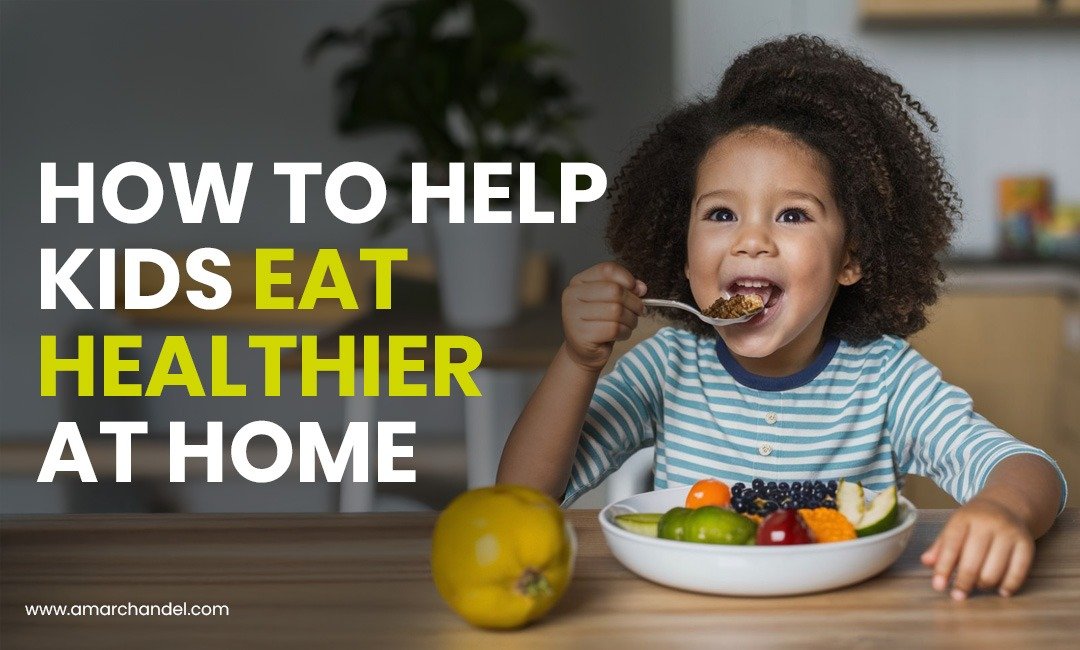
Every parent knows this challenge: if you offer a child broccoli and a bar of chocolate, the chocolate almost always wins. Studies abroad show that 4 out of 5 kids choose the chocolate. Indian parents see the same thing with chips, biscuits, and namkeen versus sabzi or fruits. But here is the hopeful part: children can be nudged—gently and creatively—towards healthier eating without forcing, shouting, or bribing.
Modern research shows that small tricks can dramatically change what children reach for, even in the middle of a junk-food environment. One famous experiment used simple character stickers. When broccoli was served plain, most kids ignored it. But when researchers put an Elmo sticker on the broccoli, suddenly 50% of kids chose it. Just a friendly face made the vegetable look more appealing. A similar school experiment placed a sign of SpongeBob saying “Got beans?” next to green beans, and suddenly 37% more boys and 17% more girls chose the vegetable. This shows how strongly children respond to visuals and characters they love.
India can easily apply this idea by using popular local characters—Chhota Bheem, Motu Patlu, or even Chandrayaan-3 themed stickers—on tiffin lids, lunch boxes, or vegetable bowls. Simple, low-cost nudges can spark surprisingly big changes.
Another practical trick is how vegetables are cut. When children aged 9 to 12 were asked to choose between whole slices, sticks, or star-shaped veggies, the results were clear:
“Shape was very influential; children clearly preferred having their vegetables cut.”
Star shapes were the most liked. Sticks and slices were equally acceptable. Size mattered only if the piece was too tiny—kids preferred normal-sized chunks over mini bits. For Indian homes, this means you can cut cucumbers, carrots, beets, and even idlis or chapatis into fun shapes during the early years to build positive associations with healthy food.
If children still resist, pairing vegetables with something they enjoy works wonders. Research shows:
“Pairing vegetables with peanut butter may successfully increase intake, even in vegetable-resistant children.”
In Indian kitchens, peanut butter can be swapped with homemade peanut chutney, til chutney, hung curd dips, or light lemon curd dressings—all familiar flavours that make raw veggies feel friendly instead of boring.
Another successful method is the hidden veggies strategy. In one study, pureed vegetables like cauliflower, squash, tomatoes, zucchini, and broccoli were mixed into dishes such as pasta sauce without changing the look or taste. Children ended up eating more vegetables without even noticing it. Indian parents already do something similar—adding lauki to dal, spinach to chapati dough, carrots to upma, beetroot to idli batter, or pumpkin to sambhar. Researchers emphasise that this method is useful but should not replace serving whole vegetables, because children still need to get used to the taste and texture of real vegetables for long-term acceptance.

Repeated exposure remains powerful. Nutrition scientists have repeatedly found that:
Children can learn to like vegetables through repeated, pressure-free exposure.
The more often they see and taste a vegetable—even if they don’t finish it—the more normal and acceptable it becomes.
For the tech-loving generation, interactive games also help. A public-private project called “The Quest to Lava Mountain” designed a video game where kids “harvest kale” and learn the benefits of fruits, vegetables, and whole grains. In India, similar digital health games are already being tested by IIT Delhi and other institutions for promoting healthy habits among children.
But after all these clever tricks, the most powerful and scientifically confirmed factor is still the simplest of all. A major study on parenting styles found that the best predictor of children’s fruit intake was not pressure, nagging, rewards, or rules.
It was this:
“The most important predictor of children’s fruit consumption was the parent’s own consumption.”
For vegetables, the findings were the same.
This is a universal truth, deeply relevant to Indian families: children imitate what they see, not what they are told.
If parents snack on pakodas, biscuits, and sugary tea, children will do the same. If parents regularly eat fruits, salads, dal, sabzi, and whole grains, children naturally follow. The researchers concluded that:
“To increase children’s fruit and vegetable consumption, parents should be guided to improve their own diets.”
In simple words:
If we want healthier children, we must first be healthier adults.
Kids learn from the plate in front of them every single day.
References
1. Wansink B et al. (2012) – “Attractive naming increases vegetable intake in elementary schools.” Preventive Medicine.
2. Robinson TN et al. (2014) – “Influence of cartoon characters on children’s food choices.” Journal of Pediatrics.
3. Horne PJ et al. (2011) – “Using characters and messages to promote vegetable selection in schools.” Appetite.
4. Frazier BN et al. (2012) – “Cutting and shaping vegetables enhances children’s acceptance.” Food Quality and Preference.
5. Savage JS et al. (2011) – “Peanut butter pairing increases vegetable intake.” Appetite.
6. Spill MK et al. (2011) – “Covert incorporation of vegetables into foods.” American Journal of Clinical Nutrition.
7. Robinson TN (2013–2016 series) – “Healthy video game interventions for child nutrition.” Pediatrics.
8. Cooke L (2007) – “Children’s food preferences and repeated exposure.” Proceedings of the Nutrition Society.
9. Pearson N et al. (2009) – “Parental modeling and children’s fruit and vegetable intake.” Public Health Nutrition.
10. ICMR (2023) – “Dietary patterns of Indian children and adolescents: implications for obesity and poor nutrition.”