
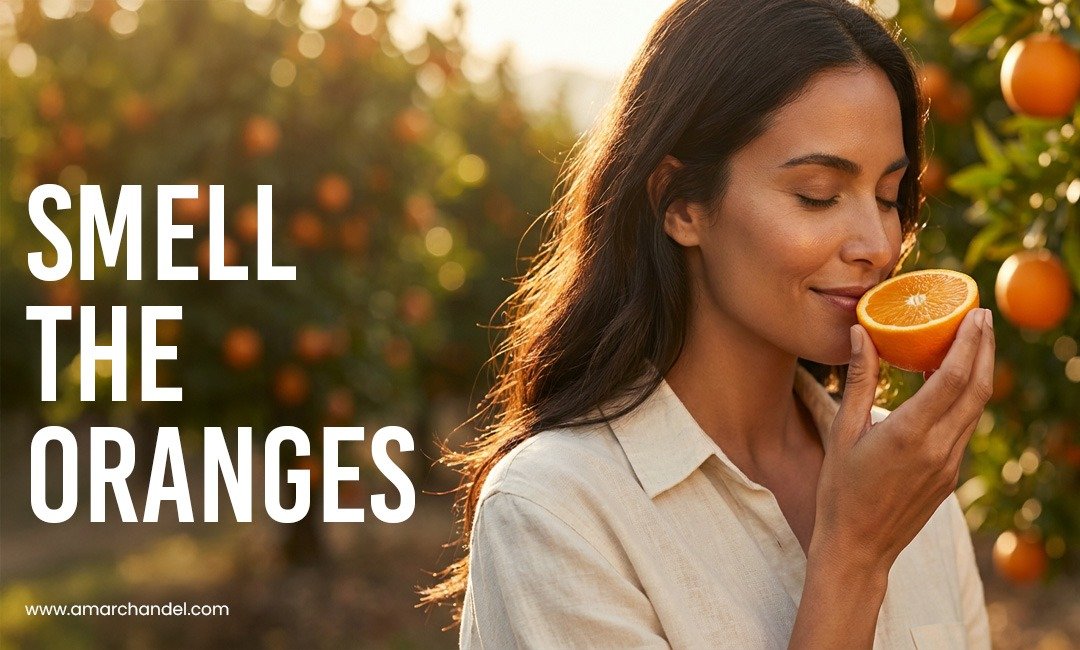
Aromatherapy is the practice of using concentrated plant-based essential oils — like those extracted from orange peel — to influence mood, stress, and wellbeing. Anxiety disorders are very common, and while modern medicines help, they can also bring side effects. That makes non-pharmacological options like aromatherapy attractive — but how well do they actually work?
Recent research has increasingly examined whether the scent of sweet orange (Citrus sinensis) or other citrus oils can reduce anxiety. Clinical trials and lab studies suggest some real promise, though it’s not a magic cure.
What the Evidence Says?
1. How orange scent might calm the brain
Biologically, components of orange essential oil — especially d-limonene — seem to interact with the brain’s calming systems. According to a review of citrus essential oils, these compounds may affect neurotransmitters like GABA, which help regulate anxiety.
In animal studies, inhaling orange oil reduced anxiety-like behaviour in rodents, further supporting the idea of a calming, anxiolytic effect.
2. Clinical trials in anxiety-inducing situations
• In a well-known “experimental anxiety” study, 40 healthy volunteers were asked to inhale varying doses of sweet orange essential oil and then perform a stressful cognitive test (a colour-word Stroop test). Those exposed to the orange scent didn’t show the same spike in anxiety, and in fact, higher doses made them feel more energetic rather than sedated.
• Another randomised controlled trial looked at children (6–9 years old) in a dental clinic. When exposed to orange aroma during their dental appointments, the children had lower salivary cortisol (a stress hormone) and a lower pulse rate, compared to when there was no aroma.
• For pregnant women in labour, one clinical trial found that inhaling sweet orange essential oil reduced anxiety more than a control (distilled water) did.
• In a recent (2024) study, inhaling Citrus sinensis oil during labour also helped reduce both pain and anxiety, along with improving physiological parameters like heart rate and blood pressure.
• More broadly, a review of the clinical literature concluded that both Citrus aurantium (bitter orange) and Citrus sinensis (sweet orange) essential oils have shown anti-anxiety effects in various settings (though with some limitations in study designs).
3. Safety and side effects
• Unlike many anti-anxiety drugs, sweet orange aroma in these studies did not produce strong sedation.
• However, not all studies are risk-free. For example, a foot-massage study using orange essential oil in post-cesarean women showed reduced anxiety, but because massage itself reduces anxiety, it’s hard to separate how much the scent added.
• There was also a randomised clinical trial in an Indian hospital on orange oil inhalation for patients with fractured limbs, but it was later retracted, raising concerns about the validity of that evidence.
• In a new study on pregnant women, inhaling bitter orange (Citrus aurantium) twice a day (via facemask) over a month significantly reduced anxiety and depression (measured by standard scales), and there were no serious reported side-effects.
What this mean for India?
• Cultural relevance: Citrus fruits (including sweet orange) are widely grown and used in India; orange essential oils or peel-based extracts may be more accessible and affordable here compared to imported “luxury” aromatherapy oils.
• Complement, not replace: The current evidence suggests that orange aromatherapy can help, especially in acute anxiety situations (like dental fear or labour), but it shouldn’t replace standard medical care for anxiety disorders.
• Safe usage: If someone wants to try it, inhalation is the most studied and safest method in these trials. “Air diffusion” (using a diffuser) or inhaling from a cloth or pad might give benefits with minimal risk.
• Be cautious: Quality matters. Not all “orange essential oils” are the same — purity, source, and how the oil is processed can affect safety and efficacy. Also, essential oils are potent: they should be used in moderation, and dilution or controlled exposure is better than overuse.

Limitations & Future Research
Despite encouraging findings, the research has some important gaps:
• Many studies are small, or only test short-term anxiety (not chronic anxiety disorders).
• Some trials combine aromatherapy with massage, making it hard to isolate the effect of scent alone.
• There is limited research in the Indian population specifically — we need more locally conducted, well-designed trials to confirm benefits in Indian cultural and clinical contexts.
• Long-term safety is not well studied: while inhalation seems relatively safe in the short term, repeated or high-dose exposure needs further evaluation.
Bottom Line
Using orange essential oil by inhalation may be a gentle, non-drug way to help reduce anxiety for some people — for example, during stressful moments like before a dental treatment or during labour. It seems to have fewer side-effects than many medications, and the science is growing stronger. But it’s not a cure-all, and we still need more rigorous studies, especially in the Indian setting, to say how much it can help for long-term anxiety. If you choose to try it, go for a high-quality oil, use small, safe doses, and don’t rely on it to replace professional mental health treatment.