
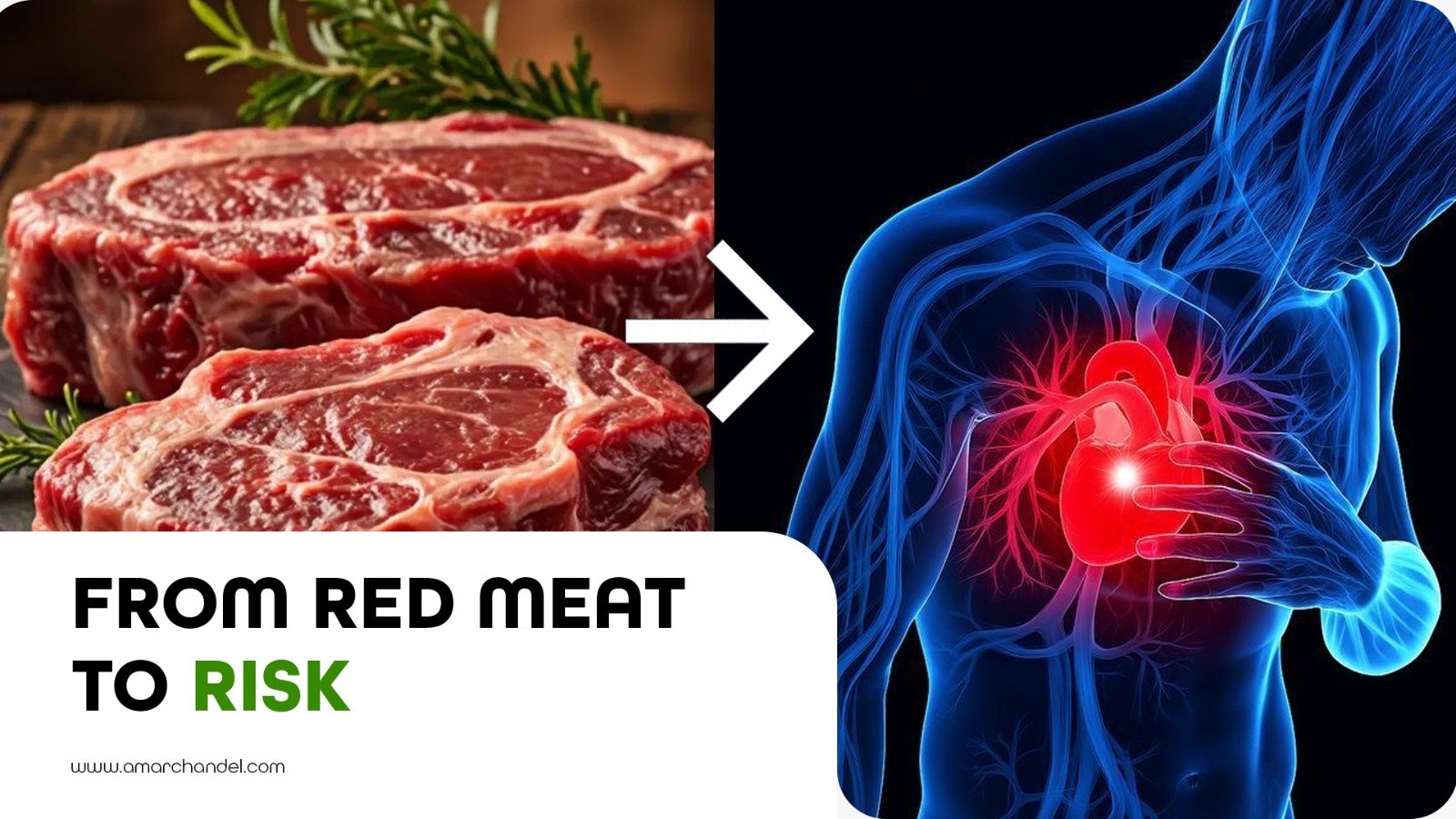
In recent years, scientists have uncovered an important link between certain animal foods, gut bacteria and the risk of heart disease. Researchers at the Cleveland Clinic first highlighted how nutrients found mainly in red meat—especially carnitine—can be converted by gut bacteria into a compound called trimethylamine (TMA). The liver then converts TMA into trimethylamine-N-oxide, or TMAO. Higher levels of TMAO in the blood have been linked with a greater risk of heart attack, stroke and death.
According to research published in Nature Medicine, people who produced more TMAO after eating red meat had a significantly higher risk of major cardiovascular events (Koeth et al., 2013; Wang et al., 2011).
What makes this finding important is that it shifts the focus beyond just cholesterol and saturated fat. For decades, we believed meat increased heart risk mainly because of these fats. But this research suggests that the interaction between animal foods and our gut bacteria may also play a major role. In studies, when participants were given antibiotics to temporarily suppress gut bacteria, TMAO production dropped dramatically—even after eating steak. Once their gut bacteria returned, so did TMAO production. This clearly showed that gut microbes are central to the process (Koeth et al., 2013).
TMAO appears to promote the buildup of cholesterol inside artery walls and may make blood more likely to clot. Research in the New England Journal of Medicine found that higher blood TMAO levels predicted future heart attacks, strokes and death, even after adjusting for traditional risk factors (Tang et al., 2013).
More recent studies continue to confirm that elevated TMAO levels are associated with cardiovascular disease and mortality (Cleveland Clinic, 2019; European Heart Journal, 2023 reviews).
While red meat is especially rich in carnitine, it is not the only concern. Another nutrient, choline, can also be converted by gut bacteria into TMA and then into TMAO. Choline is found in eggs, chicken, fish, dairy products, and organ meats. In fact, the original researchers were inspired to study carnitine because earlier work had already shown that choline from eggs could raise TMAO levels (Wang et al., 2011). This means the issue is broader than just red meat.
For India, this research is highly relevant. Cardiovascular disease is the leading cause of death in the country. According to the Indian Council of Medical Research (ICMR), heart disease accounts for more than one in four deaths in India. Urban diets are increasingly shifting toward higher intake of red meat, processed meat, eggs and packaged foods. At the same time, India is seeing rising rates of obesity, diabetes, and high blood pressure—all of which increase heart risk. The TMAO pathway may be one more piece of this growing public health puzzle.cc
However, there is an interesting twist. Studies show that people who follow long-term vegetarian or vegan diets tend to produce much less TMAO—even when temporarily given red meat. Researchers believe this is because their gut bacteria are different. A plant-based diet rich in fibre encourages the growth of beneficial bacteria that produce helpful compounds such as short-chain fatty acids. Diets high in animal foods may encourage bacteria that produce more TMA (Koeth et al., 2013). India has a long tradition of vegetarian eating, and this may offer some protective advantage when the diet is based on whole foods like dals, vegetables, fruits and whole grains.

That said, even vegetarians are not automatically protected. Some energy drinks and bodybuilding supplements contain added carnitine. Lecithin supplements and highly processed foods may contain choline additives. Regular use of such products could potentially increase TMAO production. Experts suggest that most people do not need carnitine supplements because the body naturally makes enough for normal function. There is no dietary requirement for carnitine in healthy individuals (National Institutes of Health, Office of Dietary Supplements).
Choline is different because small amounts are necessary for liver and brain function. However, most Indians can meet their needs through a balanced diet that includes legumes, nuts, seeds and vegetables, without excessive reliance on eggs or red meat. The key message is moderation and focussing on whole, minimally processed foods.
There is also growing research linking TMAO with cancer progression. A study from Harvard involving men with early-stage prostate cancer found that higher blood levels of choline were associated with increased risk of lethal prostate cancer (Richman et al., Journal of the National Cancer Institute, 2012). More recent research suggests that TMAO may promote inflammation and tumour growth, although this area is still being studied and is not yet as firmly established as the heart disease link (Nature Reviews Cancer, 2022 discussions on gut microbiome and cancer).
For India, where prostate cancer cases are rising and breast and colon cancers are becoming more common in cities, diet-related risk factors deserve attention. Identifying modifiable factors—such as excessive intake of red and processed meat—may help reduce long-term disease risk.
In simple terms, what does all this mean? It does not mean that one egg or one serving of chicken will cause heart disease. It means that regular high intake of red meat, processed meat and possibly excessive eggs or supplements may encourage gut bacteria that produce higher levels of TMAO, which in turn may increase heart risk. Diets centred around plant foods appear to reduce this effect.
The practical advice for Indians aligns closely with what cardiologists and public health experts have long recommended: eat more fruits, vegetables, whole grains, pulses and nuts; limit red and processed meat; avoid unnecessary supplements; and maintain a healthy lifestyle with physical activity. The “new” science of TMAO may simply be offering another explanation for why traditional plant-forward diets are protective.
References
Koeth RA et al. “Intestinal microbiota metabolism of L-carnitine, a nutrient in red meat, promotes atherosclerosis.” Nature Medicine. 2013.
Wang Z et al. “Gut flora metabolism of phosphatidylcholine promotes cardiovascular disease.” Nature. 2011.
Tang WHW et al. “Intestinal microbial metabolism of phosphatidylcholine and cardiovascular risk.” New England Journal of Medicine. 2013.
Richman EL et al. “Choline intake and risk of lethal prostate cancer.” Journal of the National Cancer Institute. 2012.
Indian Council of Medical Research (ICMR). India State-Level Disease Burden Report on Cardiovascular Diseases.
National Institutes of Health, Office of Dietary Supplements. Carnitine Fact Sheet.
European Heart Journal (2023) and Nature Reviews Cancer (2022) on TMAO, microbiome and chronic disease.