
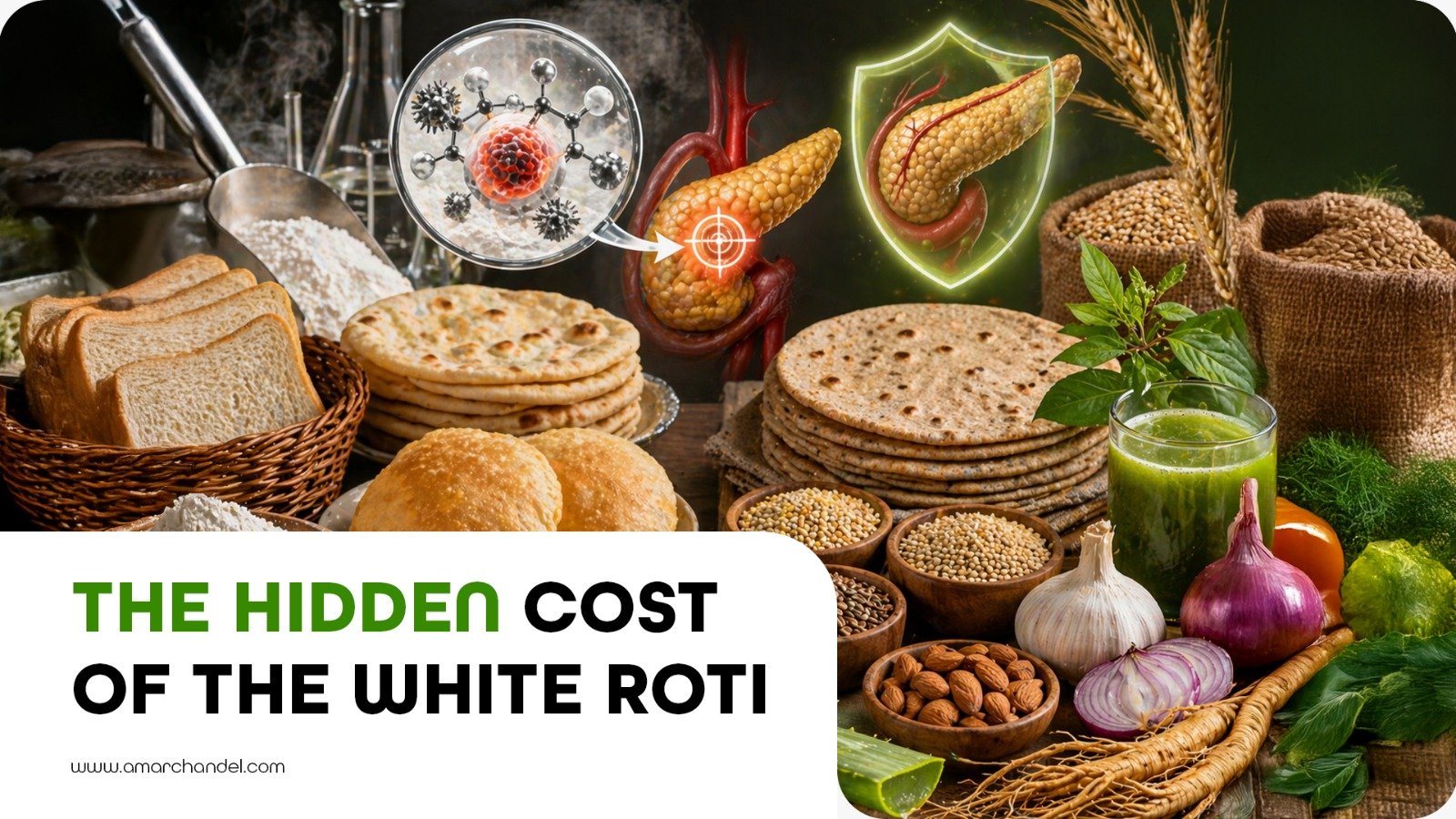
Most of us in India grew up seeing white bread, maida-based biscuits, and fluffy bhaturas as treats. However, that bright white colour in refined flour often comes at a hidden price. During the processing of wheat into white flour (maida), the natural bran and germ are stripped away. To make the remaining flour look “clean” and white, chemical bleaching agents are often used.
Research says that a byproduct of this bleaching process is a compound called alloxan. This chemical is well-known in the scientific community for a very specific and troubling reason: it is a toxin that targets the pancreas.
The pancreas is a vital organ responsible for producing insulin, which keeps our blood sugar levels in check. Within the pancreas, special units called beta cells do the heavy lifting of insulin production. Alloxan works by generating unstable molecules known as free radicals that attack the DNA of these beta cells. When these cells are damaged or destroyed, the body loses its ability to produce enough insulin, leading to the development of diabetes.
In fact, this connection is so strong that scientists routinely use alloxan in laboratories to induce diabetes in test animals so they can study the disease. While the human body is more complex than a lab rat, the biological vulnerability of our pancreatic cells remains a serious concern for those consuming highly processed flours daily.
In India, where we are often called the “diabetes capital of the world,” this information is particularly urgent. Many people have a genetic predisposition to diabetes. When you combine those genetics with a diet high in maida and refined sugars, you create a perfect storm for the disease. The food industry often promotes the convenience and “beauty” of white flour products, but they rarely mention the chemical residues left behind by processing.

While the FSSAI (Food Safety and Standards Authority of India) regulates food additives, the cumulative effect of consuming these trace chemicals over a lifetime is a risk many health experts advise against.
The good news is that we can protect ourselves by returning to our traditional roots. Moving away from refined white flour and back to whole-grain “chakki” atta or multi-grain flours (like ragi, jowar, and bajra) removes the alloxan risk entirely. These whole grains are not bleached and are packed with fibre, which actually helps stabilise blood sugar.
Furthermore, traditional Indian ingredients like garlic and onions have been shown in various studies to help support insulin function. Local herbs, such as Gymnema Sylvestre—known in India as Gurmar or “the sugar destroyer”—have even shown the potential to help pancreatic cells recover and improve insulin secretion.
If you are worried about past habits, research highlights the importance of antioxidants. For instance, Vitamin E has been shown to offer a level of protection to the pancreas against chemical toxins. Incorporating natural sources of Vitamin E, like almonds and sunflower seeds, into your diet can be a smart move.
Additionally, traditional remedies like Aloe Vera juice and Ginseng have been studied for their ability to lower fasting blood sugar levels. However, the most effective step is prevention. By choosing “lal atta” (whole wheat) over white maida, you are effectively choosing to stop poisoning your pancreas and protecting your long-term health.
References
- Pizzorno, J. E., & Murray, M. T. (2020). Textbook of Natural Medicine. Elsevier. (Discussion on beta-cell toxins and the impact of alloxan).
- Sharma, H. (1993). Freedom from Disease. Veda Publishing. (Research on free radical damage to pancreatic DNA).
- Lau, B. (1991). Garlic for Health. Lotus Press. (Studies from RNT Medical College, India, on garlic’s effect on blood sugar).
- Null, G. (2010). The Clinician’s Handbook of Natural Healing. Essential Publishing. (Data on Vitamin E and Aloe Vera in protecting against alloxan-induced damage).
- Pitchford, P. (2002). Healing with Whole Foods: Oriental Traditions and Modern Nutrition. North Atlantic Books. (Analysis of flour bleaching and chemical byproducts).
- Howenstine, J. (2003). A Physician’s Guide to Natural Health Products That Work. Pen Publishing. (Information on Gymnema Sylvestre and beta-cell regeneration).