

A Smarter Approach to Vitamin B12: Why the “Active B12” Test Matters
Medical Disclaimer: The information provided in this article is for educational and informational purposes only and is not intended as…
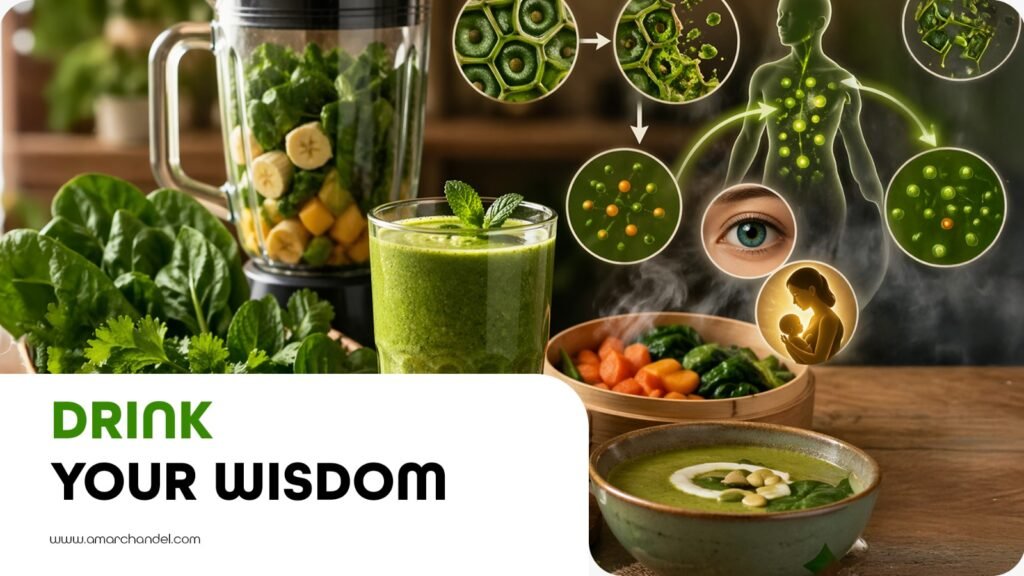
Most of us know that the secret to a long life isn’t just avoiding bad habits like smoking, but actively embracing good ones, especially eating our greens. One of the easiest and most efficient ways to do this is through “whole food smoothies.”
Unlike juicing, which removes the beneficial fibre, blending keeps the entire plant intact. For many Indian families, this is a game-changer. You can blend local favourites like spinach (palak) or even a bit of coriander and mint with sweet fruits like mango or banana. The fruit perfectly masks the earthy taste of the greens, making it a hit for kids who usually push their vegetables away and for busy professionals who do not have the time to sit down for a massive salad.
The real magic of the green smoothie lies in something called “bioaccessibility.” Many of the best nutrients in plants, like beta-carotene (which the body turns into Vitamin One) and lutein (which protects our eyes), are actually trapped inside tough, microscopic plant cell walls. To get those nutrients into our bloodstream, we have to break those walls open. Usually, we do this by chewing, or “mastication.” However, science shows that humans are actually quite poor at chewing. Most of the vegetable pieces we swallow are still way too large for our bodies to fully extract the goodness inside. A high-speed blender can do in 40 seconds what your teeth could never achieve: it breaks the spinach down to a “subcellular” level, rupturing those tough walls and releasing a flood of nutrients.
Why does this mechanical breakdown matter so much? Take folate, for example. This B vitamin is crucial for everyone, but especially for women of childbearing age to ensure healthy pregnancies. Research has shown that when you finely chop or blend spinach, the amount of folate that actually makes it into your bloodstream can more than double compared to eating the leaves whole.
The same goes for lutein, which is vital for preventing cataracts and keeping our vision sharp as we age. It isn’t just about what you put in your mouth; it is about what your body is actually able to absorb and use. Blending ensures you aren’t literally flushing those expensive nutrients away.
Even if you prefer cooked vegetables, blending still offers a massive advantage. While boiling carrots for a few minutes helps soften the cell walls and makes nutrients ten times more available than raw chewing, blending those cooked carrots can double that absorption again.

In the context of Indian cooking, this means that blending your lightly steamed vegetables into a “green soup” or a smoothie can provide three times the alpha and beta-carotene compared to just mashing them.
Whether your greens are raw or lightly cooked, using a blender helps you take full advantage of every rupee spent at the sabzi mandi. It turns your food from a simple meal into a potent, highly absorbable source of health, supporting holistic healing.
References:
Medical Disclaimer: The information provided in this article is for educational and informational purposes only and is not intended as…
Every time we flex a muscle, take a breath, or blink an eye, our body spends a tiny packet of…
Managing chronic kidney disease through nutrition relies on balancing essential nutrients while minimising the workload on failing kidneys. Damaged kidneys…
