
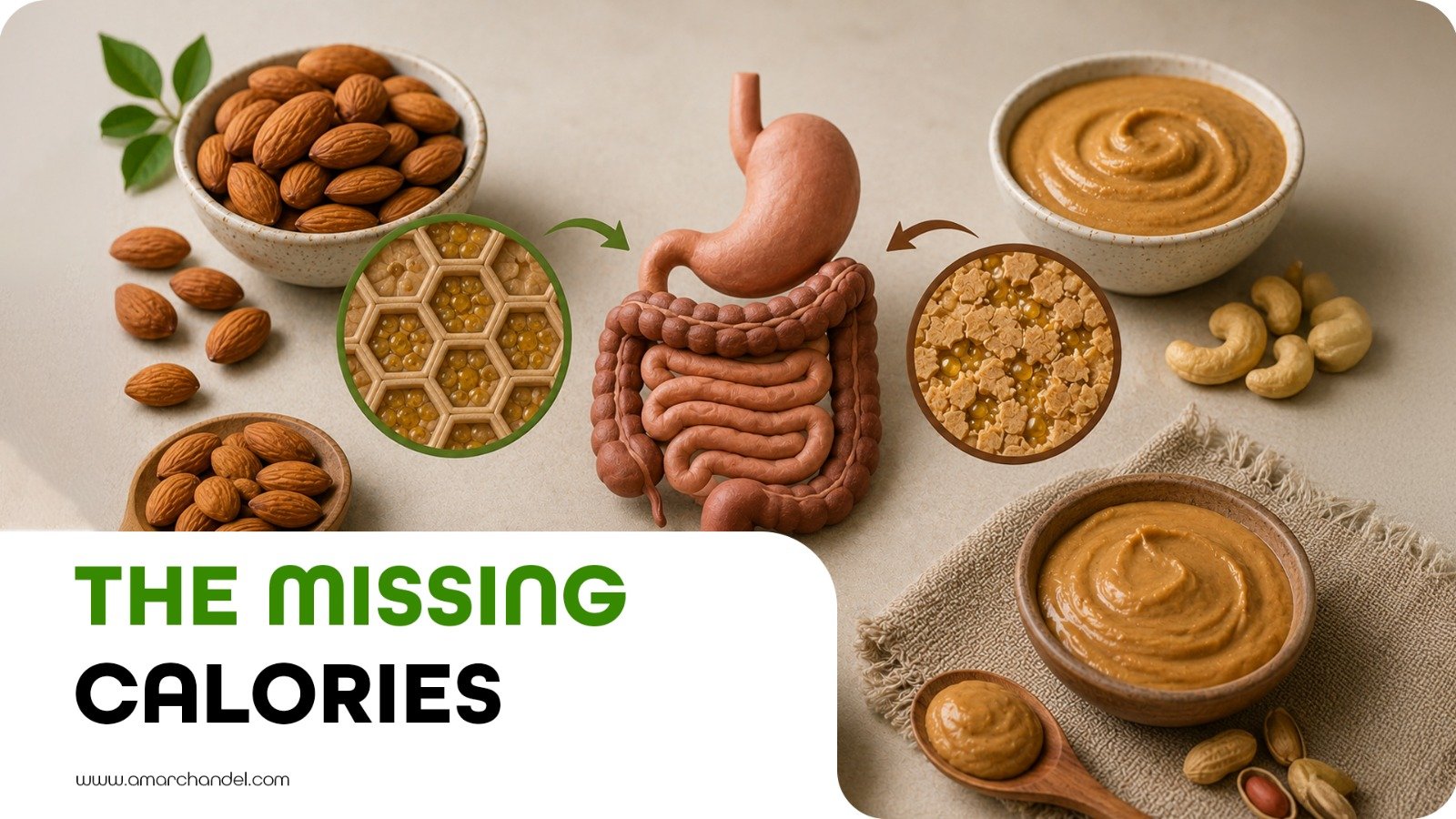
The consistent finding that regular nut consumption does not lead to weight gain seems to challenge a fundamental law of physics. The first law of thermodynamics states that energy can neither be created nor destroyed, meaning calories cannot simply vanish into thin air. For years, scientists have tried to solve this mystery, exploring different theories as to why the dense energy found in nuts does not translate into extra body fat.
One early idea was the pistachio principle, which suggests that the physical effort required to shell nuts slows down our eating pace. This delay allows the brain enough time to register fullness and naturally signals the body to stop eating before we overindulge. While this explains the behaviour for in-shell varieties, it fails to account for the same weight-neutral effects observed in people who eat pre-shelled nuts.
Another theory focuses on the sheer physical exertion of chewing hard foods. A well-known study from Japan indicated that diets consisting of harder textures were associated with smaller waist circumferences (Murakami et al., 2007). While jaw muscles do burn a tiny amount of energy, the caloric cost of chewing is far too small to explain the massive amounts of missing energy.
Instead, researchers looked closer at what happens inside the digestive tract, leading to the fecal excretion theory. Microscopic examinations show that even after thorough chewing, many of the rigid cellular walls of nuts remain completely intact as they pass through the stomach and intestines. Because the human digestive system cannot break down these tough structures, a significant portion of the fat remains trapped inside the plant tissue and passes right out of the body unabsorbed.

This digestive mystery holds profound relevance for Indian dietary habits and culinary traditions. Across India, nuts like almonds, cashews, and peanuts are rarely eaten in isolation; they are deeply integrated into daily meals through processes like grinding into pastes for curries, roasting for snacks, or blending into traditional sweets. Because processing nuts changes their physical structure, modern researchers have turned to comparative studies to see if altering the nut’s form changes how our bodies handle the calories. Large-scale global reviews, such as those published in the American Journal of Clinical Nutrition, have actively tested this by comparing whole nuts against smooth nut-derived pastes (Baer et al., 2024). These studies show that the more a nut is mechanically ground down, the more its cellular walls rupture, which frees up the trapped oils and allows the human body to absorb nearly all the available calories.
For the health-conscious Indian consumer, understanding this distinction is crucial for effective weight and metabolic management. Holistic Healing and Traditional practices, such as soaking whole almonds overnight and peeling them, preserve the structural integrity of the nut, ensuring that a large portion of the calories remain locked away and unabsorbed. Conversely, heavy culinary processing, such as blending cashews into thick, creamy gravies or consuming commercial peanut butter, breaks down the plant cells entirely, making the food much more energy-dense for the body.
Recent guidelines from regional health bodies like the Indian Heart Association emphasise that choosing whole, minimally processed nuts over ground pastes is a highly effective, natural strategy to protect cardiovascular health without accidentally increasing total daily calorie intake (Indian Heart Association, 2025).
References:
- Baer, D. J., & Novotny, J. A. (2024). Metabolizable energy of nuts: why the calorie counts on labels may be wrong. American Journal of Clinical Nutrition, 119(2), 312-319.
- Indian Heart Association & Nutrition Council (2025). Dietary Guidelines for Managing Abdominal Obesity and Cardiovascular Risk in South Asian Populations. Indian Journal of Medical Research, 161(3), 114-122.
- Murakami, K., et al. (2007). Dietary hardness is inversely associated with waist circumference in free-living young Japanese women. Journal of Nutrition, 137(9), 2122-2126.
- Novotny, J. A., et al. (2012). Discrepancy between the Atwater factor predicted energy value and the empirically measured energy value of almonds in the human diet. American Journal of Clinical Nutrition, 96(2), 296-301.