
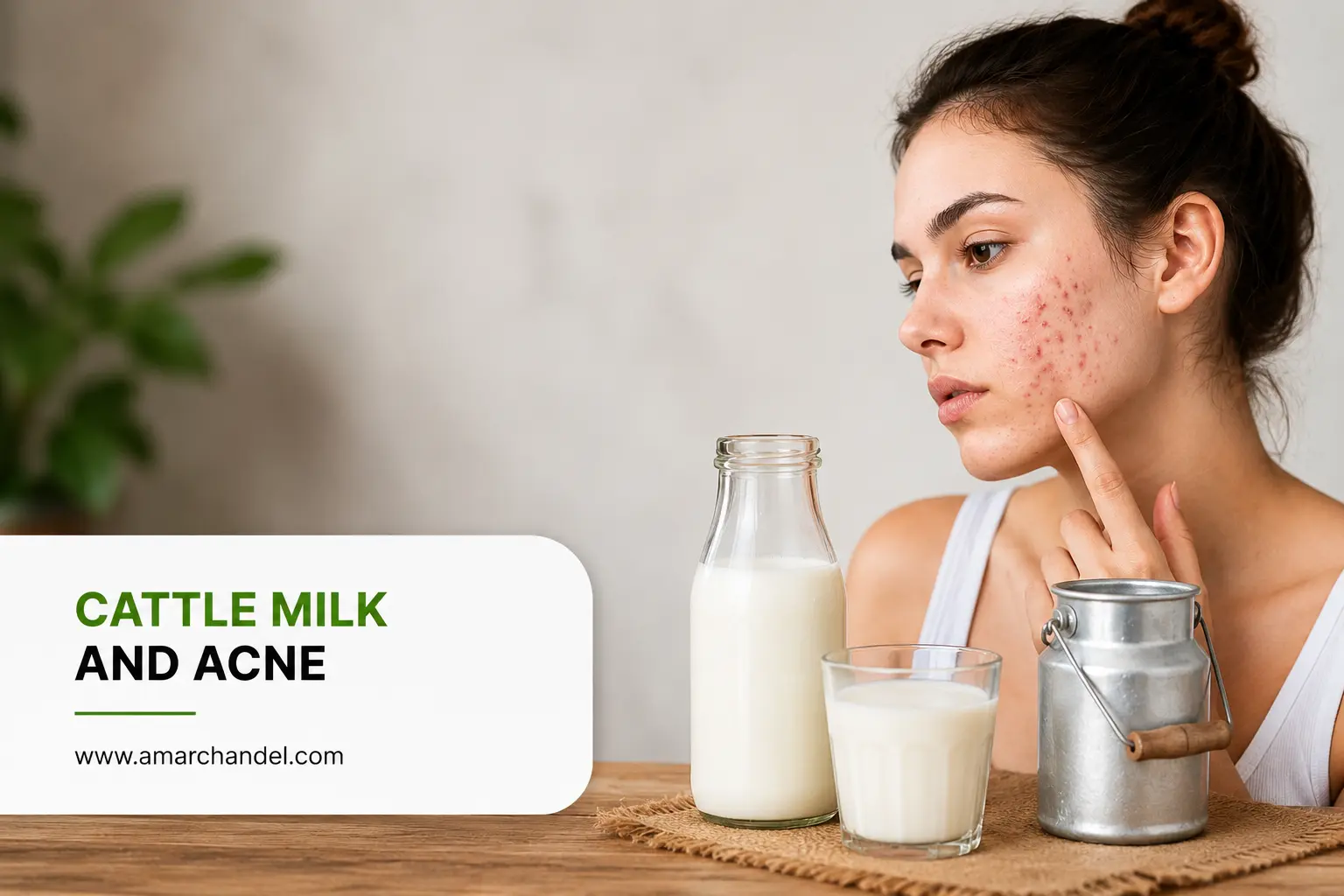
For many years, industry groups such as the National Dairy Council maintained that drinking cow milk had no link to skin breakouts, often pointing to official statements from medical bodies. However, landmark dietary studies from the Harvard School of Public Health, published in the official journal of the American Academy of Dermatology, revealed a very different picture.
Researchers analysing data from over 47,000 women in the Nurses Health Study discovered a clear, positive link between high milk consumption during teenage years and the occurrence of severe acne.
Intriguingly, skimmed milk showed a stronger link to breakouts than full-fat milk, ruling out milk fat as the primary culprit.
Subsequent large-scale global meta-analyses involving tens of thousands of adolescents and young adults have confirmed these early Harvard findings. Modern dermatological research shows that milk increases the levels of a chemical called insulin-like growth factor 1, or IGF-1, in the human bloodstream. This hormone stimulates the oil glands in the skin, causing them to produce excess sebum and clog pores.
Furthermore, skimmed milk is often enriched with whey and casein proteins during processing to boost its texture, which further spikes insulin and triggers skin inflammation.
From an evolutionary perspective, human consumption of commercial cow milk breaks fundamental natural rules. In nature, animals consume milk exclusively during infancy, exclusively from their own species, and only until weaning occurs. Additionally, female mammals in the wild typically stop producing milk long before their next pregnancy. In commercial dairy farming, however, cows are routinely milked while pregnant, exposing consumers to elevated levels of natural pregnancy hormones that human bodies were never designed to process during adolescent or adult years.
Combining these exogenous hormonal signals with a teenager’s natural surge of growth hormones creates ideal conditions for stubborn acne.
This scientific connection carries significant relevance for India, where dairy products hold a cherished cultural, dietary, and religious place. Traditionally viewed as a pure and essential building block for health, milk, paneer, and curd are consumed daily in millions of households across the country. However, as dietary habits in urban India shift towards higher dairy consumption alongside processed foods, dermatologists in major Indian cities report a noticeable rise in persistent acne among teenagers and young adults.
The structure of the dairy industry in India has also transformed over recent decades. While traditional Indian cattle produced milk containing primarily A2 protein, modern commercial supply chains rely heavily on crossbred cattle producing A1 milk, alongside high-volume processing techniques.
Indian skin specialists increasingly advise patients with moderate to severe acne to trial a short-term elimination of liquid milk and ice cream to observe whether their skin clears up. Interestingly, many find that fermented dairy items like home-made curd or buttermilk cause far fewer skin flare-ups due to altered protein structures during fermentation.
While global guidelines do not call for a blanket ban on dairy, leading international and Indian dermatological societies now recognise diet as a key factor in managing skin health. For young people struggling with persistent acne, reducing liquid milk intake—particularly low-fat and skimmed variants—offers a simple, non-invasive dietary step toward achieving clearer skin.
Sources and References:
Adebamowo, C. A. et al. (2005). High school dietary dairy intake and teenage acne. Journal of the American Academy of Dermatology, 52(2), 207-214.
Aghasi, M. et al. (2019). Dairy intake and acne development: A meta-analysis of observational studies. Clinical Nutrition, 38(3), 1067-1075.
Juhl, C. R. et al. (2018). Dairy Intake and Acne Vulgaris: A Systematic Review and Meta-Analysis of 78,529 Children, Adolescents, and Young Adults. Nutrients, 10(8), 1049.
Journal of Integrative Dermatology (2026). Milk and Skin: A Narrative, Integrative Review of Dairy and Dairy Substitutes Through the Lens of Cutaneous Inflammation.
Indian Journal of Dermatology, Venereology and Leprology. “Role of Diet in Acne Vulgaris: An Indian Perspective.”