
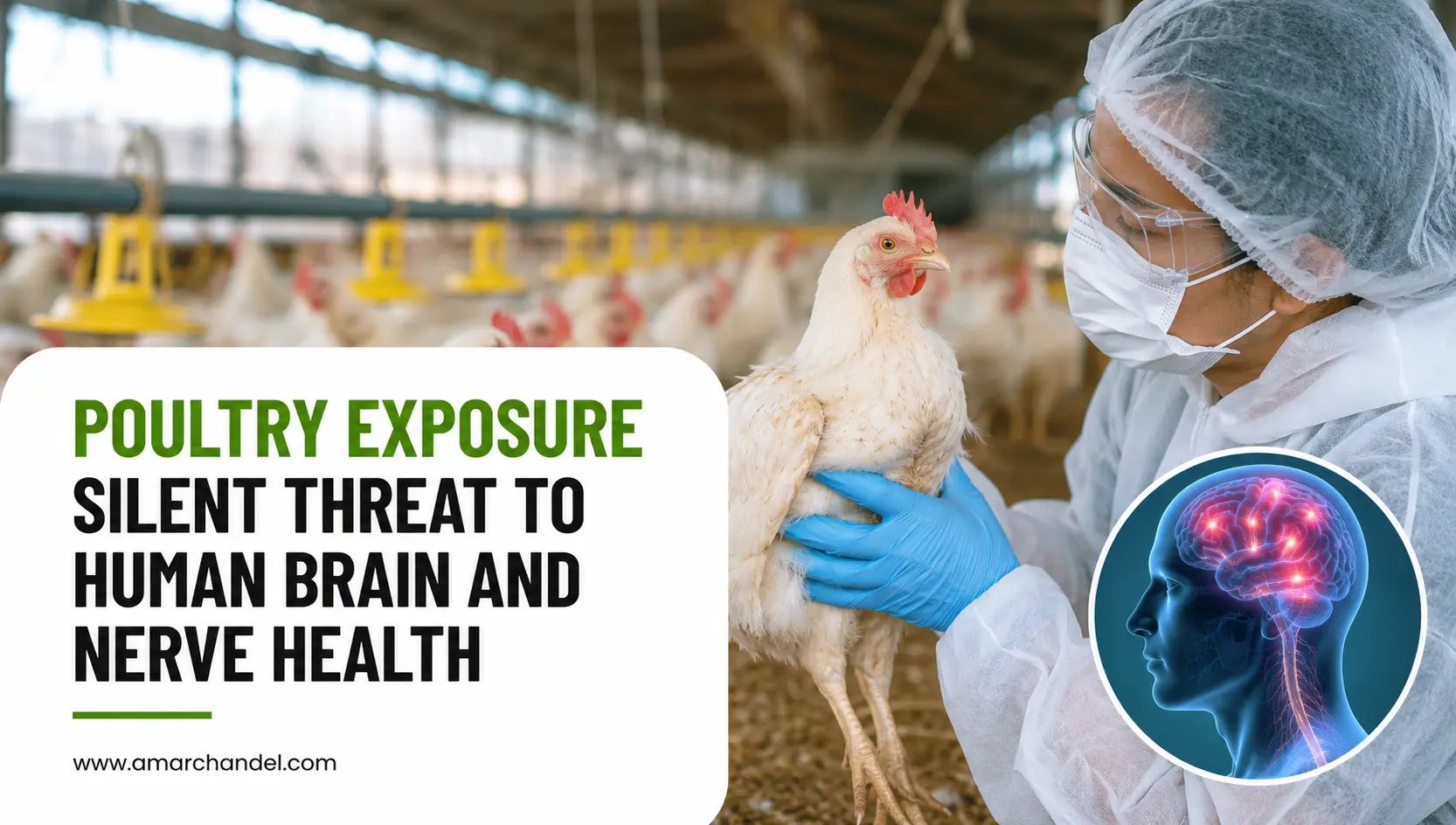
While science has long associated higher exposure to poultry with increased cancer risks, researchers have turned their focus to non-cancer health problems. A significant portion of human chronic diseases still lacks a known cause. Chickens and turkeys raised for meat, alongside their eggs and other derivatives, carry a wide array of transmissible biological agents. In poultry, these agents trigger various ailments ranging from kidney and heart conditions to cancers and central nervous system disorders.
These infectious agents do not always remain confined to birds. Humans can contract infections through direct contact with live or slaughtered poultry, handling raw blood and meat fluids, eating undercooked products, or coming into contact with contaminated vaccines. Blood antibody tests reveal that many people have been infected with common avian viruses, including avian leukosis virus, reticuloendotheliosis virus, and Marek’s disease virus. Because these specific viruses cause neurological issues and cancers in poultry, researchers have sought to determine whether they might also lie behind unexplained human neurological and autoimmune conditions.
Major long-term health monitoring of poultry industry workers has offered striking answers. Compared to the general population, individuals working directly with poultry showed noticeably higher death rates from non-cancer conditions. These included thyroid disorders, psychotic conditions like schizophrenia, anterior horn cell disease (which damages the spinal cord), and myasthenia gravis, a severe autoimmune disease that causes progressive muscle weakness. Researchers concluded that these wide-ranging health issues across multiple body systems likely stem from widespread exposure to transmissible microorganisms present in poultry operations.
Modern veterinary and public health studies continue to support the idea that lingering animal viruses can pass into human workers and the broader population. As research evolves, scientists suspect that subclinical infections—infections that do not produce immediate severe illness—may quietly trigger chronic inflammation or autoimmune responses in the human nervous system years later. This points to the unsettling possibility that several unexplained human neurological conditions may trace their origins back to food-producing animals.
India is one of the world’s largest producers of poultry meat and eggs, yet a vast proportion of the trade relies on wet markets and informal slaughterhouses rather than automated processing facilities. Recent field surveys conducted by veterinary institutions reveal severe gaps in basic hygiene among local poultry handlers. The vast majority of butchers operate without protective gloves or face masks, frequently handle cash while processing raw meat, and lack formal training in biosecurity or disease prevention.
Furthermore, millions of workers and local consumers in India live in close physical proximity to live bird markets and backyard poultry farms, where direct exposure to poultry fluids, droppings, and organic dust occurs daily. The lack of basic personal protective equipment and inadequate sanitation protocols create an ideal environment for cross-contamination and continuous exposure to avian pathogens.
Public health experts in India are increasingly advocating for strict biosecurity regulations, mandatory worker safety training, and better routine health screening to safeguard workers and consumers against long-term infectious and neurological risks.
References and Sources:
1. Greger, M. (2012). Poultry Exposure and Neurological Disease. NutritionFacts.org. (Reviewing findings on non-cancer mortality in poultry cohorts). 2. Johnson, E. S., Yau, L. C., Zhou, Y., Singh, K. P., & Ndetan, H. (2010). Mortality in the Baltimore union poultry cohort: non-malignant diseases. International Archives of Occupational and Environmental Health, 83(5), 543-552. 3. Janarthanan, G., Palavesam, A., et al. (2025/2026). Assessment of Food Safety and Biosecurity Practices among Poultry Butchers. Discover Public Health / Tamil Nadu Veterinary and Animal Sciences University (TANUVAS). 4. World Health Organization (WHO) & Food and Agriculture Organization (FAO). Guidelines on Zoonotic Disease Risk Management in Live Bird Markets.