

Smart Daily Strategies for Securing Vitamin B12
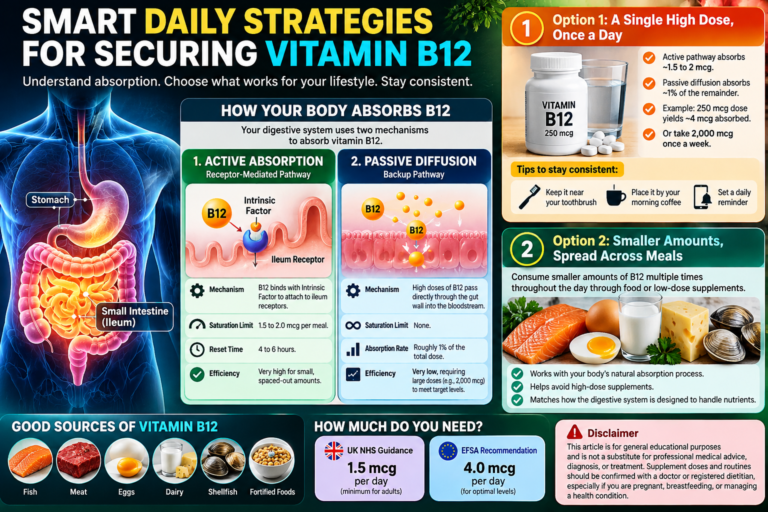
When it comes to vitamin B12, the biggest obstacle to maintaining healthy levels is rarely how much you consume. The…

Medical Disclaimer: This article is for general educational purposes and is not medical or nutritional advice. Research on antioxidant activity in cells does not prove health outcomes in people. If you have a medical condition, are pregnant, or take regular medication, speak to a doctor or registered dietitian before making major dietary changes.
Walk into any grocery store or open social media, and you will find a dizzying array of claims about “superfoods”. One expert tells you to eat spinach every day for its high antioxidant content, while another claims kale, wild blueberries, or green tea are the undisputed champions. The constant barrage of conflicting top-10 lists leaves most health-conscious consumers asking a basic question: why can’t science give a straight answer?
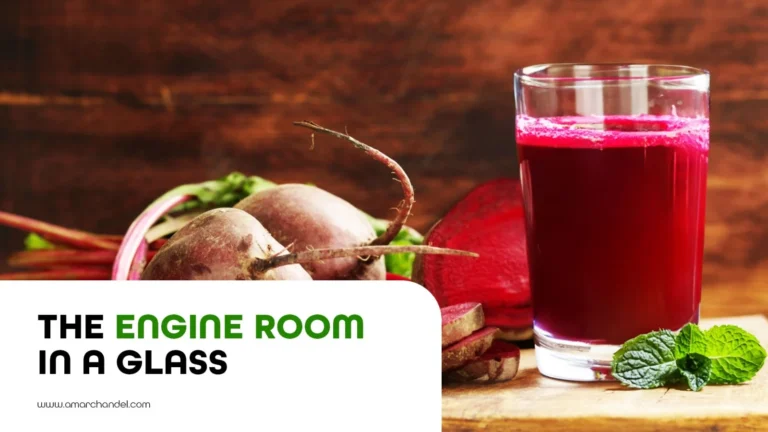
The confusion exists because the tests historically used to rank these foods were measuring chemical reactions in a glass test tube, not how antioxidants behave inside living human biology. When researchers began testing vegetable extracts on living cells, the leaderboard shifted dramatically. Beetroot rose to the top, cruciferous vegetables gained ground, and several long-standing favorites dropped down the ranks.
Understanding antioxidant research also means looking beyond individual superfoods and considering the variety of plants we eat. Different fruits and vegetables contain different combinations of naturally occurring compounds, making dietary diversity an important part of nutrition. Our guide to plants of life and plant-based nutrition explores this wider relationship between plant foods and everyday eating habits.
If two nutrition websites give completely different rankings for the exact same vegetable, it does not mean one of them is making up its numbers. Instead, they are usually citing studies that used entirely different measurement methods.
For decades, scientists have relied on standard chemical assays to estimate antioxidant capacity. Each assay tests a specific type of chemical reaction:
Because these assays evaluate different chemical mechanisms, a food can score exceptionally high in one test and average in another. A comprehensive study comparing ORAC and FRAP across 927 vegetable samples demonstrated that the two methods often yield contrasting trends, with results further influenced by plant geography, soil conditions, and harvest timing (Ou et al., J Agric Food Chem, 2002).
Early scientific databases tested only a small selection of produce. For instance, a widely cited study by Wu et al. (2004) evaluated a specific set of foods common in the United States. Years later, Carlsen et al. (2010) screened more than 3,100 foods, beverages, and herbs globally using the FRAP assay, chosen primarily because its speed allowed for high-throughput screening.
The United States Department of Agriculture (USDA) previously published a public ORAC database for common foods. However, the USDA removed this database from its website after concluding that test-tube antioxidant values do not correlate with actual biological activity in the human body.
The central limitation of chemical assays like ORAC, FRAP, and TEAC is their artificial environment. They take place in glass beakers or microplate wells using purified chemical reagents.
A test tube has no digestive enzymes, no intestinal wall, no liver metabolism, and no cell membranes. In a beaker, a large polyphenol molecule can easily neutralize a free radical floating right next to it. But inside a biological organism, that same molecule faces major hurdles:
Think of a chemical assay as testing whether a key fits a lock on paper. A compound might have the perfect shape to neutralize a radical, but if it cannot get past the front door of the cell membrane, its test-tube potential is irrelevant to human physiology.
To move closer to biological reality, researchers developed the Cellular Antioxidant Activity (CAA) assay. Pioneered by Dr. Rui Hai Liu and colleagues at Cornell University, this protocol tests how well antioxidants function inside living cells (Song et al., J Agric Food Chem, 2010).
The research team evaluated 27 common vegetables using human liver cancer cells (HepG2) cultured in the laboratory:
Because HepG2 cells are a standard human liver cell line, this protocol measures whether compounds can actually cross cell membranes and handle real cellular oxidation.
The CAA assay accounts for cellular uptake, bioaccessibility, and membrane permeability—factors chemical test tubes completely ignore.
This cell-based model is now a well-established benchmark across food science. For example, when Wolfe et al. (2008) applied the CAA protocol to 25 common fruits, pomegranate and wild blueberries demonstrated the highest cellular protection, illustrating that uptake varies widely across different botanical families.
When researchers moved from test tubes to living cells, the vegetable hierarchy changed significantly.
| Vegetable Category | Chemical Test-Tube Trend (e.g., ORAC) | Cell-Based Assay Trend (CAA in HepG2) |
| Beetroot | Moderate ranking | #1 Overall Performer |
| Spinach | Frequently ranked #1 | Fell out of the top 10 |
| Red Bell Pepper | Moderate to high | High performance (outperformed greens) |
| Cruciferous (Broccoli, Brussels Sprouts) | Moderate ranking | High performance across all varieties |
| Cucumber | Lowest ranking | Remained near the bottom |
In traditional test-tube ORAC comparisons, spinach often claimed the top spot among vegetables while cucumber ranked near the bottom.
Under the CAA assay, beetroot emerged as the highest-ranking vegetable. Cucumber remained at the bottom, but spinach experienced a steep drop, falling out of the top ten entirely. Independent review data published in the International Journal of Molecular Sciences (2017) confirm that beetroot, broccoli, and red bell peppers alongside eggplant, Brussels sprouts, and cabbage are among the highest-performing vegetables in cell-based antioxidant activity.
Why did spinach slip? While spinach contains abundant polyphenols, many of these molecules are large or bound in ways that make it difficult for them to cross cell membranes in the CAA assay model. Conversely, beetroot contains betalains and specific water-soluble compounds that pass efficiently into cells to quench intracellular radicals.
Cruciferous vegetables saw a clear rise under cell-based testing. Brussels sprouts, broccoli, cabbage, and cauliflower all scored higher in cellular activity than they did in chemical tube tests.
Similarly, red bell pepper performed exceptionally well, outscoring many leafy green options. Red peppers contain high levels of carotenoids like capsanthin alongside vitamin C, a combination that appears particularly effective at membrane penetration and cellular defense.
While Cellular Antioxidant Activity represents a major step forward from test tubes, it is essential to maintain perspective:
The Key Takeaway:
The findings do not mean that one vegetable should replace another. Beetroot, spinach, broccoli, and red bell peppers provide different nutrients, and their performance in a laboratory antioxidant test does not represent their entire nutritional value. Choosing a wider range of vegetables can help diversify your diet. Learn more about why mixing up your fruits and vegetables matters rather than relying on a single food as a nutritional solution.
Applying this research to an Indian context offers valuable guidance for daily meal planning and home cooking.
According to the ICMR-National Institute of Nutrition (ICMR-NIN) Dietary Guidelines for Indians (2024), an estimated 56.4% of India’s total disease burden is attributable to unhealthy diets. Non-communicable conditions such as Type 2 diabetes, hypertension, and cardiovascular disease are rising rapidly across urban and rural populations alike.
ICMR-NIN guidelines emphasize that daily meals should be built around a wide variety of whole plant foods, including fresh vegetables, legumes, and whole grains, to help mitigate these metabolic health risks.
A varied diet does not have to depend on expensive imported produce or specialty health foods. Seasonal vegetables available at local markets can help households build meals with a wider range of colours, flavours, and nutrients. The most practical approach is to consider affordability, availability, and dietary variety together. For more everyday ideas, explore this guide to eating healthy on a budget.
How you prepare your vegetables in an Indian kitchen directly affects how many of these beneficial compounds survive:
The best cooking method can vary according to the vegetable, the nutrient being considered, and the recipe. Rather than avoiding cooked vegetables, focus on preparing a range of produce using practical methods that suit your regular meals. You can find more ideas for incorporating familiar vegetables into daily cooking in this guide to simple vegetables and everyday food choices.
You do not need to overthink your grocery list or hunt for exotic imported superfoods. You can build a cell-protective diet using affordable ingredients from your local vegetable market (sabzi mandi):
Yes. While its cellular antioxidant score was lower than beetroot in laboratory models, spinach remains an excellent source of essential micronutrients including folate, iron, magnesium, vitamin K, and lutein.
Different websites cite different testing methods. Older rankings rely on test-tube chemical tests like ORAC, while newer lists may reference cell-based assays like CAA or total polyphenol counts. Growing conditions and plant varieties also create variations.
Both offer unique benefits. Raw beetroot preserves heat-sensitive vitamin C, while light cooking softens plant tissue, making certain antioxidants and minerals easier to digest and absorb. Avoiding prolonged boiling in excess water helps protect its betalain pigments.
No. High-dose antioxidant supplements do not replicate the complex matrix of dietary fiber, vitamins, and minerals found in whole vegetables. Major health authorities recommend getting antioxidants through a varied diet rather than pill form.
When it comes to vitamin B12, the biggest obstacle to maintaining healthy levels is rarely how much you consume. The…
Medical Disclaimer: The information provided in this article is for educational and informational purposes only and is not intended as…
Every time we flex a muscle, take a breath, or blink an eye, our body spends a tiny packet of…
