

The Hidden Risks on Your Kitchen Counter
Eggs are a familiar part of everyday life in India. They are boiled for breakfast, turned into bhurji, added to…
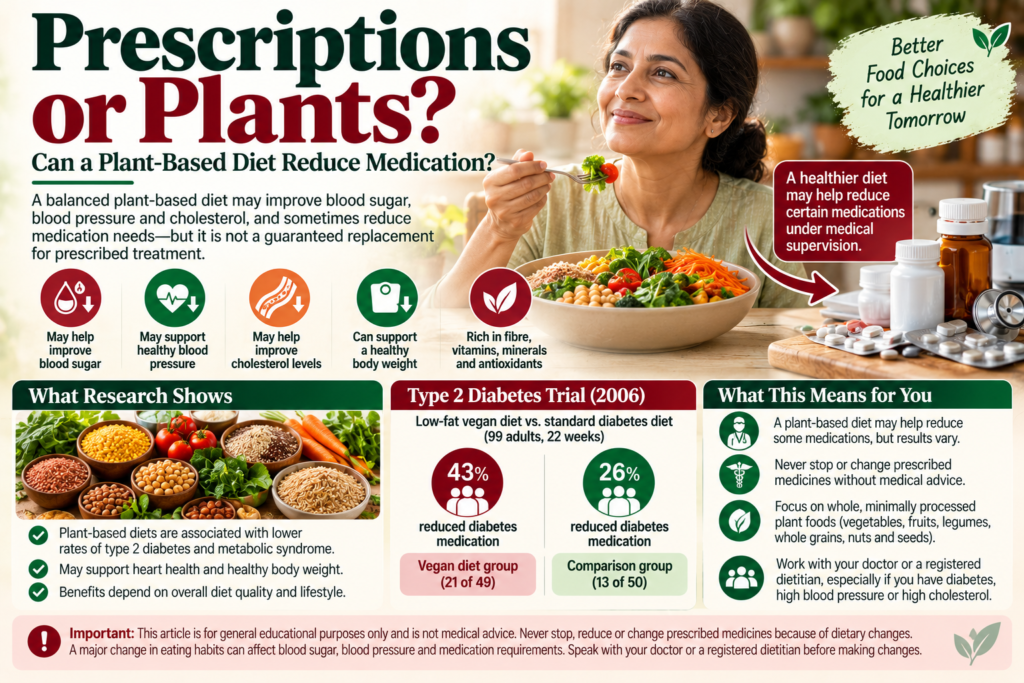
If you have type 2 diabetes, high blood pressure or high cholesterol, you may have wondered whether changing what you eat could reduce the number of medicines you need. It is a reasonable question. Food choices influence body weight, blood sugar, cholesterol levels and other factors associated with long-term health.
Research suggests that diets built around vegetables, fruits, legumes, whole grains, nuts and seeds can support better cardiometabolic health. Some clinical trials have also found that participants following a carefully planned plant-based diet were able to reduce certain diabetes medicines under medical supervision.
But there is an important distinction: a plant-based diet may improve some health markers and sometimes reduce medication needs, but it is not a guaranteed replacement for prescribed treatment. Results vary between individuals, and the quality of the diet matters as much as the label.
For Indian households, the opportunity is practical rather than complicated. Everyday foods such as dal, chana, seasonal vegetables, whole grains and fruit can form the foundation of a balanced eating pattern without relying on expensive specialty products.
Important medical disclaimer: This article is for general educational purposes and is not medical advice. Never stop, reduce or change prescribed medicines—including insulin, blood pressure tablets or blood thinners—because of dietary changes or information in this article. A major change in eating habits can affect blood sugar, blood pressure and medication requirements. Speak with your doctor or a registered dietitian before making significant changes.
Plant-based diets are associated with several favourable health outcomes, particularly when they emphasise minimally processed foods rather than refined carbohydrates, sugary drinks and heavily processed snacks.
However, studies examine different eating patterns, populations and outcomes. Some investigate vegetarian diets, others study vegan diets, and clinical trials may use a specific low-fat or whole-food approach. These patterns should not automatically be treated as interchangeable.
The Adventist Health Studies in the United States have examined health outcomes among people following different dietary patterns. Reviews of this research have found associations between vegetarian eating patterns and factors such as lower average body weight, lower rates of type 2 diabetes and metabolic syndrome, and differences in cardiovascular risk.
These findings are useful, but they do not prove that avoiding meat alone produces every benefit. Participants may also differ in physical activity, smoking, alcohol use and other lifestyle habits. Observational studies can identify relationships, but they cannot establish cause and effect as reliably as well-designed clinical trials.
The wider evidence supports a more useful takeaway: eating a variety of whole plant foods can be one part of a healthy lifestyle. The benefit depends on what those foods replace, how the overall diet is balanced and whether individual nutritional needs are met.
A healthy eating pattern should be judged by the evidence as a whole, not by selecting only favourable findings.
For example, the EPIC-Oxford study followed 48,188 people in the United Kingdom for an average of approximately 18 years. Researchers found that vegetarians had a 22% lower rate of ischaemic heart disease than meat eaters. However, they also observed a 20% higher rate of total stroke among vegetarians, equivalent to about three additional cases per 1,000 people over ten years.
This was an observational study, so it does not establish that vegetarian diets directly caused either outcome. It also does not mean that all vegetarian diets carry the same risks.
The practical lesson is not to reject plant-based eating. It is to avoid treating any single dietary label as a guarantee of health. Food quality, nutrient adequacy and individual circumstances all matter.
Sometimes, yes—but the evidence does not show that everyone can reduce or stop medication. The clearest example in the supplied research brief comes from a clinical trial involving adults with type 2 diabetes.
In a 2006 randomised clinical trial published in Diabetes Care, researchers assigned 99 adults with type 2 diabetes to one of two eating plans for 22 weeks. One group followed a low-fat vegan diet, while the comparison group followed dietary guidance from the American Diabetes Association.
By the end of the study, 21 of 49 participants in the vegan group—43%—had reduced their diabetes medication. In the comparison group, 13 of 50 participants—26%—had done so.
The trial also found improvements in measures such as blood sugar control and body weight. However, both groups benefited from dietary changes, and the study examined a specific eating plan over a relatively short period.
Most importantly, medication adjustments were made under clinical supervision. Changes were necessary because improved blood sugar control can increase the risk of hypoglycaemia, or dangerously low blood sugar, in people taking certain diabetes medicines.
These results are encouraging, but they do not mean that switching to a vegan diet will allow every person with diabetes to stop treatment.
A study involving 99 participants over 22 weeks cannot establish what will happen to every person over many years. The results also cannot automatically be applied to every plant-based diet, especially one dominated by refined flour, sweets, fried snacks and packaged foods.
People with type 2 diabetes differ in disease duration, pancreatic function, other medical conditions and the medicines they take. Some may improve their blood sugar substantially through lifestyle changes, while others will continue to need medication to manage their condition and reduce complications.
The same principle applies to blood pressure and cholesterol medicines. Improving diet quality may support treatment, but whether a medicine is still needed depends on clinical measurements, medical history and the individual’s risk.
A useful goal is therefore not to count how many pills you can eliminate. It is to improve your health with a sustainable eating pattern and work with your clinician to determine whether treatment needs to change.
A well-planned plant-based diet can influence several processes linked to cardiometabolic health.
Fibre and blood sugar: Beans, lentils, vegetables, fruit and whole grains provide dietary fibre. Depending on the food and preparation, fibre can slow digestion, support bowel regularity and help moderate the rise in blood glucose after meals.
Cholesterol and dietary fat: Replacing some foods high in saturated fat with sources of unsaturated fats, such as nuts and seeds, may help improve blood lipid levels. The overall pattern matters more than simply removing every source of dietary fat.
Body weight: Many vegetables, fruits, legumes and intact whole grains provide fibre and volume. Including them regularly may help some people feel satisfied with fewer calories, supporting weight management when appropriate.
Blood pressure: A diet containing a variety of vegetables, fruits, legumes and other nutrient-rich foods can support blood pressure management. Sodium intake, physical activity, sleep, genetics and prescribed treatment remain important factors.
These mechanisms help explain why dietary changes may be beneficial, but they do not guarantee a particular outcome. A person can eat plant foods regularly and still have high blood sugar or blood pressure that requires medical treatment.
In India, vegetarian food can range from a balanced meal of dal, sabzi and whole grains to a meal dominated by refined flour, sweets, deep-fried snacks and sugary drinks. Both may be vegetarian, but their nutritional profiles are very different.
The distinction is especially important when someone assumes that removing meat is enough to improve health.
A whole-food, plant-rich eating pattern prioritises foods that remain close to their natural form. Examples include whole wheat, millets, unpolished or less-refined grains, lentils, beans, chickpeas, seasonal vegetables, fruit, nuts and seeds.
By contrast, eating large amounts of biscuits, packaged savoury snacks, sugary breakfast foods and deep-fried products does not become healthy simply because these foods contain no meat.
Carbohydrates also deserve context. Rice, roti, oats, fruit and dal do not affect the body in exactly the same way as sugary drinks or foods made largely from refined flour. Portion size, preparation, fibre content and the rest of the meal all influence the overall response.
People considering very restrictive diets should also weigh the potential trade-offs. Our article on keto diets and heart health discusses why changes in carbohydrate intake and food choices need to be considered alongside cardiovascular risk factors.
The goal is not to label all carbohydrates as harmful or all plant foods as beneficial. It is to build a balanced pattern that is nutritionally adequate and realistic to maintain.
The ICMR–National Institute of Nutrition’s 2024 Dietary Guidelines for Indians report that an estimated 56.4% of the country’s disease burden is attributable to unhealthy diets. The guidelines encourage balanced eating patterns that include a variety of vegetables, pulses, whole grains and other nutrient-rich foods.
This is not a recommendation that every Indian should follow an exclusively vegan diet. A balanced eating pattern can include different foods according to personal preferences, nutritional requirements, affordability and medical circumstances.
For many households, improving everyday meals can begin with small, familiar changes:
Healthy eating does not require imported powders, expensive meat substitutes or a complete change in culinary tradition. Consistent improvements to familiar meals may be easier to maintain than an extreme plan that is difficult to afford or follow.
A plant-based diet can be nutritionally adequate, but a more restrictive diet requires greater attention to certain nutrients.
Vitamin B12 deserves particular consideration. Natural, reliable sources of B12 are limited in unfortified plant foods. People following vegan diets generally need a dependable source from fortified foods or supplements, with individual needs discussed with a healthcare professional.
Our guide to a smarter approach to vitamin B12 testing explains why B12 status can require careful assessment rather than relying on diet alone.
Other nutrients also need attention:
Requirements vary with age, pregnancy, breastfeeding, medical conditions and the type of diet followed. Children, older adults and pregnant or breastfeeding people may need more individualised nutritional planning.
A registered dietitian can help assess whether the eating pattern provides enough energy, protein, vitamins and minerals. Supplements should be chosen according to actual needs rather than the assumption that everyone following a plant-based diet requires the same products.
This is the most important practical consideration for anyone hoping to reduce medication through diet.
Dietary changes can improve blood sugar or blood pressure. When that happens, a medicine dose that was previously appropriate may need review. The decision must be based on clinical monitoring, not on how healthy the new diet feels.
Before making a major dietary change:
People taking multiple medicines or living with kidney disease, heart disease or other long-term conditions may need more personalised guidance. A diet that is appropriate for one person may not be suitable for another.
The safest approach is to treat food as an important part of your care plan, while keeping medical treatment and professional monitoring in place.
No. Some people improve their blood sugar control substantially through dietary changes, weight management and other treatments. Some may achieve remission under clinical criteria, but this is not guaranteed and does not mean diabetes can never return. Continue medical follow-up even when blood sugar improves.
Do not stop or reduce prescribed medicines on your own. Dietary changes can alter blood sugar or blood pressure, and your clinician may decide to adjust treatment based on your measurements and medical history.
You do not have to go vegan to eat healthfully. A well-planned vegetarian diet that includes a variety of vegetables, pulses, whole grains, fruit and suitable protein sources can support good health. Overall food quality and nutritional adequacy matter more than the label alone.
There is no single supplement plan for everyone. Vitamin B12 needs particular attention in vegan diets, while other nutrients depend on your food choices, health status and life stage. A qualified healthcare professional or registered dietitian can help identify what is appropriate for you.
The most useful question is not whether to choose prescriptions or plants. It is how to combine appropriate medical care with everyday food choices that support your health over time.

Eggs are a familiar part of everyday life in India. They are boiled for breakfast, turned into bhurji, added to…
Allergic conditions in children have become far more common over the past few decades. Food allergy, asthma, hay fever and…

An Ancient Practice Backed by Modern Medicine Using a neti pot to flush the nasal passages with salt water is…
