

Nature’s Secret Weapon for Heart Health
When we think of heart health, our minds usually jump to cutting back on salt, lacing up running shoes, or…

Can everyday dishes like a fragrant mutton curry or weekend breakfast sausages influence how long we live? For decades, dietary guidelines treat red meat as a primary health concern, while food cultures around the world place it at the center of the table. Navigating these conflicting signals leaves many people wondering if their standard meals are quietly increasing long-term health risks.
This conversation shifted significantly in 2012 when landmark research from Harvard University linked regular red meat consumption to a higher risk of premature death. Since then, subsequent global studies, meta-analyses, and updated dietary consensus papers have added both clarity and nuance to the discussion.
Understanding what the science actually shows requires looking closely at how these studies were conducted, how to interpret statistical risks, where researchers disagree, and how these findings apply to dietary habits in India. This broader perspective on everyday health choices also connects with Amarchandel’s guide to simple vegetables that help the liver fight everyday toxins.
Disclaimer: This article is for general educational purposes only and does not constitute individual medical or nutrition advice. Health research evaluates patterns across large groups of people and cannot predict individual health outcomes. Red meat is an important source of bioavailable iron, zinc, and vitamin B12. Speak to your doctor or a registered dietitian before making major dietary changes, especially if you have anaemia, are pregnant or breastfeeding, are an older adult, or are managing an underlying medical condition.
The debate around red meat and longevity gained massive public attention with the publication of a major prospective study led by Dr. An Pan and colleagues at the Harvard T.H. Chan School of Public Health, published in the Archives of Internal Medicine.
The researchers analyzed data from two of America’s largest and longest-running health tracking projects: the Health Professionals Follow-Up Study (37,698 men tracked from 1986) and the Nurses’ Health Study (83,644 women tracked from 1980). All participants were free of cardiovascular disease and cancer at the start of the observation period.
Dietary habits were evaluated using validated Food Frequency Questionnaires (FFQs) updated every four years, with total follow-up extending up to 28 years (through 2008).
Over the course of the study, 23,926 deaths were recorded, including 5,910 from cardiovascular disease and 9,464 from cancer. After adjusting for major lifestyle and dietary risk factors, the researchers observed clear statistical associations:
The authors also modeled statistical substitution scenarios. Replacing one daily serving of total red meat with healthier alternative protein sources was associated with a lower risk of mortality:
The authors estimated that 9.3% of deaths in men and 7.6% of deaths in women in these cohorts could have been prevented if all participants had consumed less than half a serving (approx. 42 grams) of red meat per day.
While these percentage increases sound alarming, interpreting nutritional epidemiology requires understanding what statistical models can and cannot prove.
First, the Harvard projects were observational studies, not randomized controlled trials. They identify statistical correlations (associations), not direct cause-and-effect relationships. Even with rigorous mathematical adjustments for smoking, physical activity, alcohol intake, and body mass index, observational studies cannot fully eliminate residual confounding variables. People who consume less red meat often engage in other health-conscious behaviors overall.
Second, diet was self-reported through periodic surveys. Self-reported dietary data inherently carries measurement error and memory bias over multi-year periods.
Third, it is vital to distinguish between relative risk and absolute risk. A 13% increase in relative risk does not mean a person has a 13% chance of dying tomorrow. If an individual’s baseline absolute risk of developing a disease over a decade is 2%, a 13% relative increase moves that absolute risk to roughly 2.26%. The individual increase in absolute risk is often far smaller than the headlines suggest.
Finally, as nutrition researcher Dr. Walter Willett notes, foods are consumed as a complete “package.” Red meat is not just protein; it arrives packaged alongside saturated fats, heme iron, sodium, and specific amino acids. The overall health impact depends heavily on what replaces that meat on the plate. A balanced diet also matters when considering topics such as childhood food allergies and dietary patterns.
Research following the 2012 Harvard paper continues to explore the links between red meat, processed meats, and chronic conditions across broader populations.
A comprehensive 2023 systematic review and meta-analysis published in the European Heart Journal by Shi et al. evaluated pooled global data on meat consumption. The authors found that higher intakes of both unprocessed and processed red meat were consistently associated with an elevated risk of total cardiovascular disease, coronary heart disease, stroke, heart failure, and type 2 diabetes. Notably, the strength of the statistical association was more pronounced in Western cohort studies than in Eastern population settings, highlighting that broader dietary patterns play a major context-dependent role.
In 2015, the International Agency for Research on Cancer (IARC), the specialized cancer agency of the World Health Organization (WHO), classified processed meat as Carcinogenic to humans (Group 1) and unprocessed red meat as Probably carcinogenic to humans (Group 2A).
Understanding Group Classifications: An IARC classification reflects the strength of scientific evidence showing that an agent can cause cancer, not the magnitude of the risk. Processed meat being in Group 1 alongside tobacco smoke means the evidence that it causes cancer is equally conclusive, not that eating bacon carries the same numerical risk as smoking cigarettes.
A 2025 meta-analysis published in GeroScience by Varga et al. analyzing prospective cohort studies reinforced these findings, reporting an elevated hazard ratio of 1.22 for colon cancer and 1.15 for overall colorectal cancer among high consumers of red meat. Prospective data from the UK Biobank tracking hundreds of thousands of adults similarly demonstrates an incremental rise in colorectal cancer incidence alongside higher red and processed meat intake. Consequently, the World Cancer Research Fund (WCRF) recommends limiting red meat consumption to no more than about three moderate portions per week (350 to 500 grams cooked weight equivalent) and consuming little to no processed meat.
Across almost all clinical literature, processed meats (such as bacon, sausages, salami, and hot dogs) consistently present stronger health risks than fresh, unprocessed cuts of red meat. The high sodium content, chemical nitrates/nitrites used for curing, and advanced glycation end-products formed during high-temperature processing compound the physiological stress on the cardiovascular and gastrointestinal systems. These concerns sit within a wider discussion of hidden chemicals in our kitchens and their possible everyday exposure routes.
Although consensus across major public health bodies favors moderating red meat, the scientific community is not entirely unanimous regarding how dietary guidelines should be constructed.
In 2019, an international consortium of researchers known as NutriRECS published a series of systematic reviews and guidelines in the Annals of Internal Medicine. Utilizing the GRADE (Grading of Recommendations Assessment, Development and Evaluation) framework, the NutriRECS team concluded that the absolute risk reductions associated with cutting back on red and processed meat were small to uncertain. They issued a “weak recommendation” suggesting that adults continue their current red and processed meat consumption habits.
The NutriRECS publication triggered immediate pushback from researchers at the Harvard T.H. Chan School of Public Health and other academic institutions. Critics argued that applying GRADE standards, which were developed primarily for clinical drug trials, inherently downgrades observational dietary evidence because long-term, randomized double-blind feeding trials over several decades are practically impossible to conduct. Opponents maintained that when multiple lines of epidemiological, animal, and mechanistic evidence point in the same direction, public health guidance should lean toward caution.
Despite this methodological debate, mainstream health organizations, including the American Heart Association, the World Cancer Research Fund, and the World Health Organization, continue to advise moderating red meat and minimizing processed meat intake.
Researchers are actively studying several biological pathways to explain how heavy red meat intake may influence chronic disease risk:
Applying global red meat research directly to India requires accounting for unique dietary demographics, study definitions, and baseline population risks.
Contrary to the widespread perception that India is predominantly vegetarian, national survey data shows that a clear majority of the population consumes meat, poultry, fish, or eggs. Data from the National Family Health Survey (NFHS-5, 2019 to 2021) indicates that roughly 80% of adults aged 15 to 49 consume non-vegetarian food in some form, up from 74% in 2005 to 2006.
However, frequency matters greatly. Only about 10% of Indians eat non-vegetarian foods daily, while roughly 60% consume them weekly or occasionally. Furthermore, Indian dietary surveys often group chicken, fish, eggs, mutton, and goat under a single non-vegetarian category, whereas Western research isolates heavy daily consumption of beef, pork, and processed meats.
According to NFHS-5 data, non-vegetarian intake stands at approximately 80% of adults, with vegetarians making up 20%. Among non-vegetarian consumers, about 10% eat non-vegetarian food daily, while 60% consume it weekly or occasionally.
A key 2024 study by Banjara et al. from the ICMR-National Institute of Nutrition analyzed 6,012 adults participating in the Andhra Pradesh Children and Parents Study (APCAPS) in Southern India.
The median total meat intake in this urbanizing community was relatively modest: roughly 18 grams per day for men and 9 grams per day for women. The study observed that higher total meat intake was associated with adverse cardio-metabolic risk factors:
Crucially, this was a cross-sectional study, meaning it captured a single snapshot in time measuring risk factor markers, not long-term incidence of heart attacks or mortality. The study found no direct association between meat intake and carotid intima-media thickness (a measure of subclinical atherosclerosis). Additionally, “total meat” in this study included chicken, mutton, and fish combined, reflecting overall dietary transitions in modernizing Indian regions rather than isolated red meat consumption.
In India, red meat is rarely consumed in isolation. It is frequently prepared in rich curries with refined oils or eaten alongside refined carbohydrates like white rice, refined wheat flatbreads (naan/maida parathas), and starchy sides.
The extensive ICMR-INDIAB study revealed that modern Indian urban and semi-urban diets are overwhelmingly high in refined carbohydrates and simple sugars. A diet heavily dominant in refined carbs, coupled with rising sedentary behavior, creates an underlying environment of metabolic vulnerability. When red meat prepared with high sodium and saturated fats is added to an already carb-heavy diet, cardio-metabolic risks can compound quickly. Readers can also explore avoiding invisible pollutants as part of a broader approach to reducing avoidable environmental exposures.
Rather than resorting to extreme dietary elimination, practical evidence points toward balance, mindful substitution, and thoughtful preparation.
While reducing processed and high-fat red meat benefits many adults, abrupt dietary elimination without planning can create nutritional gaps.
Most dietary guidelines, including recommendations from the World Cancer Research Fund, suggest limiting unprocessed red meat to roughly 350 to 500 grams of cooked weight per week (equivalent to about three moderate portions), while keeping processed meats to an absolute minimum.
Yes. Studies consistently show that replacing red meat with fish or poultry is associated with a lower overall risk of cardiovascular disease, metabolic syndrome, and early mortality. Fish also provides beneficial omega-3 fatty acids.
Scientific evidence consistently links processed meat (cured, smoked, or chemically preserved cuts) to higher risks of colorectal cancer, heart disease, and type 2 diabetes than fresh red meat, primarily due to high sodium levels and nitrate preservatives.
No. You do not need to eliminate meat completely to live a long, healthy life. Overall dietary patterns matter far more than single foods. Moderating portion sizes, avoiding processed meats, and incorporating plenty of vegetables, legumes, whole grains, and healthy fats creates a strong foundation for long-term health.
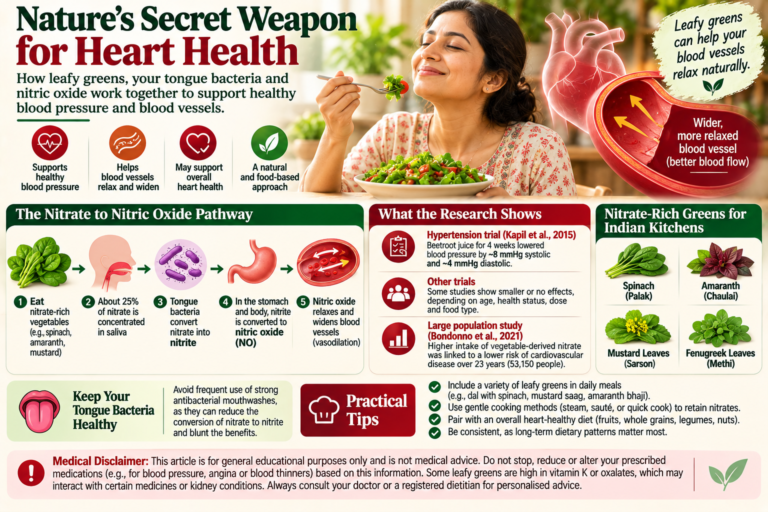
When we think of heart health, our minds usually jump to cutting back on salt, lacing up running shoes, or…
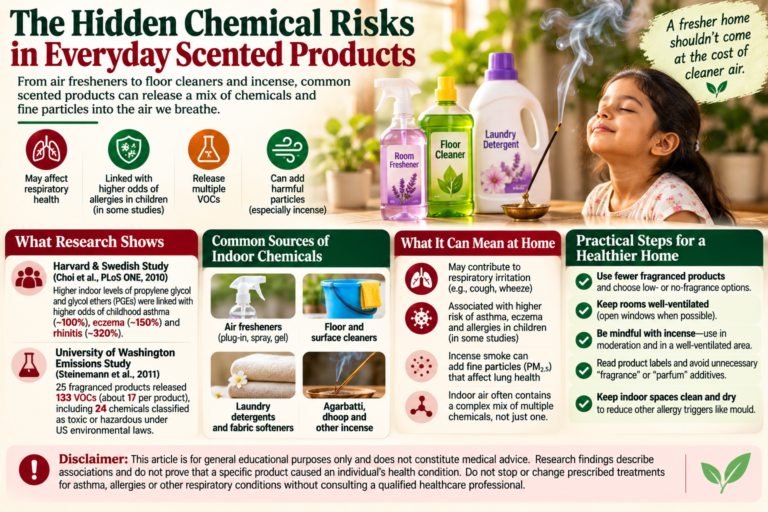
We rarely think about the quality of the air inside our homes. Most of us spend the vast majority of…
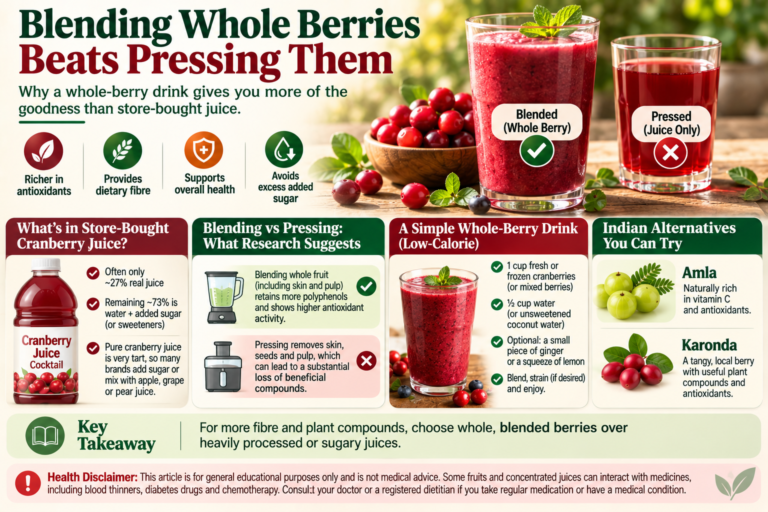
Blending Whole Berries Beats Pressing Them Berries regularly rank among the healthiest fruits you can add to your diet, packed…
