
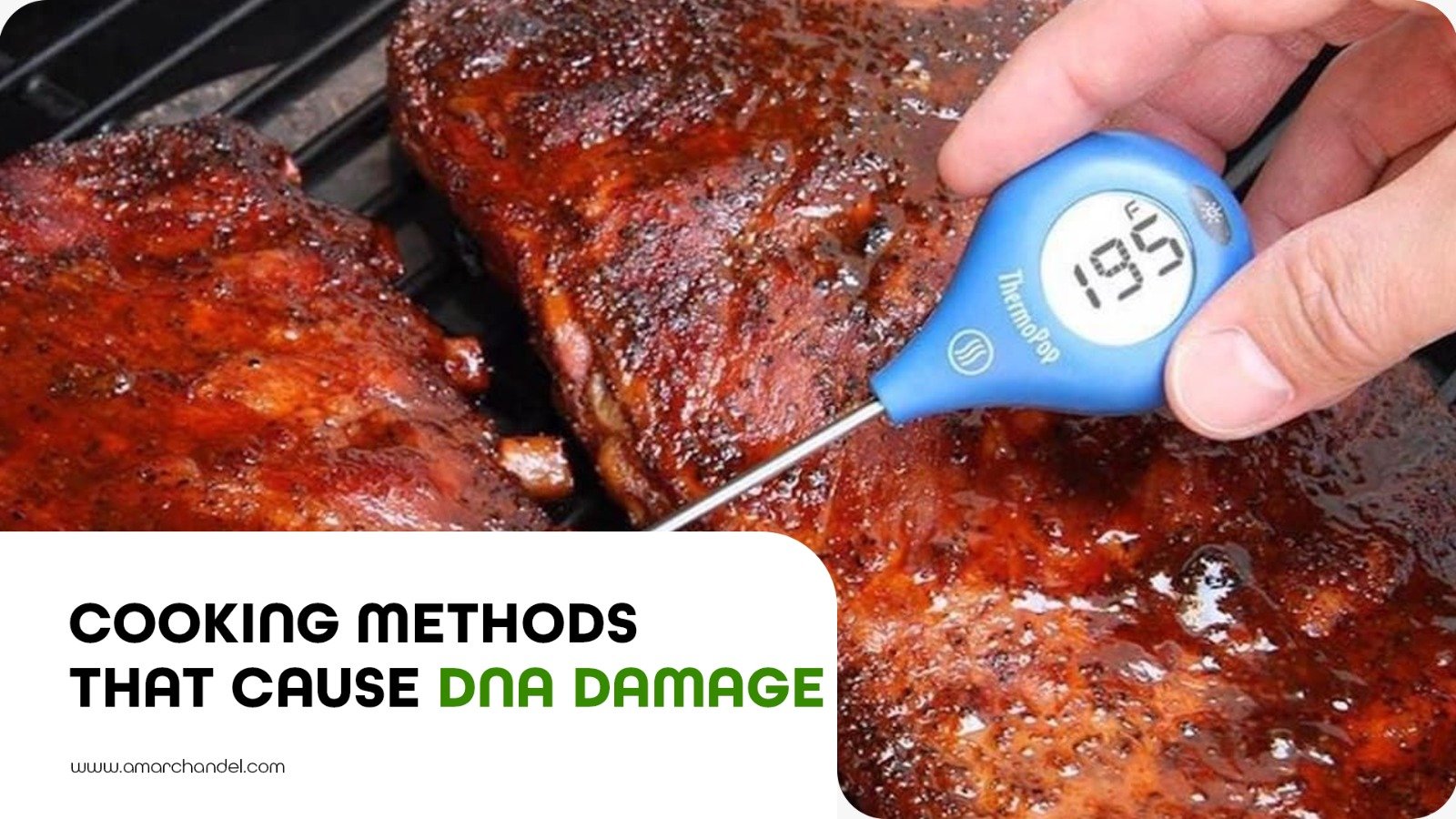
For many years, scientists have known that certain harmful compounds—called heterocyclic amines (HCAs)—form when foods are cooked at high temperatures. These chemicals are created especially when meat, fish, or poultry is fried, grilled, or roasted. What is becoming clearer with newer research is that the story is not limited to meat alone—and it is increasingly relevant for Indian kitchens as well.
HCAs such as PhIP and MeIQx are among the most studied compounds. They are formed when creatine (a natural substance in muscle foods) reacts with amino acids and sugars during high-heat cooking. Studies have identified more than 20 such compounds in commonly cooked meats under household conditions. These substances have shown the ability to damage DNA in laboratory studies, which is why they are considered potential cancer risks (Turesky, 2007; Puangsombat et al., 2012).
One interesting finding from both older and newer human studies is how quickly these compounds can disappear from the body. When people stop eating cooked meat—even for just a day—levels of some HCAs in urine can drop to undetectable levels. This suggests that dietary choices can have an immediate impact on exposure. In practical terms, even occasional meat-free days, something already common in many Indian households, may help reduce this risk.
However, recent discussions in research have also raised a more nuanced point. While meat remains the primary source, trace amounts of certain HCAs have been detected even in people who avoid meat. This has led scientists to explore other possible sources. Eggs—especially when fried—have been found to contain small amounts of HCAs. There is also some speculation that foods containing creatine or similar compounds, including dairy products like cheese, could under certain conditions contribute to their formation, although the levels are generally much lower compared to meat (Turesky, 2007).
For Indian diets, this matters because eggs are widely consumed, often cooked at high heat—think omelettes, bhurji, or fried eggs. The way food is cooked can make a significant difference. Boiling or steaming produces far fewer HCAs compared to frying or grilling. So, a simple shift in cooking method—like preferring boiled eggs over fried—can meaningfully reduce exposure.
Another emerging area of concern relates to creatine supplements, commonly used by gym-goers and athletes. Some researchers have suggested that high intake of creatine might, under certain conditions, contribute to the formation of similar harmful compounds inside the body. While this area still needs more research, it serves as a caution that “health supplements” are not always risk-free, especially when taken in large amounts without medical guidance.
Interestingly, scientists have also measured long-term exposure to HCAs by analysing hair samples. In one study, these compounds were found in all meat-eaters tested, but also in a small amount in one vegetarian. The level in vegetarians was extremely low, suggesting that non-meat sources contribute very little overall. Still, it shows that exposure is not always zero (Bessette et al., 2009).
One factor that stands out strongly in newer research is smoking. Tobacco smoke is a significant source of HCAs, including PhIP. Studies show that even vegetarians who smoke can have higher exposure levels than non-smoking meat-eaters. This is particularly relevant in India, where cigarette and bidi smoking remain common. From a holistic health care perspective, it reinforces an important point—diet alone is not enough if other lifestyle risks are present.
So what does all this mean for everyday life? The message is not about fear, but about awareness and balance. Traditional Indian diets already include many protective elements—plant-based foods, spices like turmeric and garlic, and cooking methods like boiling and steaming. These can help reduce the harmful effects of HCAs. For example, certain compounds in garlic and onions have been shown to reduce DNA damage caused by these chemicals (Wilson et al., 2007).

At the same time, small changes can go a long way. Avoiding charred food, reducing very high-heat frying, marinating meats, and including more plant-based meals during the week can all help lower exposure. For egg lovers, choosing boiled or lightly cooked preparations instead of repeatedly frying at high heat is a simple and practical step.
In the end, the larger lesson is that health risks are rarely about a single food. They are shaped by patterns—how we cook, what we eat regularly, and other habits like smoking. A Wellness Coach often emphasizes that true health comes from consistent lifestyle choices rather than isolated decisions. Indian dietary traditions, when followed mindfully, already offer a strong foundation. When combined with a holistic health care approach, these habits can support long-term well-being more effectively. Modern research simply helps us refine those habits for better long-term health.
References
• Turesky RJ. Formation and biochemistry of carcinogenic heterocyclic aromatic amines in cooked meats. Toxicology Letters. 2007.
• Puangsombat K et al. Occurrence of heterocyclic amines in cooked meat products. Meat Science. 2012.
• Bessette EE et al. Biomonitoring of carcinogenic heterocyclic aromatic amines in hair. Chemical Research in Toxicology. 2009.
• Wilson C et al. Diallyl sulfide inhibits PhIP-induced DNA damage. Oncology Reports. 2007.