
Breast pain linked to the menstrual cycle, known as cyclical or premenstrual mastalgia, has a long history of being misunderstood. In the 1970s, it was even dismissed as a psychological problem rather than a physical one. Today, medical research clearly shows what women have always known: breast pain is common, real, and can seriously affect daily life, sleep, work, and emotional well-being. Studies estimate that around 60–70% of women experience breast pain at some point, and for about 10–20%, it can be severe. Mild tenderness before periods can be normal, but persistent or intense breast pain is not something women should simply “put up with”.
For many years, treatments were extreme or unsatisfactory. Surgery was once offered surprisingly often, until evidence-based medicine highlighted how unnecessary and harmful this approach could be. Drug treatments were also tried, especially medicines that lower the hormone prolactin. Prolactin is now known to play an important role, as women with cyclical breast pain often have higher prolactin levels. While prolactin-lowering drugs can reduce pain, they frequently cause side effects such as nausea, dizziness, and mood changes, leading many women to stop treatment. This pushed researchers to look for safer, long-term solutions.
One of the most interesting findings has been the large difference in breast pain between populations. Western countries report high rates of cyclical breast pain, while studies from Asia and parts of Africa historically reported much lower rates. In some traditional Asian communities, fewer than 10% of women reported significant breast pain. This raised an important question: could lifestyle, especially diet, be playing a role?
Dietary research over the past few decades suggests the answer may be yes. Women who follow traditional diets rich in whole plant foods—such as vegetables, fruits, lentils, beans, whole grains, and minimal animal fat—tend to have lower prolactin levels. When women accustomed to plant-heavy diets were temporarily switched to Western-style diets high in meat, dairy, butter, and sugar, their prolactin levels rose within weeks. These hormonal changes were similar to those commonly seen in women with menstrual problems in Western countries. This strongly suggests diet, rather than genetics alone, influences hormone balance.
Further studies looked more closely at animal foods. When women consuming typical Western diets were shifted to vegetarian diets for just a couple of weeks, prolactin levels dropped significantly. This indicates that reducing or removing meat and animal products may directly lower prolactin release. Based on these findings, researchers began testing whether plant-based diets could actually reduce breast pain itself.
Early pilot studies showed promising results. Women with severe cyclical breast pain who followed low-fat, mostly vegetarian or fully vegetarian diets for a few months reported clear improvement. Later, more rigorous controlled trials confirmed these observations. Women who reduced dietary fat and increased plant foods experienced significant relief in breast pain compared to those who did not change their diets. Improvements were not limited to breast pain alone—many women also reported less bloating, fewer mood changes, and reduced menstrual discomfort.

Additional research has shown that vegetarian and plant-based diets are associated with more regular ovulation and fewer menstrual disturbances. Plant-based diets have also been shown to reduce the severity and duration of menstrual cramps and premenstrual symptoms such as water retention and difficulty concentrating. In one well-designed crossover study, women placed on a vegan diet experienced clear symptom relief; some felt so much better that they were unwilling to return to their previous diets.
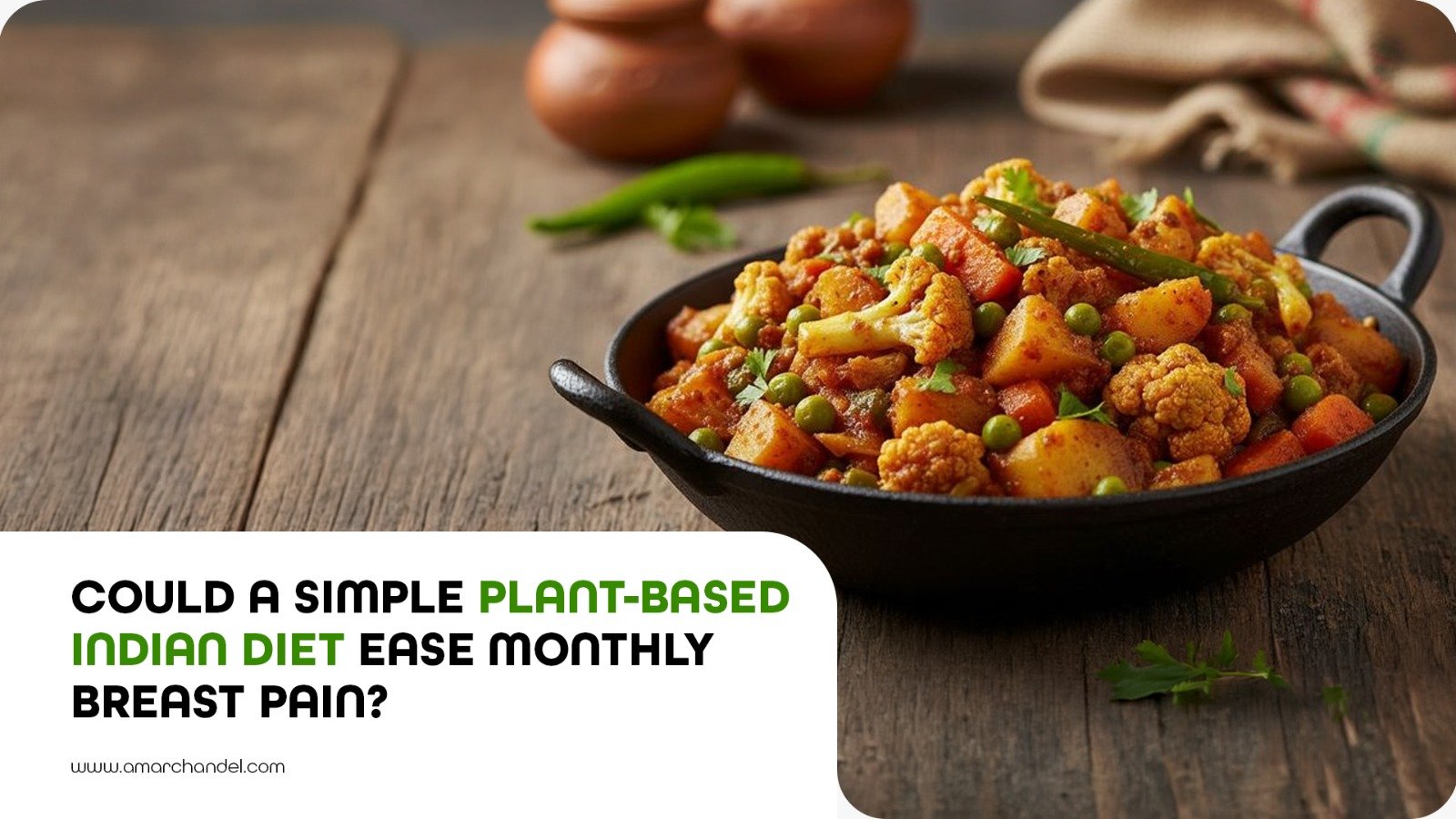
Traditional Indian diets—when not overly processed—are naturally rich in plant foods like dal, chana, rajma, vegetables, fruits, millets, rice, and whole wheat, with limited meat and dairy. However, rapid urbanisation has increased consumption of high-fat dairy, refined foods, and ultra-processed snacks. Research suggests that returning to a simpler, plant-forward eating pattern may help many Indian women manage cyclical breast pain safely and affordably.
While diet is not a replacement for medical evaluation—especially to rule out other causes of breast pain—it offers a low-risk approach that may improve both hormonal balance and overall health. For many women, simple changes on the plate may bring meaningful relief month after month.
References
Messina, M. & Messina, V. The Dietitian’s Guide to Vegetarian Diets. Jones & Bartlett Learning.
Barnard, N. D. et al. “Dietary fat and breast pain.” Journal of Reproductive Medicine.
Prentice, C. M. et al. “Low-fat diet and cyclical mastalgia.” British Journal of Surgery.
Gorbach, S. L. et al. “Dietary changes and prolactin levels.” American Journal of Clinical Nutrition.
Barnard, N. D. et al. “A low-fat vegetarian diet improves premenstrual symptoms.” Obstetrics & Gynecology.
Indian Council of Medical Research (ICMR). Dietary Guidelines for Indians, latest edition.