
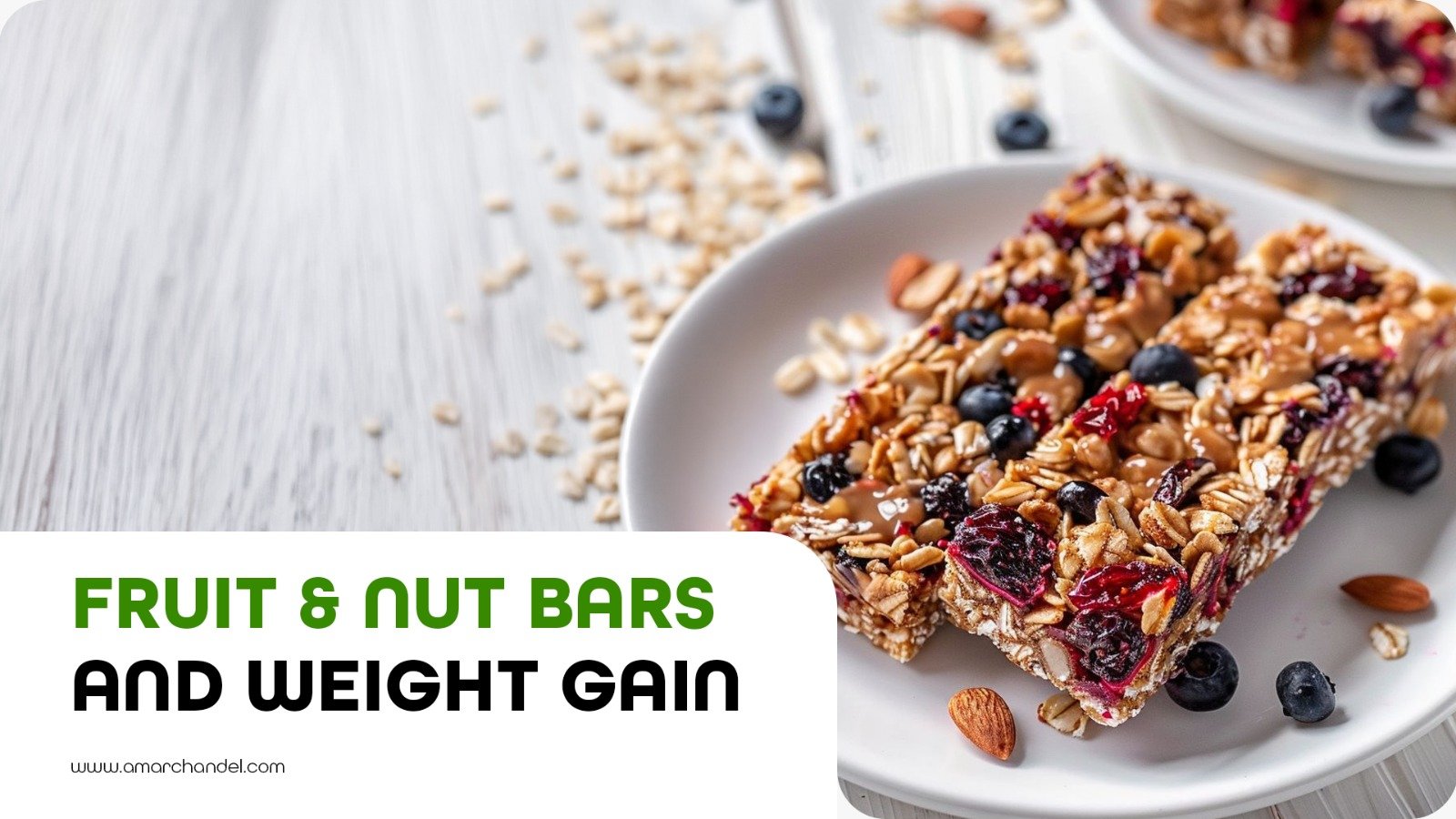
Fruit and nut bars are everywhere. They are sold as “healthy snacks” in supermarkets, airports, offices and even school canteens. Many people choose them instead of biscuits or fried snacks, believing they are better for weight control. But a common doubt remains: dried fruits are high in calories, and nuts are rich in fat. So, can eating fruit and nut bars cause weight gain? Let us look at the latest research, including Indian data, in simple terms.
Dried fruits are indeed calorie-dense. When water is removed from fresh fruit, the sugar and calories become concentrated. For example, a small handful of raisins or dates can provide as many calories as a much larger serving of fresh fruit. At first glance, this seems worrying. But research over the past decade tells a more balanced story.
Clinical trials have repeatedly shown that when people add moderate amounts of dried fruits to their daily diets, they do not automatically gain weight. This has been seen with dried apples, prunes, dates and figs. Even when these foods added 200–300 calories per day, participants often did not gain significant weight over weeks or months. Researchers believe this happens because dried fruits are rich in fibre and natural plant compounds that increase fullness. People unconsciously reduce intake of other foods during the day (Gibson et al., Nutrition Reviews, 2016; Keast et al., Journal of the Academy of Nutrition and Dietetics, 2011).
The same pattern has been observed with nuts. Nuts are energy-dense because they contain healthy fats. However, long-term studies show that regular nut consumption does not promote weight gain. In fact, people who eat nuts frequently often have lower body weight and smaller waist size compared to those who rarely eat them. Nuts increase satiety, may slightly boost metabolism, and some of their fat is not fully absorbed by the body due to their structure (Bes-Rastrollo et al., American Journal of Clinical Nutrition, 2007; Mattes & Dreher, Nutrition Reviews, 2010). The Global Burden of Disease Study has also linked higher nut intake with better heart health and lower risk of chronic disease (GBD 2017 Diet Collaborators, The Lancet, 2019).
What about when dried fruits and nuts are combined in bars? Studies where people were given fruit and nut snacks daily for several weeks found no significant weight gain compared to control groups. In some cases, participants reported better satiety and improved diet quality. However, the results depend on the type of bar. Bars made mostly from whole nuts and dried fruits behave differently from bars that contain added sugars, syrups, chocolate coatings or refined flour (Tey et al., European Journal of Nutrition, 2017).
India faces a double burden: rising obesity in cities and persistent undernutrition in some regions. According to the National Family Health Survey (NFHS-5, 2019–21), overweight and obesity among adults has increased significantly in urban areas. At the same time, many Indians consume diets high in refined carbohydrates such as white rice, maida products and sugary snacks. In such a setting, replacing biscuits, namkeen or sweets with a small portion of nuts and dried fruits may actually improve diet quality.
Traditional Indian diets have long included dried fruits and nuts—almonds soaked overnight, dates during fasting, raisins in poha, groundnuts as snacks, and chikki made from peanuts and jaggery. These foods were usually eaten in small portions. The problem today is not the presence of nuts or dried fruits, but the modern processing of snack bars. Many commercial bars marketed in India contain glucose syrup, inverted sugar syrup, maltodextrin or chocolate layers. These additions can increase sugar intake without improving fullness.
Another important factor is portion size. A small handful of mixed nuts and dried fruits, about 30–40 grams, can be a healthy snack. But eating multiple large bars mindlessly, especially along with sweetened tea or coffee, may lead to excess calorie intake. The body does not gain weight from one food alone; weight gain happens when total calorie intake regularly exceeds what the body uses.

Recent guidance from the Indian Council of Medical Research (ICMR) in its 2024 Dietary Guidelines for Indians emphasizes whole foods, nuts, and seeds in moderation, while advising a reduction in ultra-processed packaged foods. Fruit and nut bars made with minimal ingredients may fit into a balanced diet, but highly processed versions with long ingredient lists may not offer the same benefit.
It is also important to consider lifestyle. Many office workers spend long hours sitting and engage in low physical activity. In such cases, even healthy foods can contribute to weight gain if overall calorie intake is high. On the other hand, for active individuals, students, athletes, or those who skip meals due to busy schedules, a simple fruit and nut snack may help maintain energy without promoting weight gain.
Another benefit of nuts and dried fruits is their impact on metabolic health. Studies show that regular nut consumption can improve cholesterol levels and reduce risk of heart disease (Estruch et al., New England Journal of Medicine, 2018). Dried fruits contain antioxidants and potassium, which support heart health. However, if bars are loaded with added sugar, the cholesterol-lowering effect of nuts may be reduced.
So, do fruit and nut bars cause weight gain? Current research suggests that moderate intake of minimally processed fruit and nut combinations does not automatically lead to weight gain. In fact, they may support better weight management when they replace refined snacks. The key factors are ingredient quality, portion size, and overall diet pattern.
For Indians, a practical approach may be even simpler. Instead of relying only on packaged bars, one can carry a small homemade mix of roasted chana, groundnuts, almonds, raisins and a few dates. Traditional options like peanut chikki made with minimal jaggery, without glucose syrup, can also be reasonable in moderation. These choices are often cheaper and less processed than many branded bars.
References
Bes-Rastrollo M. et al. Nut consumption and weight gain in a Mediterranean cohort. American Journal of Clinical Nutrition. 2007.
Estruch R. et al. Primary Prevention of Cardiovascular Disease with a Mediterranean Diet. New England Journal of Medicine. 2018.
GBD 2017 Diet Collaborators. Health effects of dietary risks in 195 countries. The Lancet. 2019.
Gibson S. et al. The role of dried fruit in the diet. Nutrition Reviews. 2016.
ICMR-NIN. Dietary Guidelines for Indians. 2024.
Keast D. et al. Dried fruit consumption and diet quality in the US population. Journal of the Academy of Nutrition and Dietetics. 2011.
Mattes R., Dreher M. Nuts and healthy body weight maintenance. Nutrition Reviews. 2010.
National Family Health Survey (NFHS-5). Ministry of Health and Family Welfare, Government of India. 2019–21.
Tey S. et al. Effects of daily nut consumption on body weight and metabolic health. European Journal of Nutrition. 2017.